Water-bearing fireplaces

A smart heating system – efficient hot water generation with fireplace ambiance

BRUNNER was one of the first manufacturers to offer its proven wood-burning systems for professional stove construction in a water-bearing version. Here, maximum fire enjoyment meets hot water generation and wood heating: a water-bearing fireplace radiates gentle warmth into the room through its large viewing window while simultaneously producing hot water for the home’s heating system.

Wasserführender Eckkamin mit grauen Diamantkacheln und liegendem Hund im Vordergrund

The features

Water-bearing fireplace with gray tiles
Realisation: Großenhainer Ofenbau GmbH

Primarily for atmosphere

A water-bearing fireplace is chosen when large glass panels and a true fireplace ambiance are desired. The selection of the heating insert follows as a second step, with the building’s heat requirements and the size of the installation room serving as key criteria for the planner.

Many of our BKH models can be combined with a boiler module. The variety of BRUNNER water-bearing heating inserts is so extensive that the perfect combination of desired design and technical performance can almost always be achieved.

The design of the boiler body and water heat exchanger determines the proportion of heating water supplied to the central heating system. With a higher boiler output, even frequent use will not cause a “sauna effect” in the installation room.

Two types of Heating water support

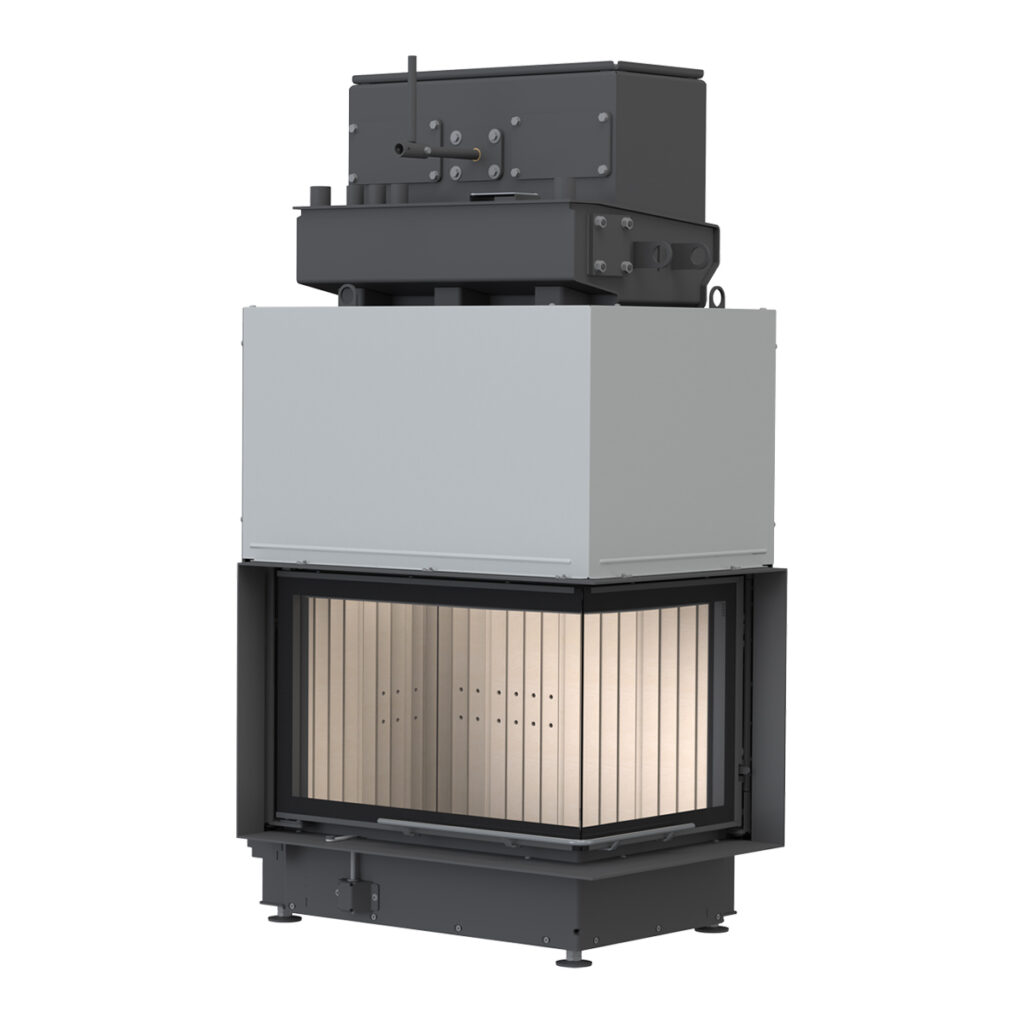
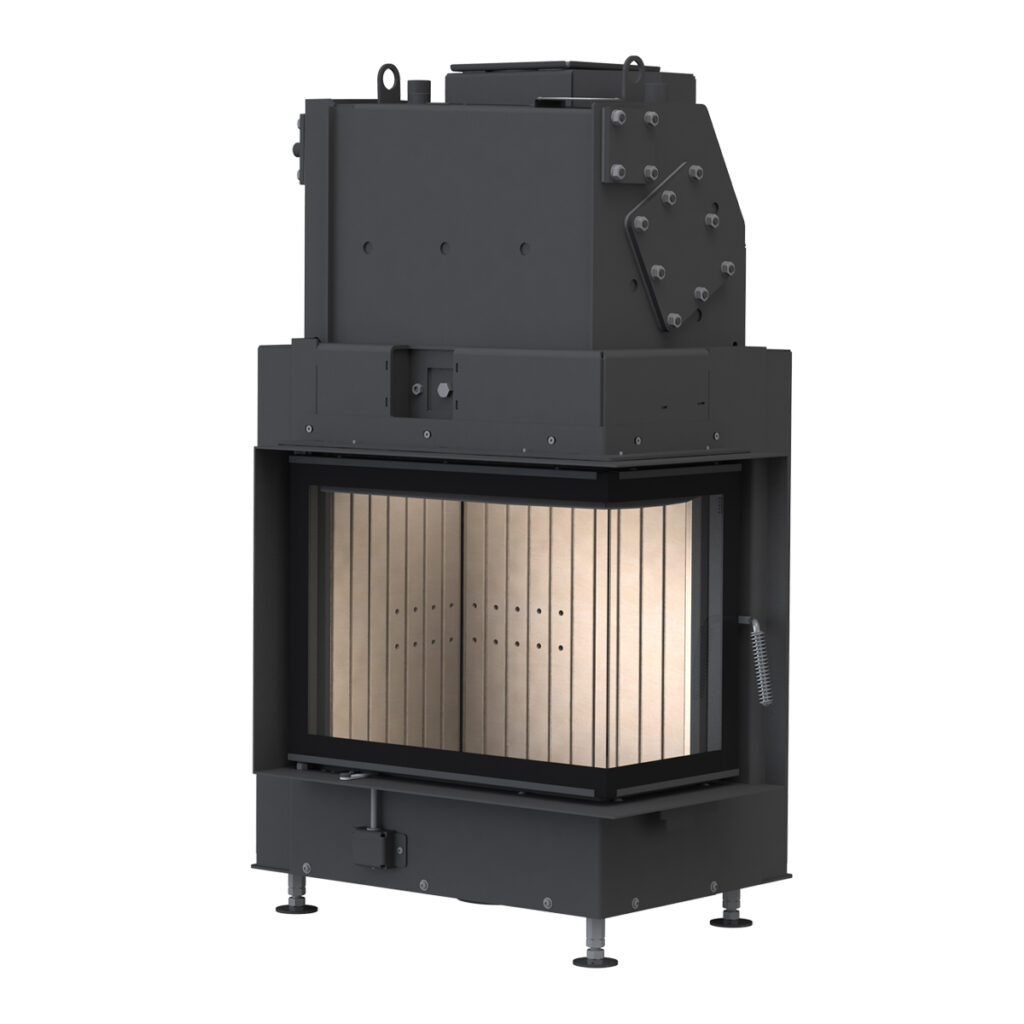
Water-bearing corner fireplace 42-57-44

Integrated water heat exchanger

Boiler bodies with integrated heat exchangers have the highest boiler capacity — more is not possible with large glass panels. The installation room is directly heated by radiant heat through the viewing window.

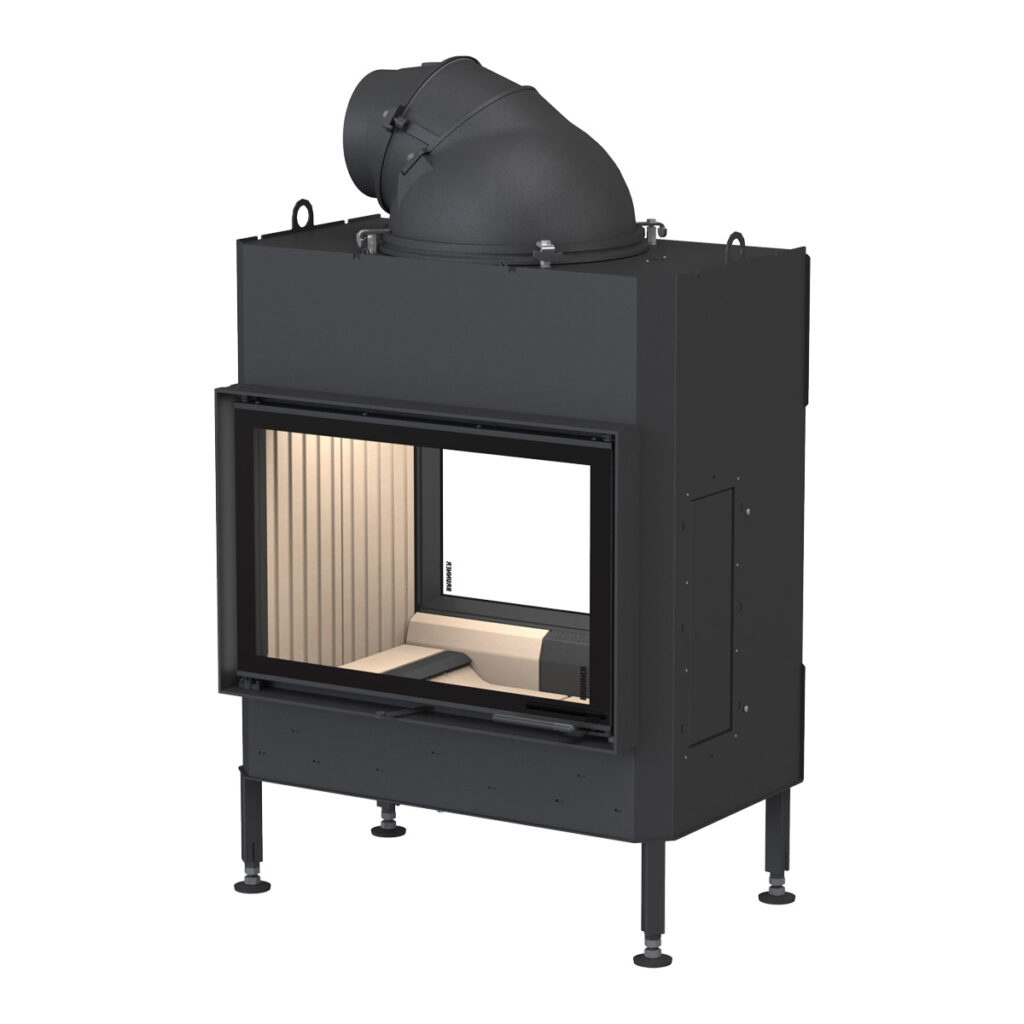
Flat fireplace insert with mounted boiler module

Mounted boiler module

Instead of a warm-air hood, a boiler module is installed on top of the fireplace. The boiler module, featuring smooth, vertically arranged heat exchanger tubes, ensures optimal flow characteristics. This standard version can be mounted on nearly all flat, tunnel, and corner fireplace models.

Simply explained

How heat from the wood reaches the radiators

Heat is released in the combustion chamber. During the combustion process, the chamber walls become intensely hot, reaching flue gas temperatures of 600–800 °C. Depending on the application, one or both heat release effects are used to heat the water. If the hot combustion chamber walls are enclosed by a boiler jacket, they transfer their heat to the metallic body of the boiler and the heating water inside it. Even more heat can be extracted from the hot flue gases as they pass through a metallic water heat exchanger — the most effective way to transfer heat from the flue gases to the water.

The boiler body and water heat exchanger are designed as a single unit. Through both heat transfer processes, the water heats up to around 70–80 °C, is stored in a buffer tank, and can then supply warmth to radiators, underfloor, or wall heating systems when needed. The installation room is heated during combustion via radiant heat through the viewing window.

In water-bearing wood-burning inserts, the flue gases — or their residual heat after the water heat exchanger — are also used to heat a storage mass. The stored energy is then released as pleasant radiant heat through the stove casing after the burn cycle has ended.

Diagram functional principle of water-bearing fireplaces

Water-bearing fireplaces with water heat exchanger

Fireplaces with optional boiler module

Load more products

FAQ Water-bearing fireplaces

BRUNNER Craftsmen search

If you are interested in a BRUNNER stove or heating system, please contact one of our craftsmen.

Handwerker