Cast-iron wood-burning stove – made in Germany & a loyal companion for cold days
If you’re looking for a special kind of Swedish stove, you’ll find it in the IRON DOGs® by BRUNNER. Timeless in design, this series of durable cast-iron stoves complements any interior style. IRON DOGs® stand for the highest quality and are made entirely of cast iron, fully manufactured in Germany.
And above all, IRON DOGs® are a true passion project for us – the result of our craftsmanship, expertise, and enthusiasm for the extraordinary. Each IRON DOG® can even be used for cooking, as all models feature a hotplate – and one of them even includes an oven and grill function.
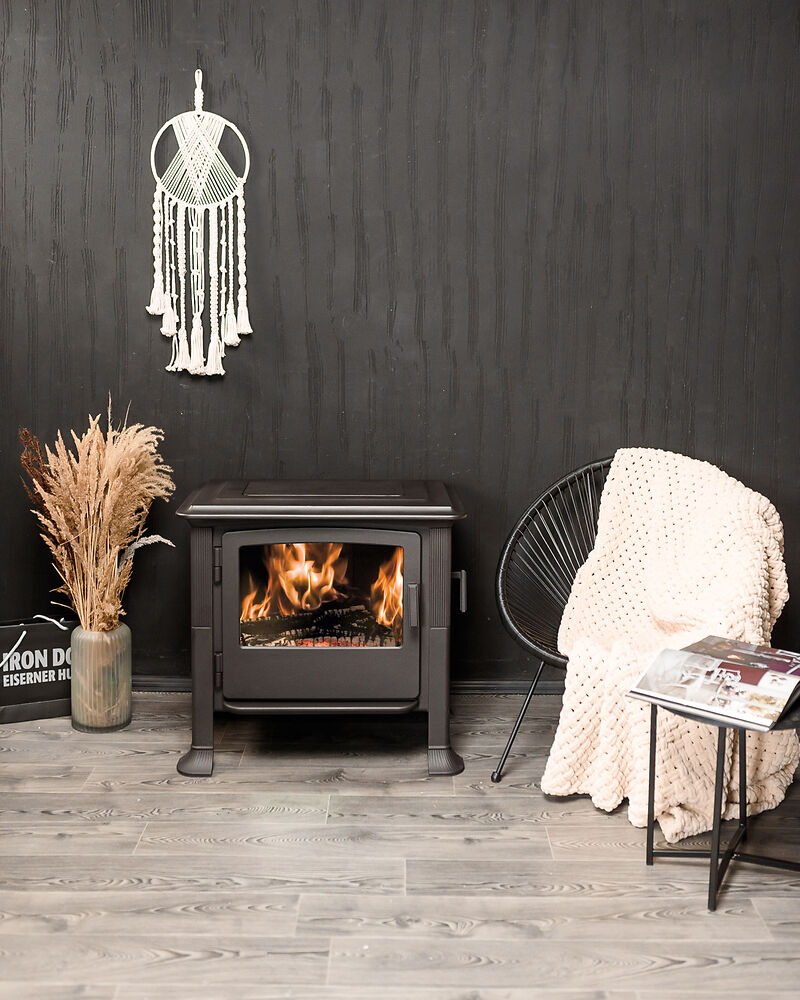
Some stoves keep you warm through the winter-
this one accompanies you for a lifetime.
A cast iron stove not only provides pleasant warmth – it is also a real eye-catcher in any living space and creates a particularly cosy atmosphere. The cast iron stoves from Ulrich Brunner GmbH are made in Bavaria, with the entire process handled in-house: from development and production to quality control and final assembly. The cast iron stoves in the Iron Dog range differ in many ways, including size, materials and functionality.
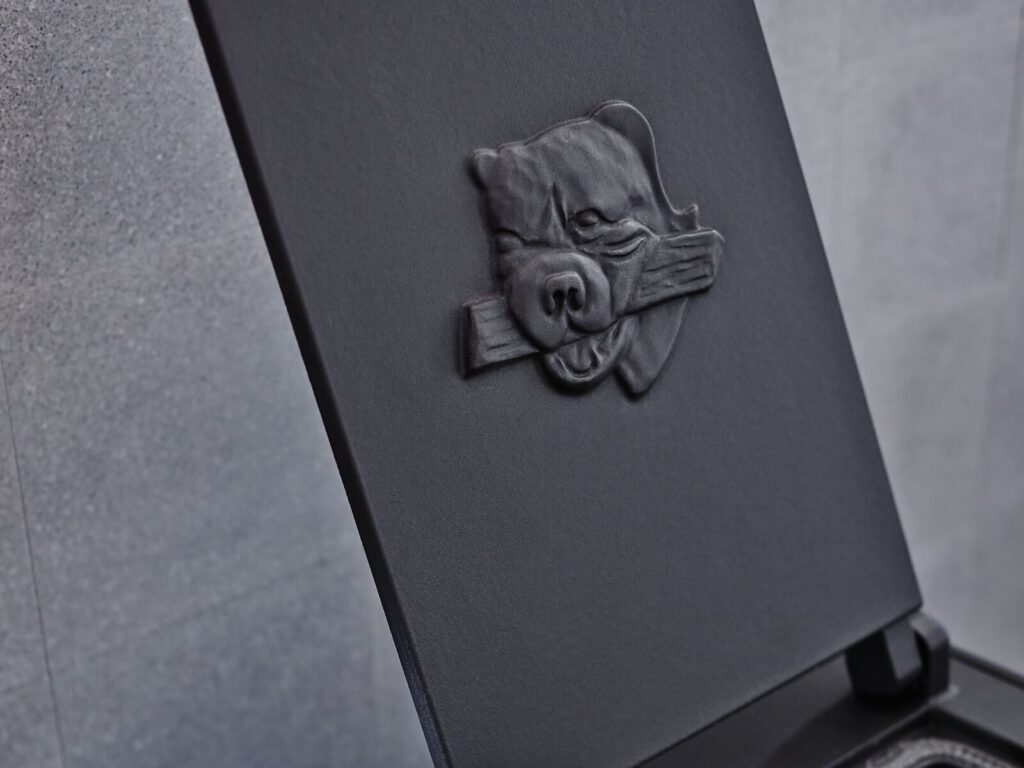
Why “Iron Dog”
An Iron Dog accompanies its owner for a lifetime – it burns for them and, with its warm heart, turns four walls into a welcoming home. It’s as loyal and reliable as a good friend, and as versatile and unique as the people it’s made for.
A dog is loyal, loves human company, and rejoices when its owner comes home – that’s why the name “Dog.” And “Iron,” because the IRON DOG® is made of 7-millimeter-thick cast iron. It’s a designer stove for people who value form, quality and persistence. It spreads comforting warmth and an inviting atmosphere. Thanks to its hotplate, baking compartment, and grill rack (only on the IRON DOG® 06), it can also be used for cooking.

The advantages of the IRON DOGs®
The Iron Dog impresses with its practical additional functions, as every model comes equipped with a hotplate. The IRON DOG® 06 offers even greater versatility with its additional grill function and built-in oven.
The wood-burning stove is compact yet powerful, made from premium cast iron – making it exceptionally long-lasting. A loyal companion for life, so to speak.
A wood-burning stove is a preassembled unit that is delivered ready for installation and simply connected to the chimney.
The models
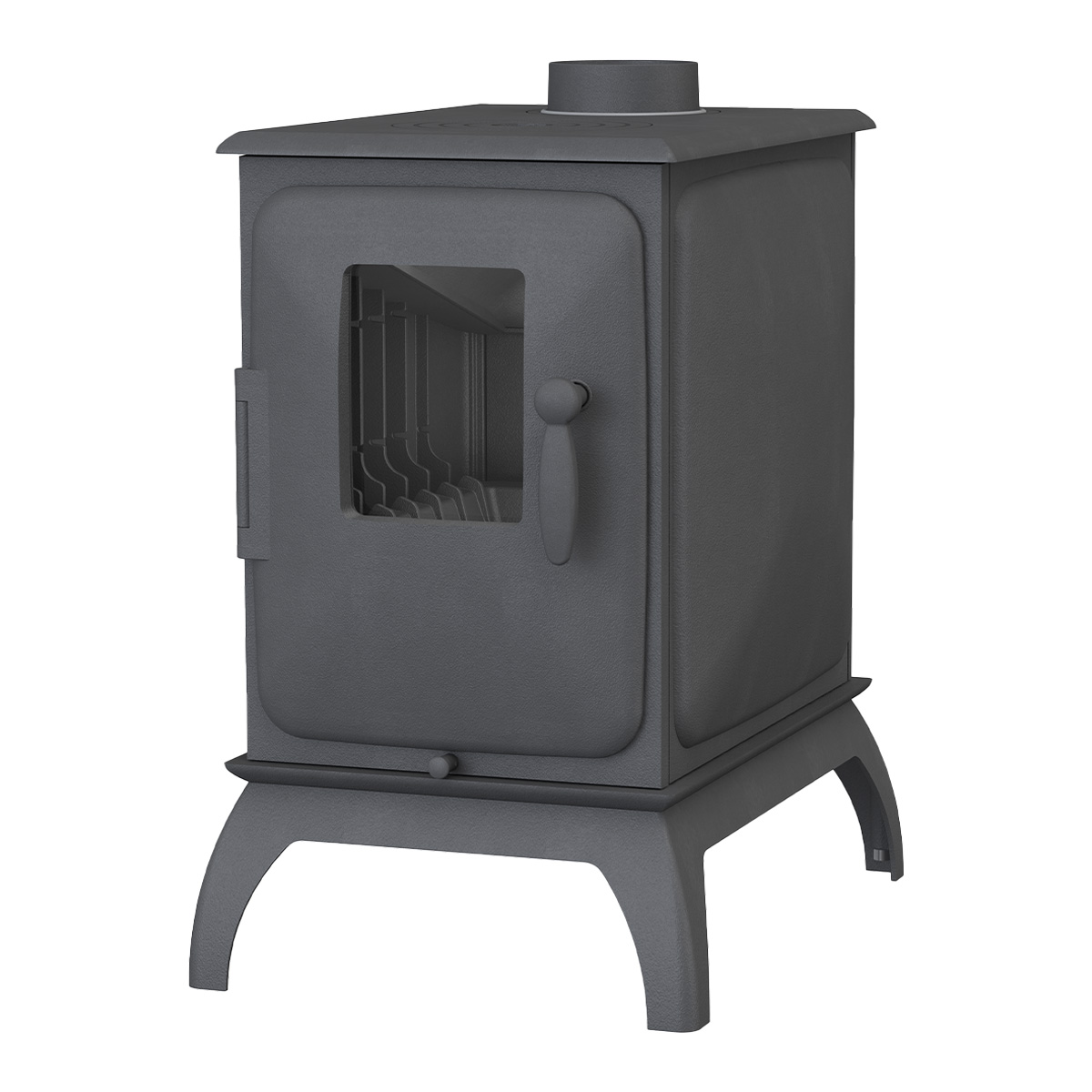
Friends for life
Good friends always hold a special place in our lives — and the IRON DOG® N°01 achieves greatness even in the smallest of spaces. That’s thanks to its refreshingly natural character, its unique presence, and its warm-hearted nature.
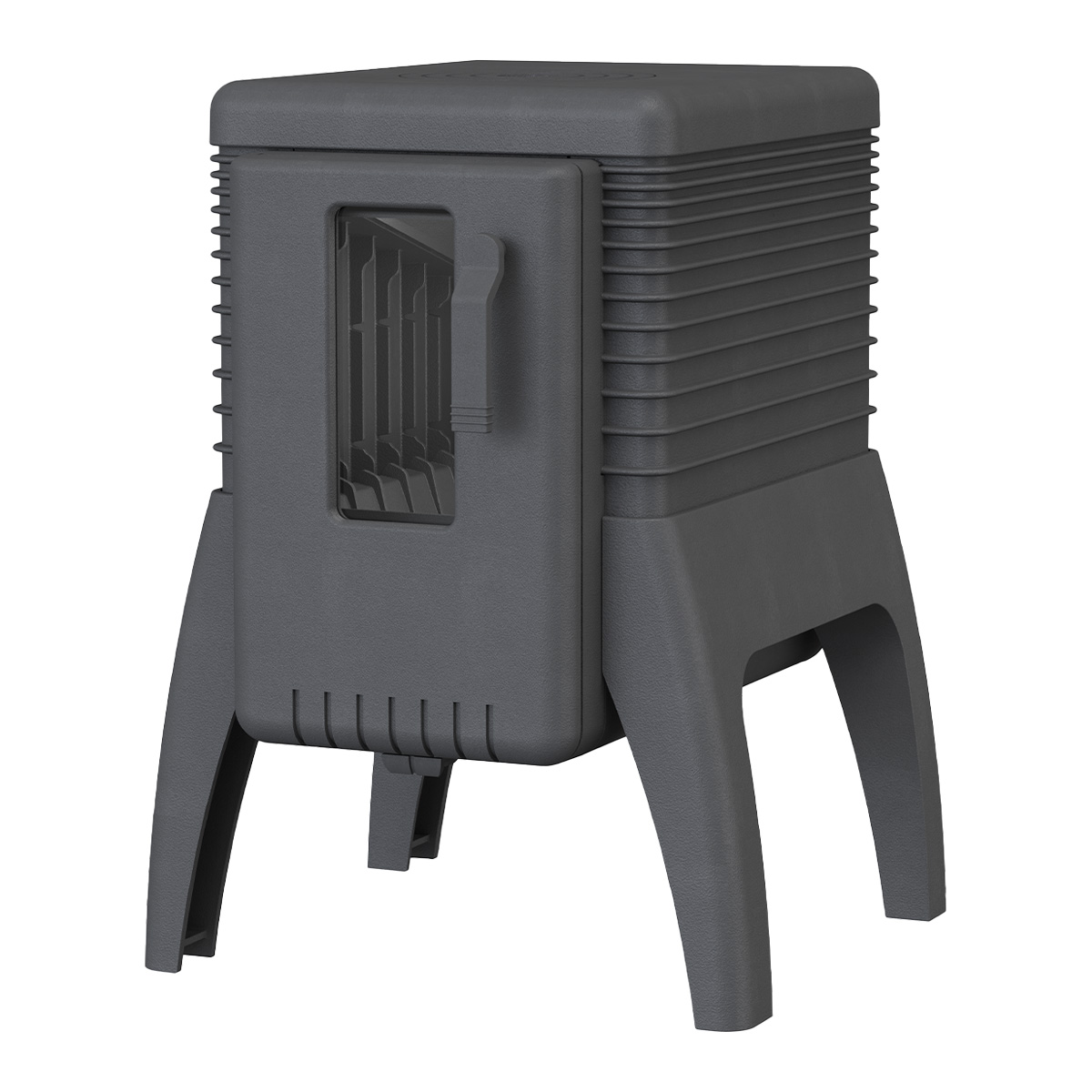
Radiates personality
Throughout history, the fireplace has always been a favorite gathering place. With the IRON DOG® N°02, it becomes a true focal point. Thanks to its unique blend of strength and aesthetics, this dog radiates not only warmth but also personality.
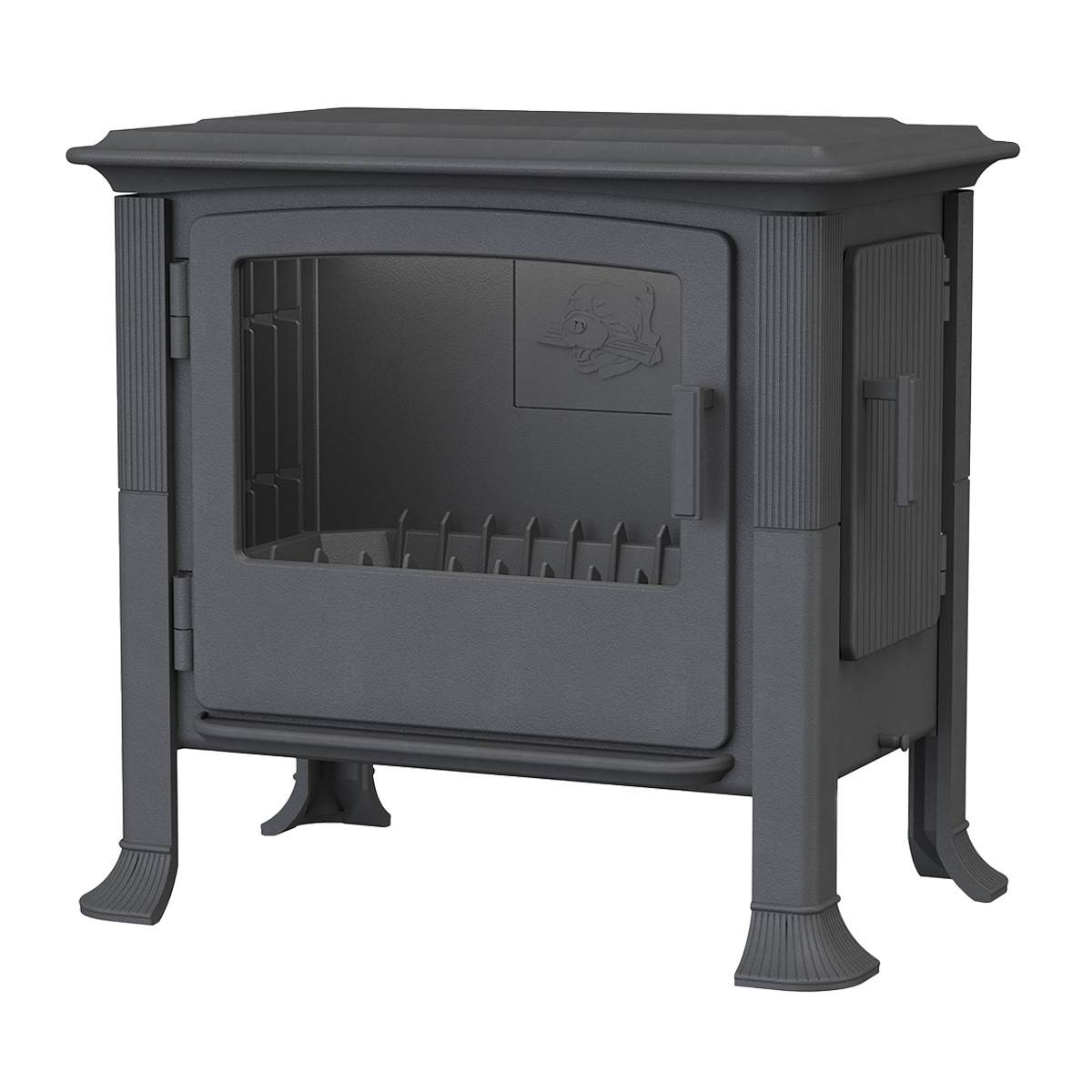
Large ceramic glass window for maximum fire enjoyment
Time, relaxation, comfort – it doesn’t take much to be happy. With the IRON DOG® N°04, just a few logs and a cozy spot by the fire are enough. Its large panoramic glass window makes it an inviting centerpiece and a visual highlight in any room.
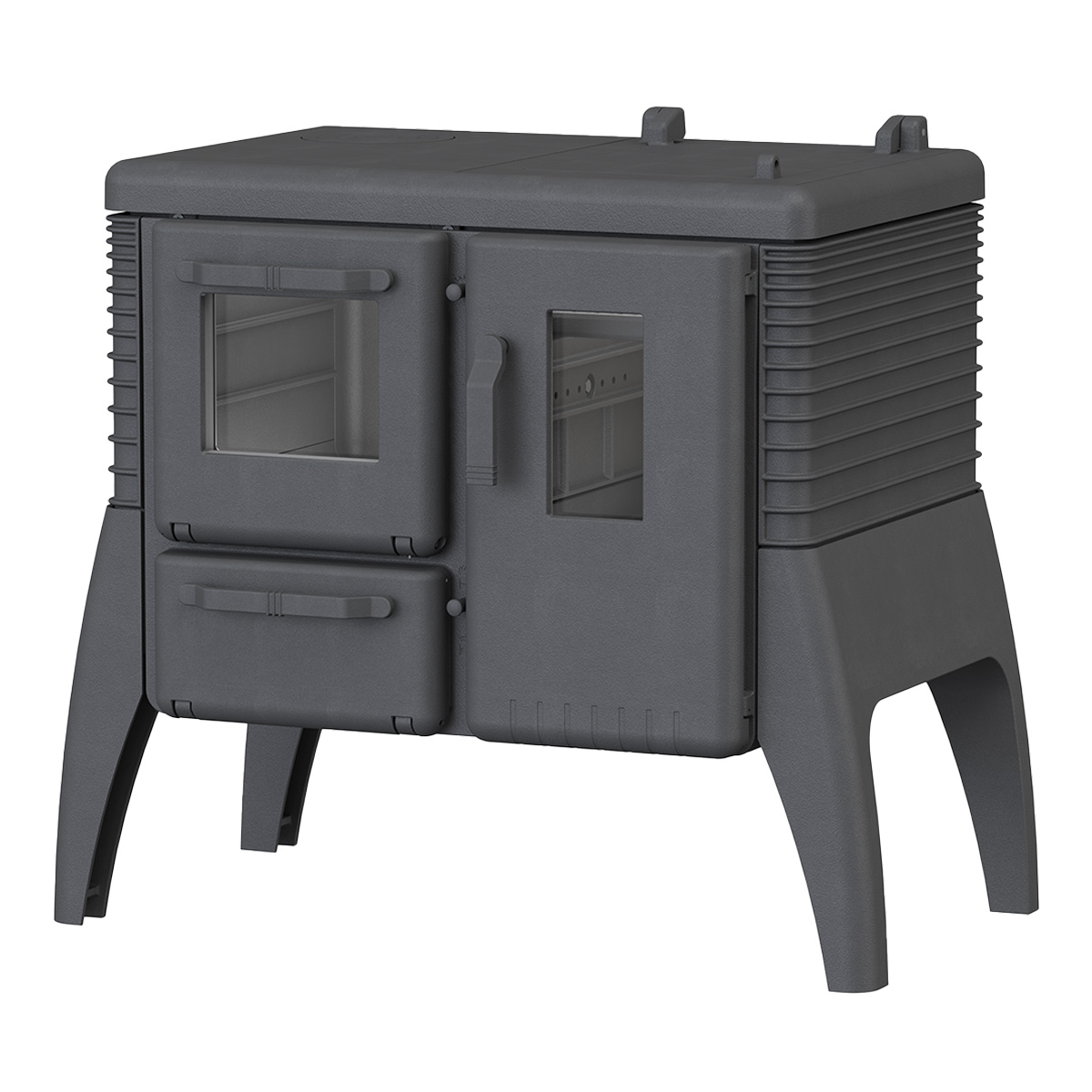
A wood-burning stove with hotplate
The IRON DOG® N°06 from BRUNNER is, in the best sense, a cooking machine. It’s relatively heavy, ensuring a stable and secure base for all operations, including cooking. With it, you can heat the room, cook on the hotplate, bake in the oven, and even grill perfectly over the embers once the fire has burned down. Since grilling takes place inside the stove, excess odors are carried away through the chimney – making indoor grilling effortlessly enjoyable.
- Grilling & baking
These stoves feature a baking compartment, a cooking plate, and sometimes even a grill rack. While you prepare the most delicious dishes, the room naturally becomes pleasantly warm. Wood-fired kitchen stoves were once commonplace and are now enjoying renewed popularity — not only for their heating performance and the cozy atmosphere they create but also because food prepared in a wood stove simply tastes so much more flavorful. While cakes become perfectly light and moist in the oven and stews simmer gently on the cooktop, the wood compartment only needs occasional refueling.
The IRON DOG® 06 from BRUNNER impresses not only with its minimalist design — after the fire has burned down, you can even grill perfectly over the embers. Grilling takes place directly inside the stove. There’s no need to worry about odors in enclosed spaces, as they are immediately vented outdoors through the chimney.
- Tips
Those who bake, cook, and grill with a wood-burning stove quickly develop a feel for when the heat is just right and how long dishes need to cook. Unlike an electric stove, the temperature can’t be adjusted with the push of a button. Here are a few basic tips:
-
To quickly heat water or food, place the pot directly above the firebox, where the temperature is highest. Moving the cookware to the side reduces the risk of burning or boiling over, as the plate is cooler there.
-
When using the baking compartment, it’s best to start with a lower heat — good roasts take time anyway — and add more wood toward the end to achieve a crisp, golden finish.
-
Once the wood fire has burned down to glowing embers, it’s time to grill. Simply insert the grill rack into the firebox above the embers and enjoy perfect results.
-
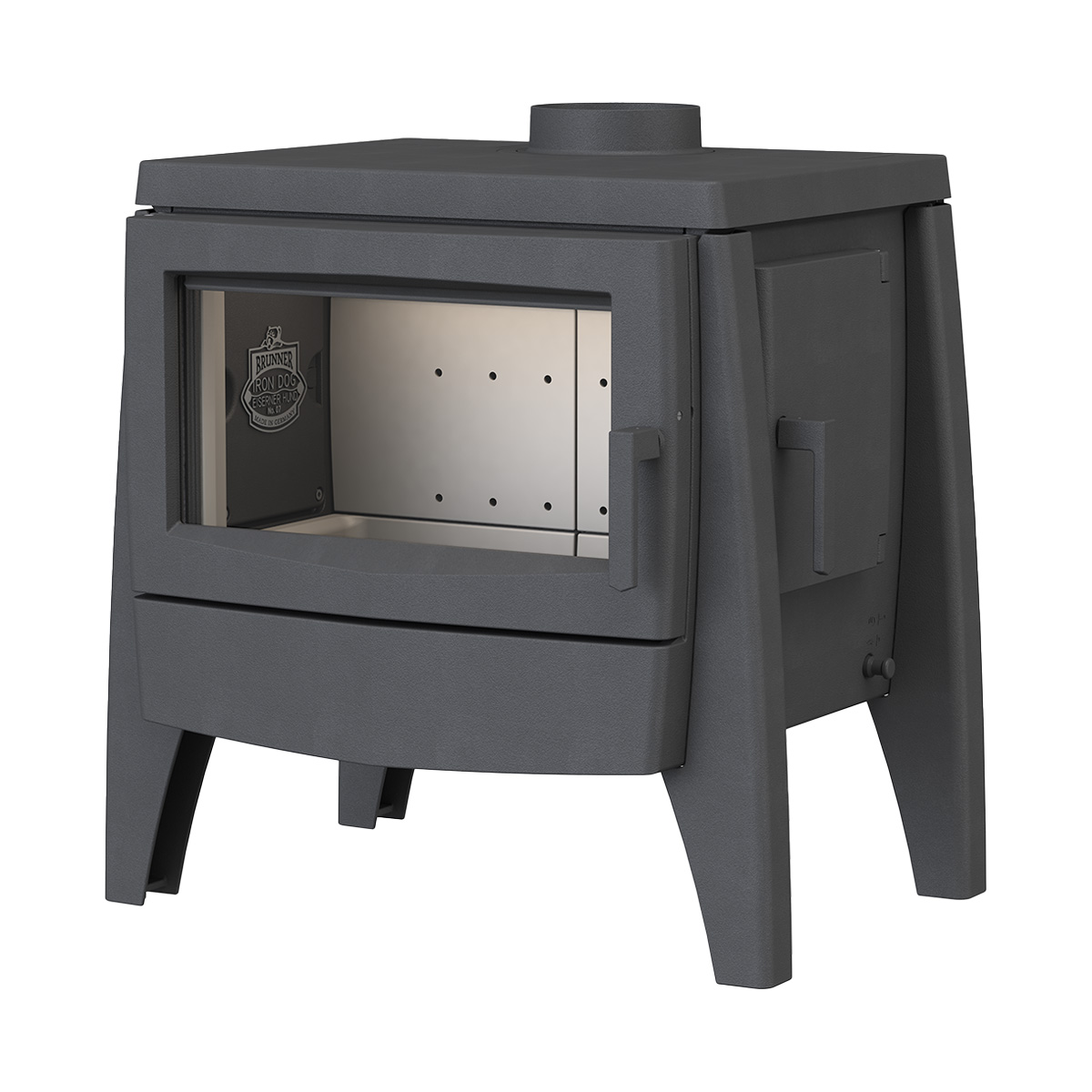
Timeless, minimalist in design & appearance
With its new firebox made of special heat-storing concrete, the IRON DOG® N°07 is even more robust, efficient, and enjoyable than its predecessors. Practical features such as a separate refueling door and a completely new design make it the best IRON DOG® ever built.
The IRON DOG® cast-iron stove The material
Cast-iron wood-burning stove
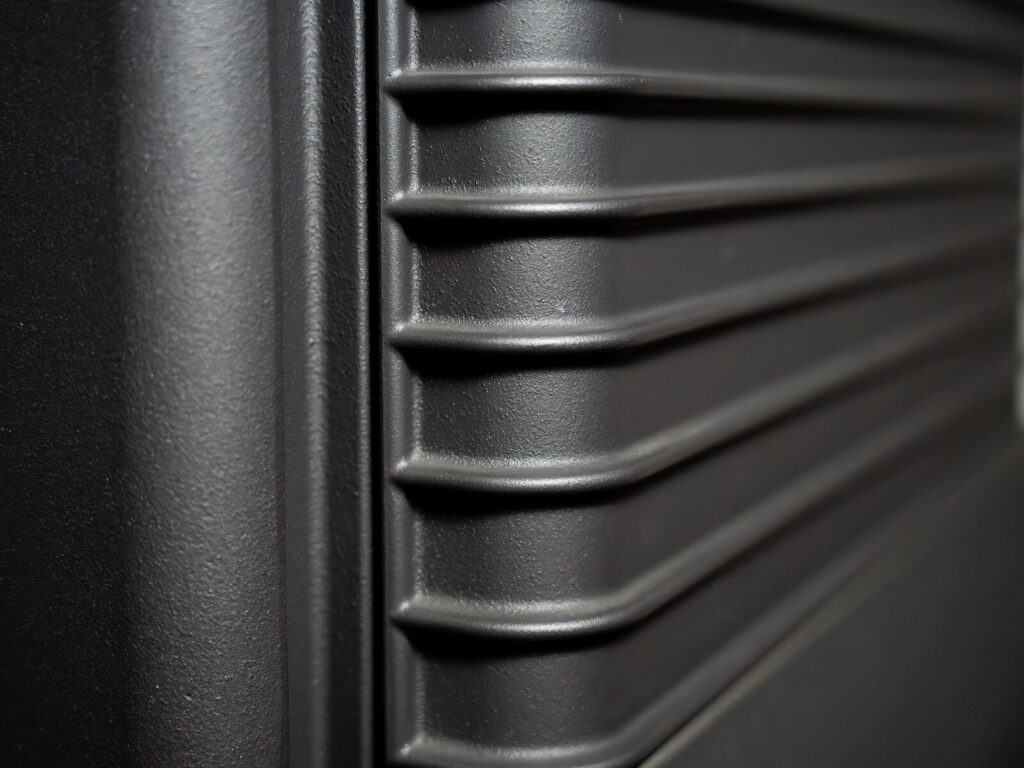
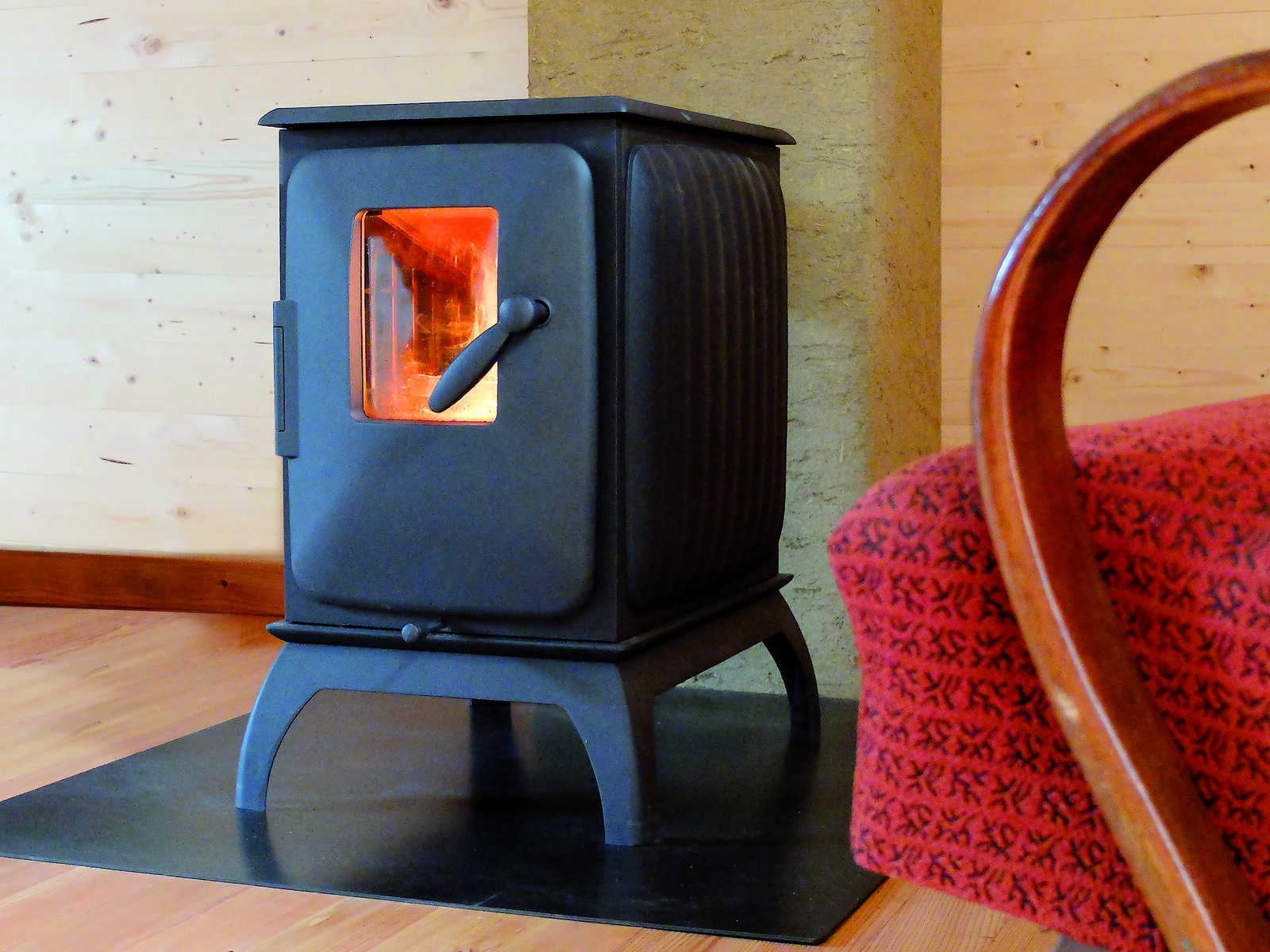
The IRON DOG® is made from cast iron and manufactured in Germany. This solid material is known for its robustness and durability. Thanks to its low thermal expansion, cast iron is also particularly dimensionally stable. Depending on the model, an IRON DOG® weighs between 130 and 300 kilograms, giving it a secure and stable footing – even when used for cooking.
Resistant even at extreme heat
Cast iron is almost twice as thick as the sheet steel typically used for stoves, which explains its superior heat retention. It also distributes heat more evenly, creating a pleasant, cozy warmth. A cast-iron stove radiates comfortable, long-lasting heat similar to the warmth of the sun.
When infrared radiation strikes a solid object, the particles within it begin to vibrate, warming up and then releasing that energy as heat. Radiant heat is perceived by humans as particularly pleasant — it feels as though the warmth comes from within.
At the same time, the air humidity remains stable, and radiant heat does not cause air or dust turbulence — a great advantage, especially for allergy sufferers. Another benefit is that the perceived room temperature feels up to two degrees Celsius higher than it actually is. A cast-iron stove therefore offers high efficiency with low wood or fuel consumption.
Some models can also be operated with lignite or hard coal. Although these fuels offer the highest heat output, they are significantly more expensive. For wood-burning operation, hardwood logs such as beech, oak, or alder are recommended.
Functionality -
the technology behind it
Primarily for warmth – a wood-burning stove that provides pleasant radiant heat
While some models feature larger ceramic glass panels for an enhanced view of the fire, the focus of the IRON DOG® stove series is clearly on delivering warmth.
A warm room simply feels good – and this sense of comfort is not only due to temperature, but to the overall indoor climate. Radiant heat, in particular, is perceived as much more pleasant than convection heat. It works similarly to the sun’s rays, which move through the room and are absorbed by solid or liquid surfaces, warming them from within.
Radiant heat quite literally gets under the skin, creating deep, soothing warmth. In contrast, convection heat uses air as the medium to transport warmth from one place to another.
Sophisticated
combustion air supply
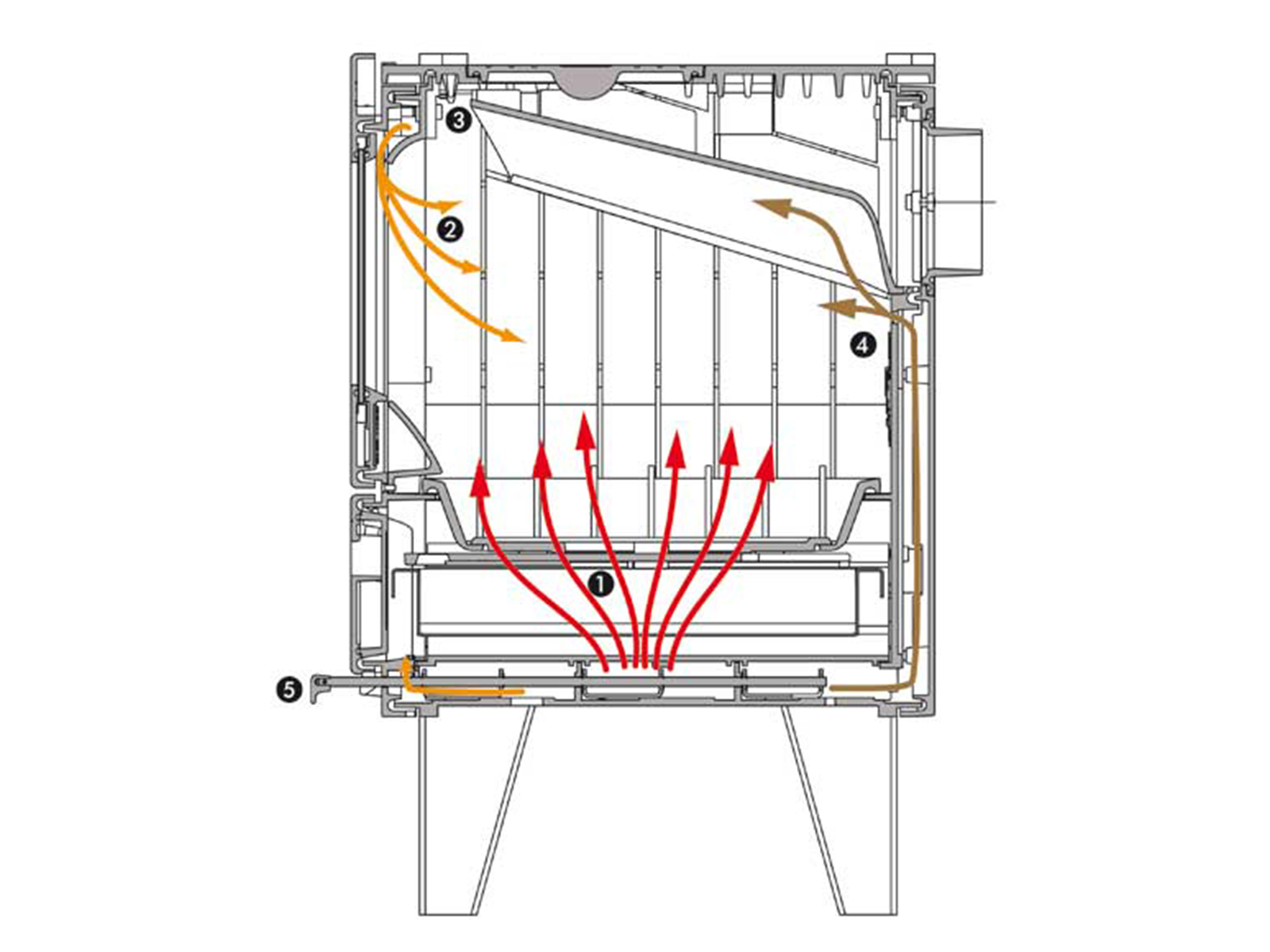
A precisely engineered air supply system ensures slow and even degassing of the wood logs with minimal emissions and combustion residues. The primary air (1) flows directly into the ember bed, gently supporting the degassing process. The secondary air (2) keeps the glass clean and mixes the combustion gases with the required oxygen before they enter the flame channel (3).
The tertiary air (4) mixes the gases released at the back of the combustion chamber in real time, triggering the ignition reaction. Operation is controlled by a single adjustment element (5) – making it as simple as possible to use a wood-burning stove.
The high efficiency is achieved through large heat-absorbing surfaces combined with special flue gas deflection channels. In the Multi-Fuel version, the “Iron Dog” cast-iron stove can be fired not only with wood but also with solid fuels such as coal or peat.
FAQ IRON DOG®
- Who is responsible for the disposal of the fireplace stove?
If a fireplace stove no longer meets legal requirements because it exceeds emission limits or you simply want to replace it with a new model, the question arises: what do you do with the old one?
If the stove can be retrofitted with a filter, it can often be sold second-hand. Defective or no longer approved stoves count as bulky waste and can be taken to a landfill or recycling center – provided you can transport them yourself. Most units, however, are heavy and difficult to move.
In addition, older stoves may contain hazardous or harmful materials such as asbestos. It’s therefore better to have a certified waste disposal company handle the removal. If you’re unsure, your local chimney sweep can also provide advice.
- When should you replace your fireplace stove?
The Federal Immission Control Ordinance (BImSchV) defines emission limits for fireplaces in Germany that must not be exceeded. The goal is to reduce fine dust and carbon monoxide pollution in the air.
This means that older fireplace inserts must be replaced with new, low-emission units. You can find out here whether your appliance is affected and what you need to keep in mind.
- Who cleans the fireplace stove?
The fireplace stove is usually cleaned by the owner. It’s important to do this regularly to ensure optimal heating performance. During combustion, residues build up inside the stove and flue pipe, and soot deposits can also affect how well the stove works.
The best time to clean your stove is before each heating season, or at the latest when you notice these signs:
- The stove glass is heavily sooted.
- The wood smolders instead of burning properly.
- No matter how much you heat, the stove doesn’t reach a high temperature — a sign of incomplete combustion.
By law, fireplaces and chimneys must also be inspected, cleaned and serviced regularly by a certified chimney sweep, usually two to three times a year.
- What is a water-bearing fireplace stove?
Sitting by the wood stove, watching the flames and enjoying the warmth — for many homeowners, these are the main reasons to buy a fireplace. But some models can do even more.Water-bearing stoves not only heat the room, they also supply the home’s heating and hot water system with energy. They’re especially efficient during the transitional seasons, in spring and autumn. With just two burns a day, they can support the heating system so that the main heating doesn’t even need to switch on. How does it work? Only part of the heat from combustion is released into the room. The rest is transferred to a buffer tank, from which it’s fed into the central heating system.
- What should you consider when heating with a wood-burning stove?
For the safe and low-emission operation of a wood-burning stove, choosing the right fuel and operating the stove correctly are key factors. Only suitable, dry and untreated firewood may be used. An adequate supply of combustion air and correct lighting are equally important. Information on which fuels are approved for the respective stove and how to operate it correctly can be found in the corresponding operating instructions.
- How safe is heating with a fireplace stove?
Many people worry about their family’s safety when buying a fireplace stove. But when operated correctly and in compliance with safety standards, it is a very safe heating system.
- Who are fireplace stoves ideal for?
Even people who don’t own a home often don’t want to miss out on the cozy atmosphere of a real fire. For them, a fireplace stove is the perfect choice.
While a handcrafted, built-in fireplace or tiled stove can cost several thousand euros, a fireplace stove can be dismantled and moved later on. This makes it especially attractive for renters and younger people who don’t want to invest heavily in a property they don’t own.
A fireplace stove is also a great option for those who don’t want to spend much but still value warmth, comfort and design. As a standalone unit, it’s more affordable yet still offers pure firelight and a pleasant, cozy heat.
- What does it mean when a fireplace stove is room air-independent?
Every fire needs oxygen to burn. Fireplace stoves draw this oxygen either from the room they’re in or from outside — this determines whether they are room air-dependent or room air-independent.
A room air-dependent stove takes its combustion air from the room where it’s installed. This works well in older houses with lower insulation, as enough air seeps in through small gaps and windows. No external air connection is needed, but the room must be ventilated regularly while the stove is burning.
A room air-independent stove, on the other hand, uses an external air supply. The combustion air is fed to the stove through an outside air connection, and the unit must be approved by the German Institute for Building Technology (DIBt). Such stoves are typically used in modern low-energy or passive houses. In homes with ventilation systems, a room air-independent stove is also required for safety reasons.
Naturally, open fireplaces cannot be room air-independent, since they don’t have a closed combustion chamber.
- Buying a fireplace stove: cast iron or steel?
Wood-burning stoves come in different designs, including fireplace stoves. Most stove bodies are made of sheet steel with a fireclay lining or of cast iron — and cast iron is considered one of the highest-quality materials. One reason is its excellent heat conductivity, the best among all stove materials.
Cast iron is durable and extremely robust. It contains more than two percent carbon, which makes it ideal for components that need to withstand high stress. Unlike steel, cast iron cannot be forged — it must be cast. While steel expands and warps under heat, cast iron keeps its shape perfectly, which means the parts fit together with much greater precision.
- Cast iron fireplace stoves are heavy – what should I keep in mind?
A cast iron stove is quite heavy. In older buildings especially, the structural stability can become an issue — the floors might not be able to support the stove’s weight. It’s therefore important to consult a professional in advance; in some cases, floors or ceilings may need reinforcement.
That said, while every house has its own construction style, most buildings can accommodate a stove, whether it’s made of steel or cast iron. Still, you should carefully consider where the cast iron stove will be placed and which design best matches your interior style.
BRUNNER Craftsmen search
Interested in a stove or heating system from BRUNNER?
Please contact one of our craftsman partners.