Crafted by skilled hands, a tiled stove stores warmth and releases it slowly into the living space over many hours – soothing and pleasantly comfortable
Tiled stoves
Fire ambience with heat storage – the classic wood-burning stove with a personal touch.
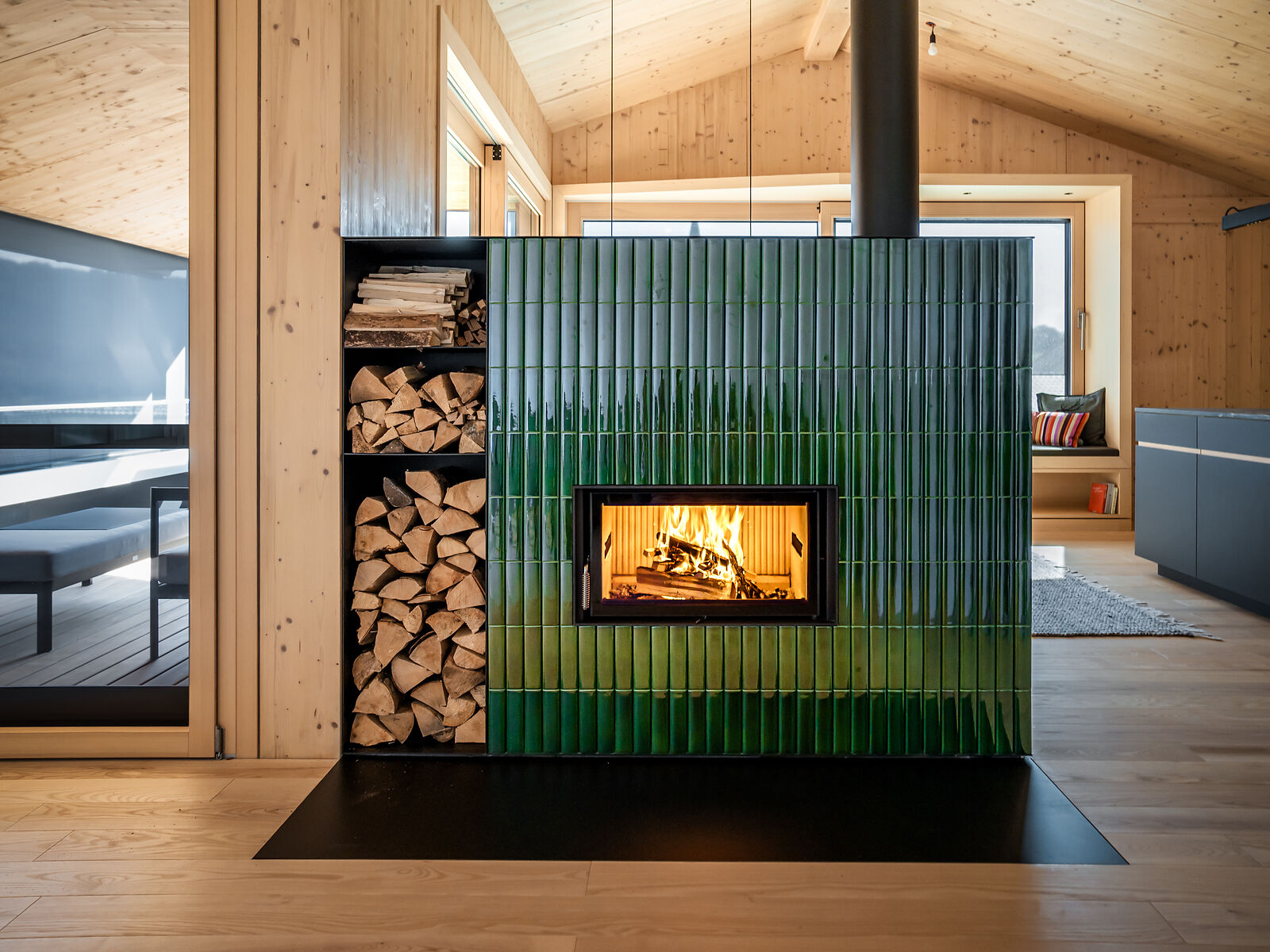
Just like in grandma’s day, a tiled stove is still often the heart of the home, a place where everyone likes to gather. Sitting on the warm bench or in a cozy nook, you can truly feel its gentle warmth.
A tiled stove is a wood-burning appliance that once served to heat entire houses or several rooms, while meals were cooked on the tiled range nearby.
Thanks to its large thermal mass, it absorbs the heat produced during combustion and releases it slowly over many hours. That’s why, unlike a fireplace, a tiled stove is also known as a storage heater. The oldest version of this type is the traditional masonry heater.
The Features
- 1. Radiant heat
- 2. Unique
Tiled stoves are individually designed by skilled craftsmen and become a central design feature that draws attention in any home.
- 3. Slow-response stove
When you light the fire, the tiled stove takes some time to heat up, depending on the amount of storage mass used. After the fire has burned down, the hot storage core continues to release heat into the room, providing lasting warmth and comfort. This way, the tiled stove retains its heat for a long time.
- 4. Solid cast-iron body
The solid cast iron makes the tiled stove extremely durable and is the most resilient material in heating technology. The bolted cast-iron construction of the firebox withstands thermal stress far better than conventional sheet steel. Cast iron is also resistant to scaling and surface corrosion.
- 5. The BRUNNER handle
Wherever possible, we have done away with visible handles. For those who appreciate pure design, this is our elegant solution.
- 6. Manual or automated operation
The combustion air can be easily adjusted by hand using a single control lever. For added convenience, helpful symbols are placed on the glass.
Alternatively, it can be automated. With the BRUNNER EAS and EOS controls, the combustion process is regulated precisely and comfortably. All you need to do is light the fire and add wood – the system takes care of the rest. Both versions feature a clear touch display, integrated Wi-Fi, and app connectivity for smartphones or tablets. Open interfaces also allow smart home integration, making it easy to monitor your fire remotely.
- 7. Viewing panels made of glass-ceramic
The viewing panels are far more than ordinary glass. The glass-ceramic is specially designed to withstand the high and fluctuating temperatures inside the combustion chamber as well as the mechanical stress of a tiled stove. Depending on your preferences, you can choose between clear glass-ceramic, heat-reflective coated panels, or double-glazed versions.
- 8. Door and frame variants
All BRUNNER tiled stoves come with a classic side-opening door. There are two frame options: the door frame, which sits visibly on the surface, or the more discreet mounting frame integrated into the stove cladding. The door frame is available in either steel or cast iron, with the steel version offered in stainless or black painted finish.
- 9. Front panels
If you want to modernize your tiled stove or prefer a more traditional heating insert, the wood-burning inserts of the WF/WFR series are the ideal choice. All models, whether with a large or small viewing window, come with a front panel that creates a seamless transition to the stove cladding, resulting in a perfectly balanced overall look.
The four
glass pane options

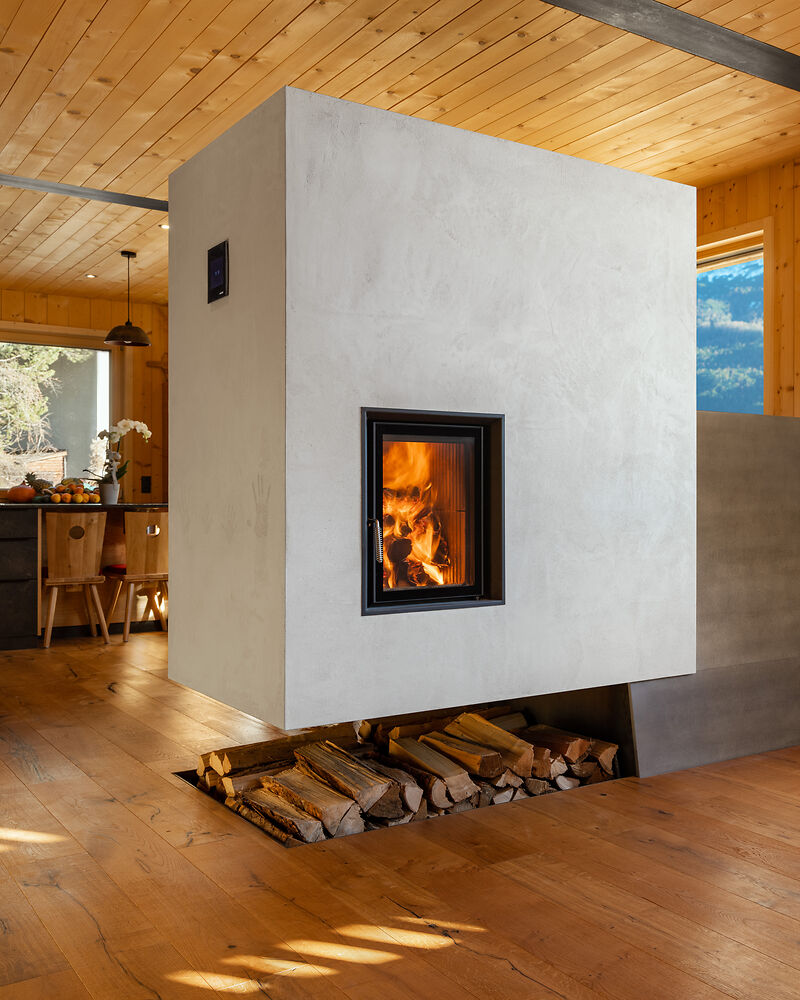
Corner tiled stove
The corner tiled stove is a great choice for those who want an extended view of the fire without giving up the benefits of heat storage. Its compact design makes it perfect for space-saving installation, and with glass panes on two sides, it’s ideal for visually dividing living areas.

Tunnel tiled stove
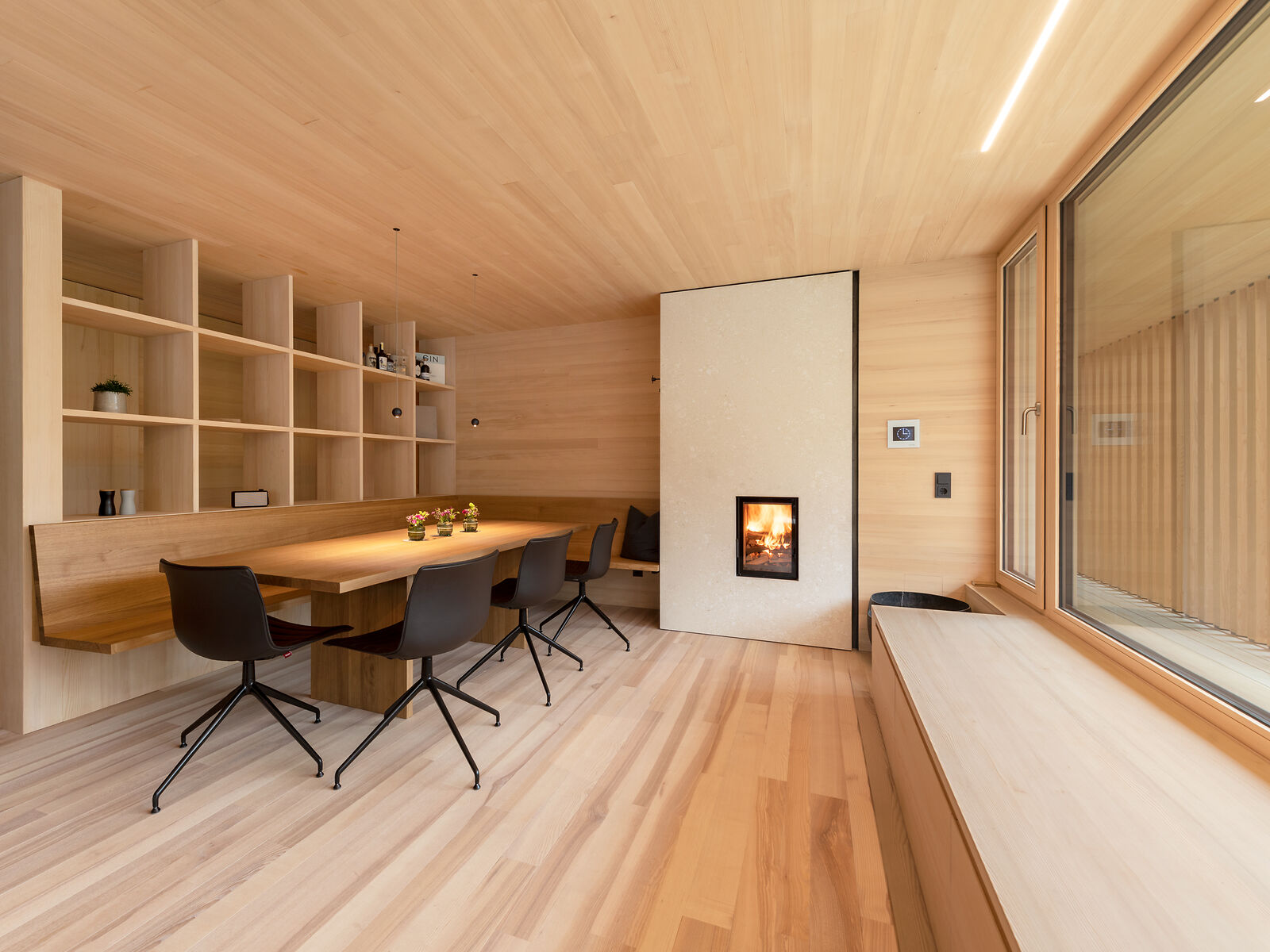
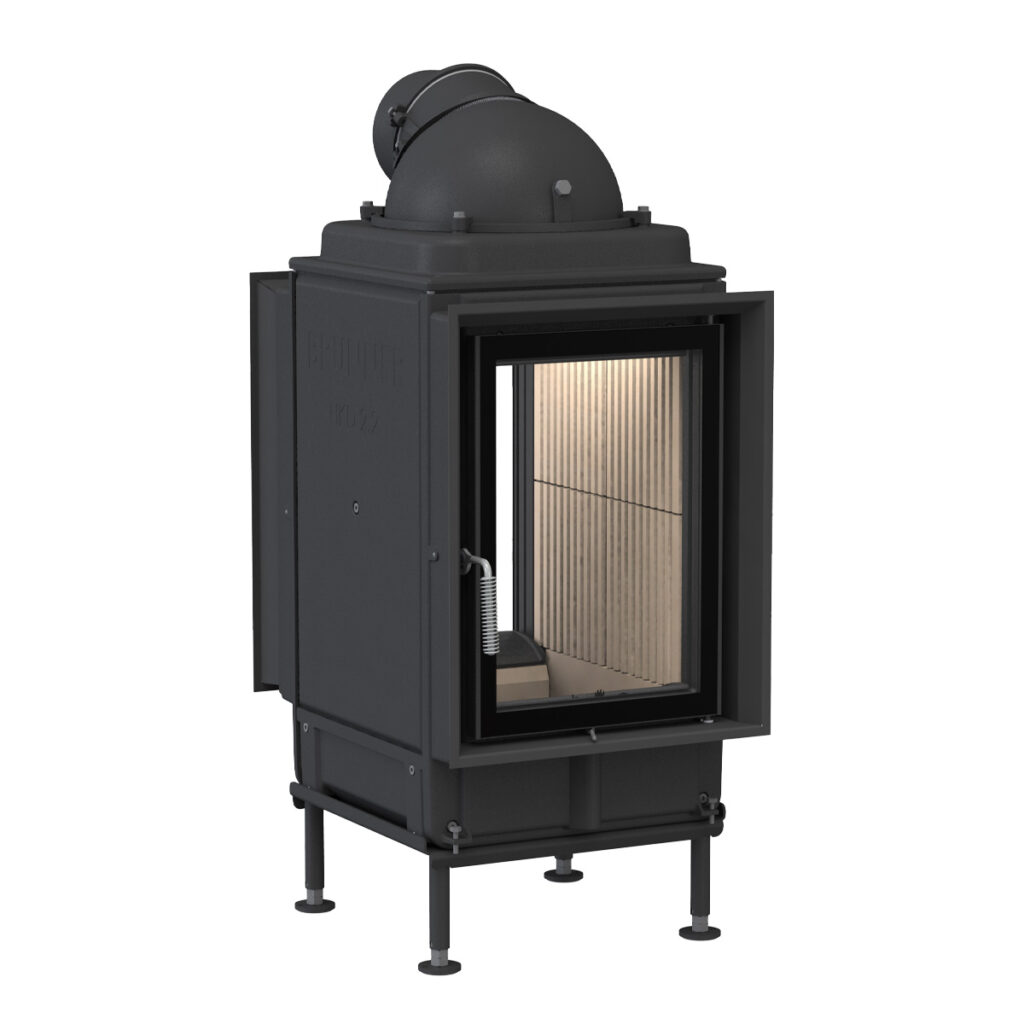
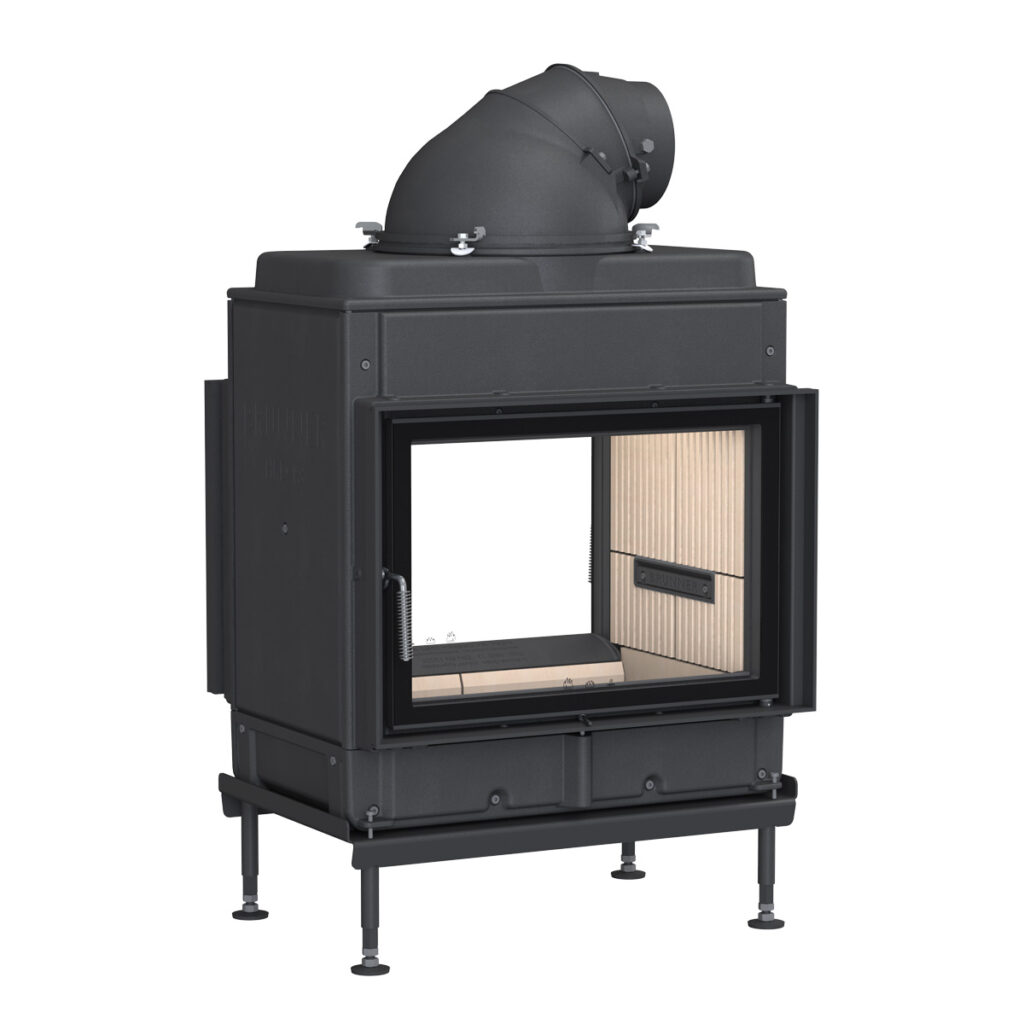
Tiled stove inserts with doors on both the front and back are referred to as see-through or tunnel models. A tunnel tiled stove is an excellent choice for use as a room divider. This version is especially popular in new builds, where it allows both sides of the room to enjoy the same cozy fire atmosphere.
Flat tiled stove
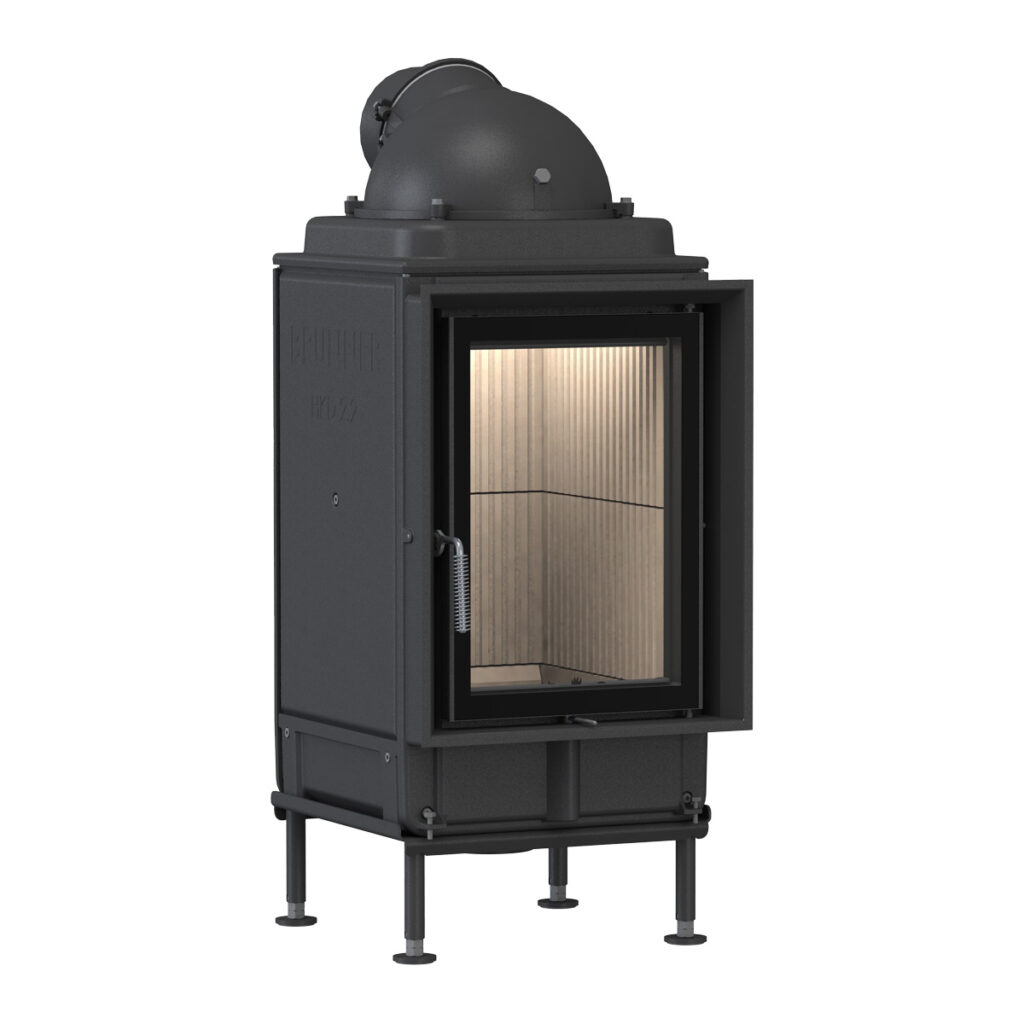
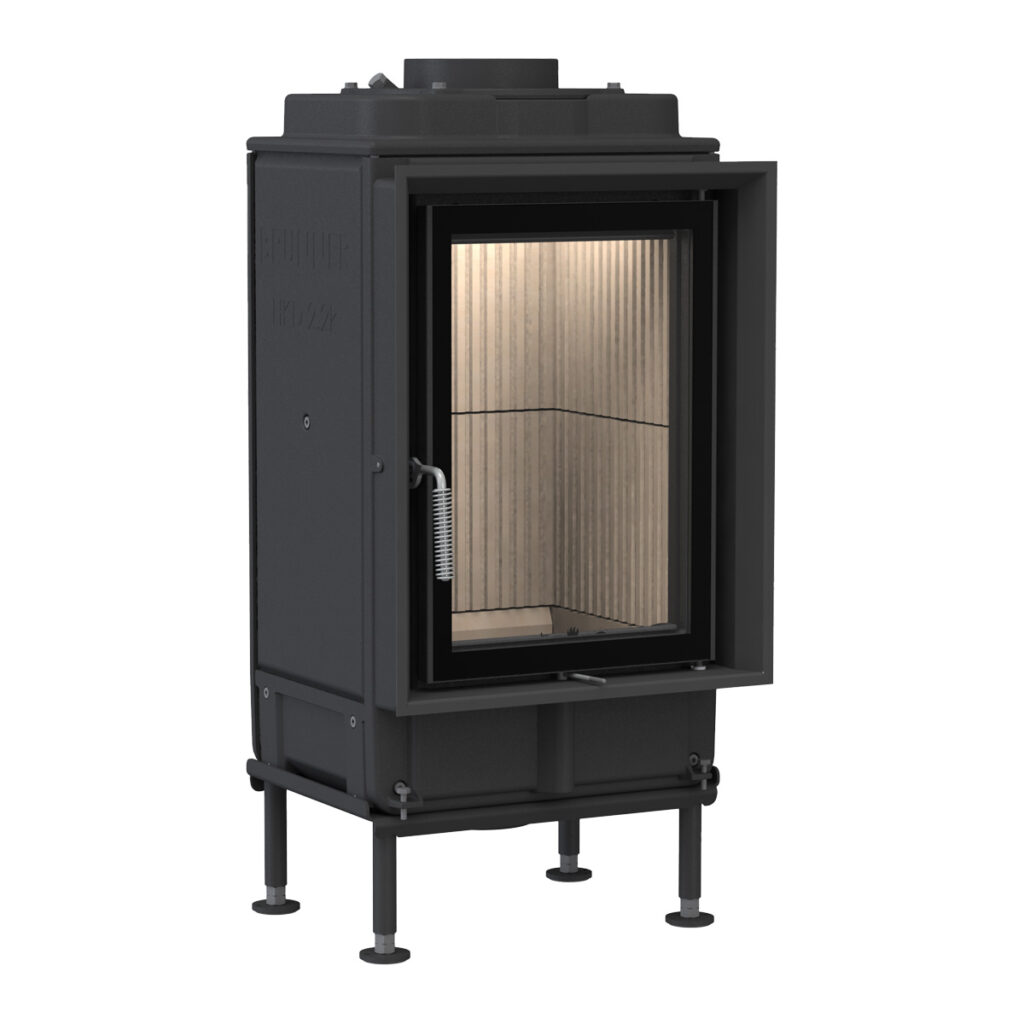
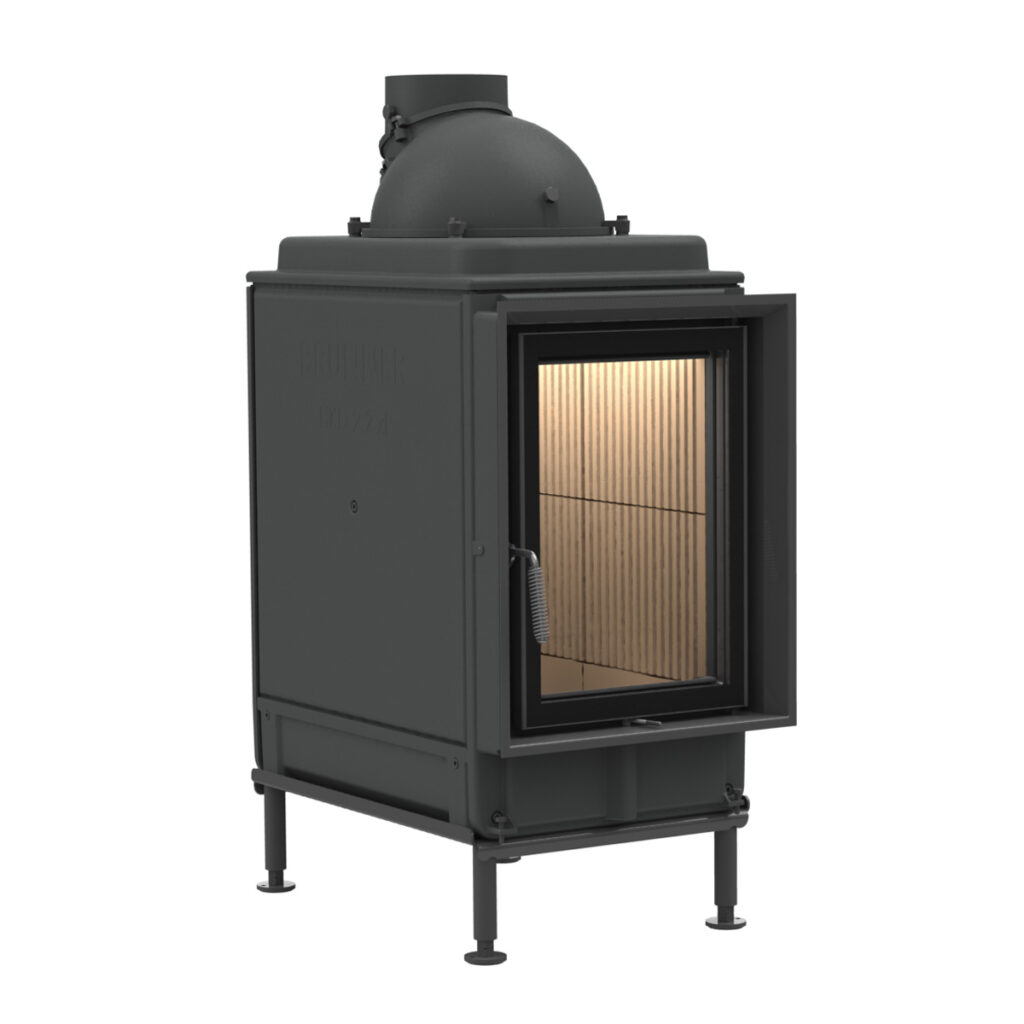
Die Variante, die bei Kachelöfen am öftesten zum Einsatz kommt, sind Kachelöfen mit flacher Scheibe. Warum? Ihre Geometrie kommt der Wärmespeicherung besonders entgegen, da durch das Standardformat nur wenig Wärme verloren geht. Davon abgesehen lässt sich mit flacher Scheibe eine Vielzahl an Umsetzungen realisieren. Ob kompakt, modern, traditionell oder mit reichlich Sitzgelegenheit.

Round tiled stove
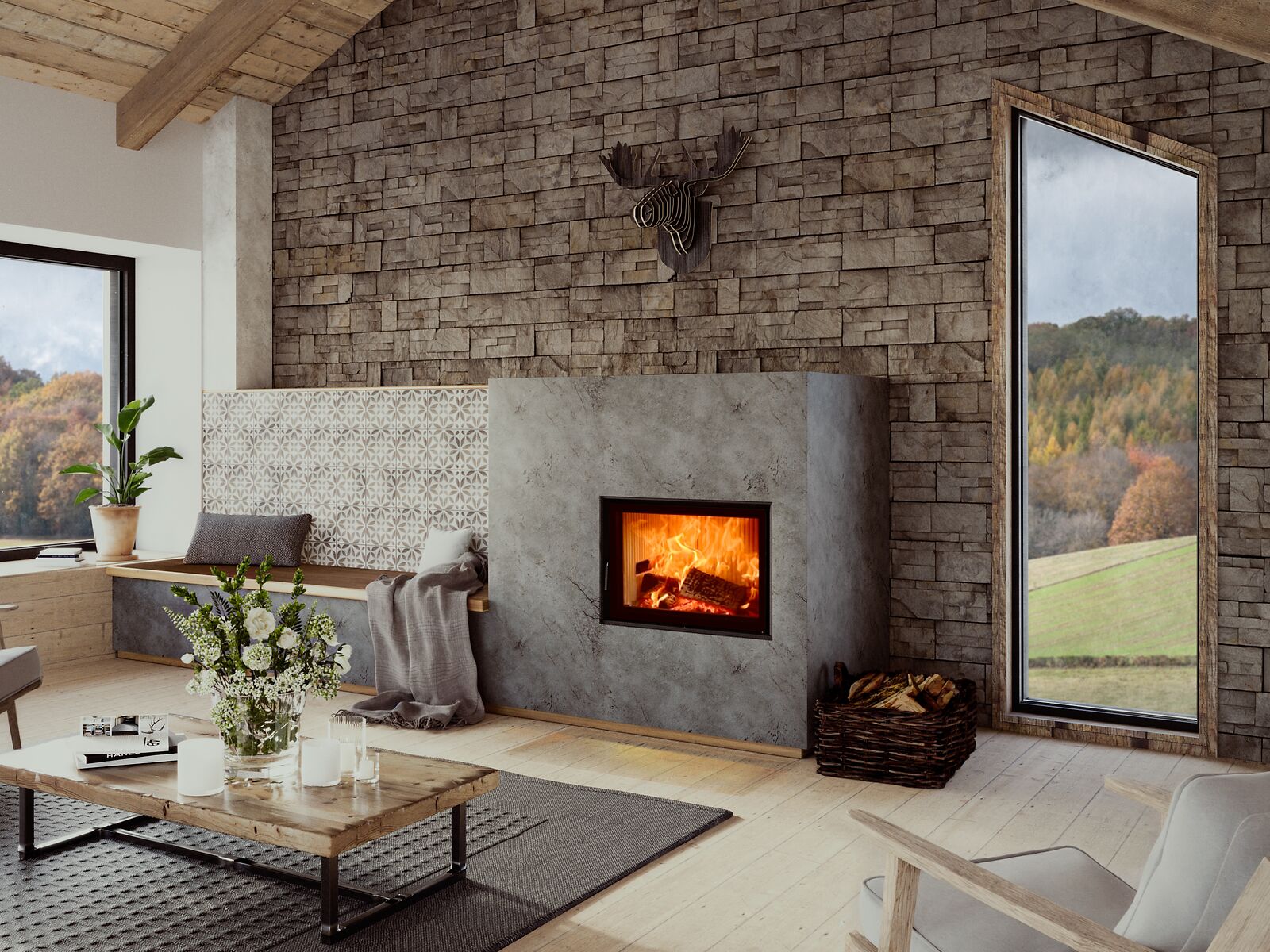
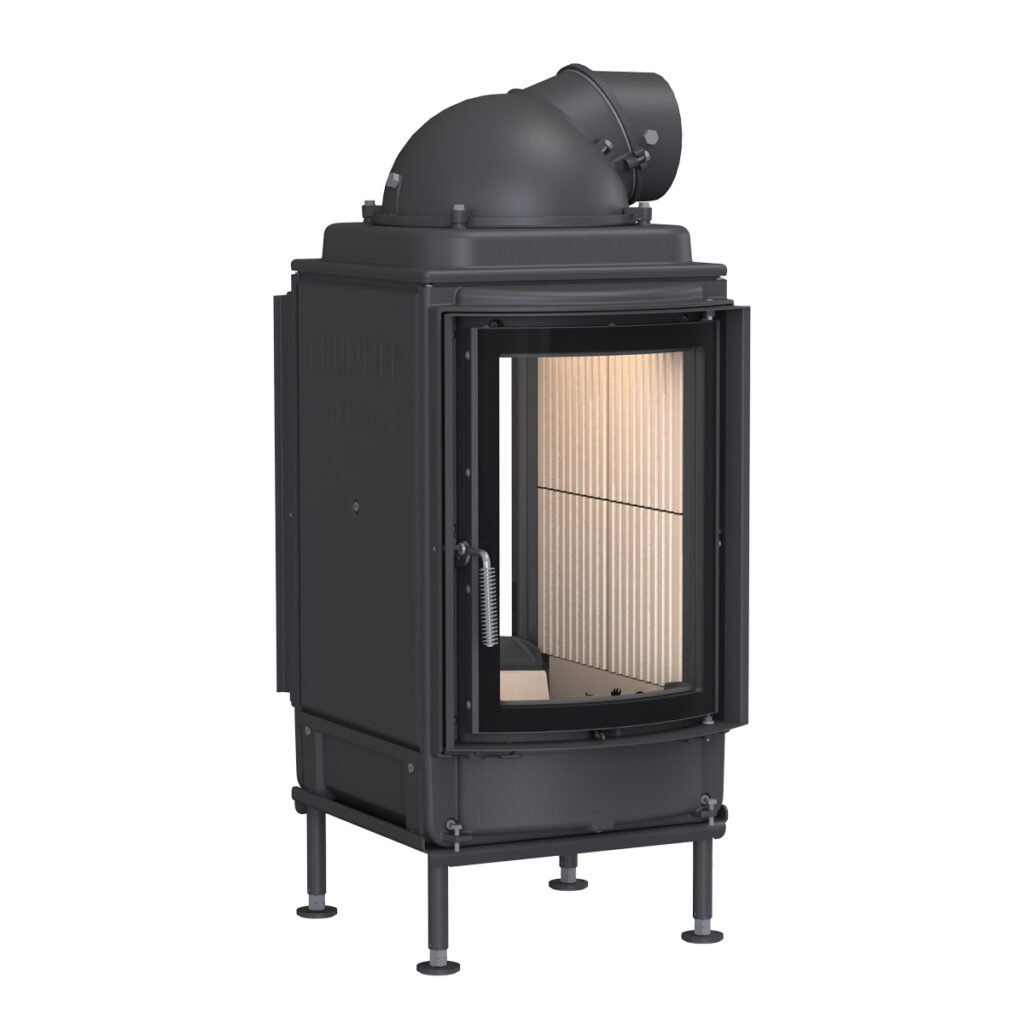
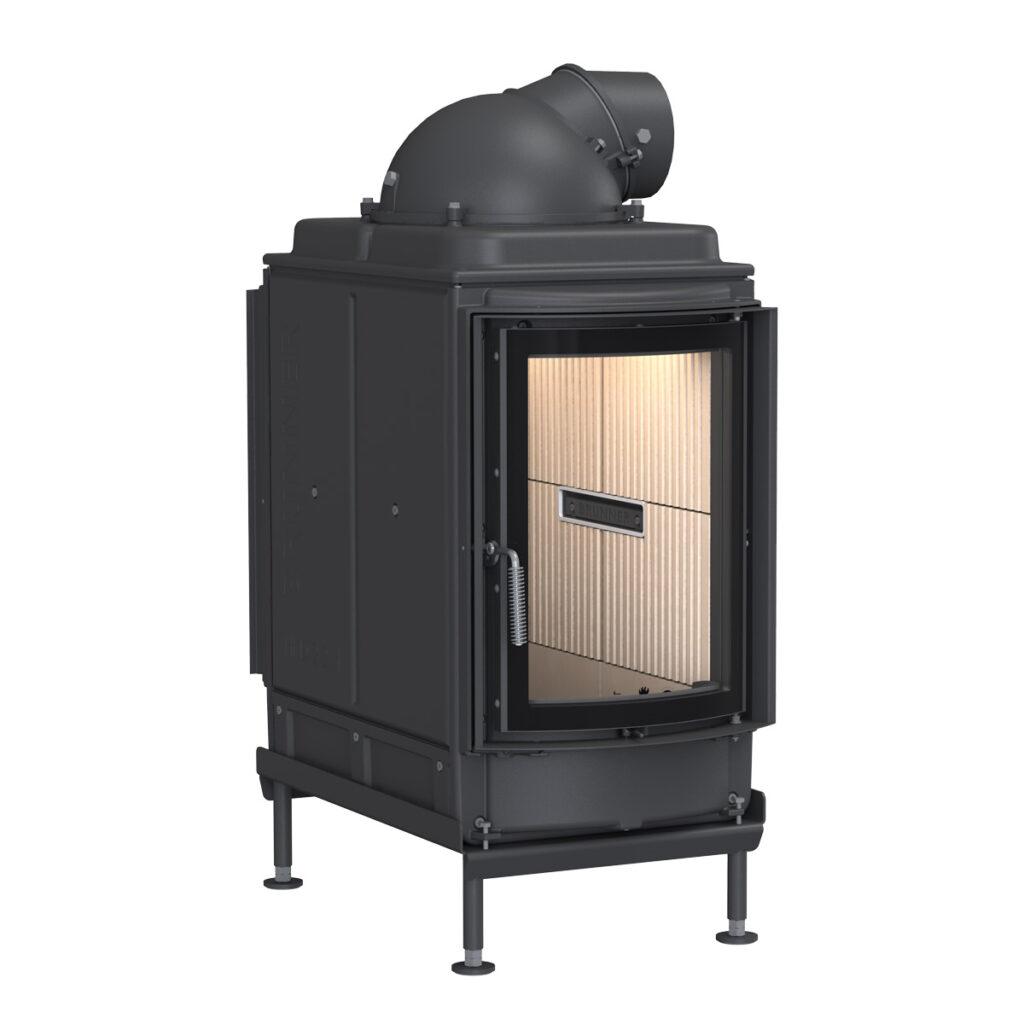
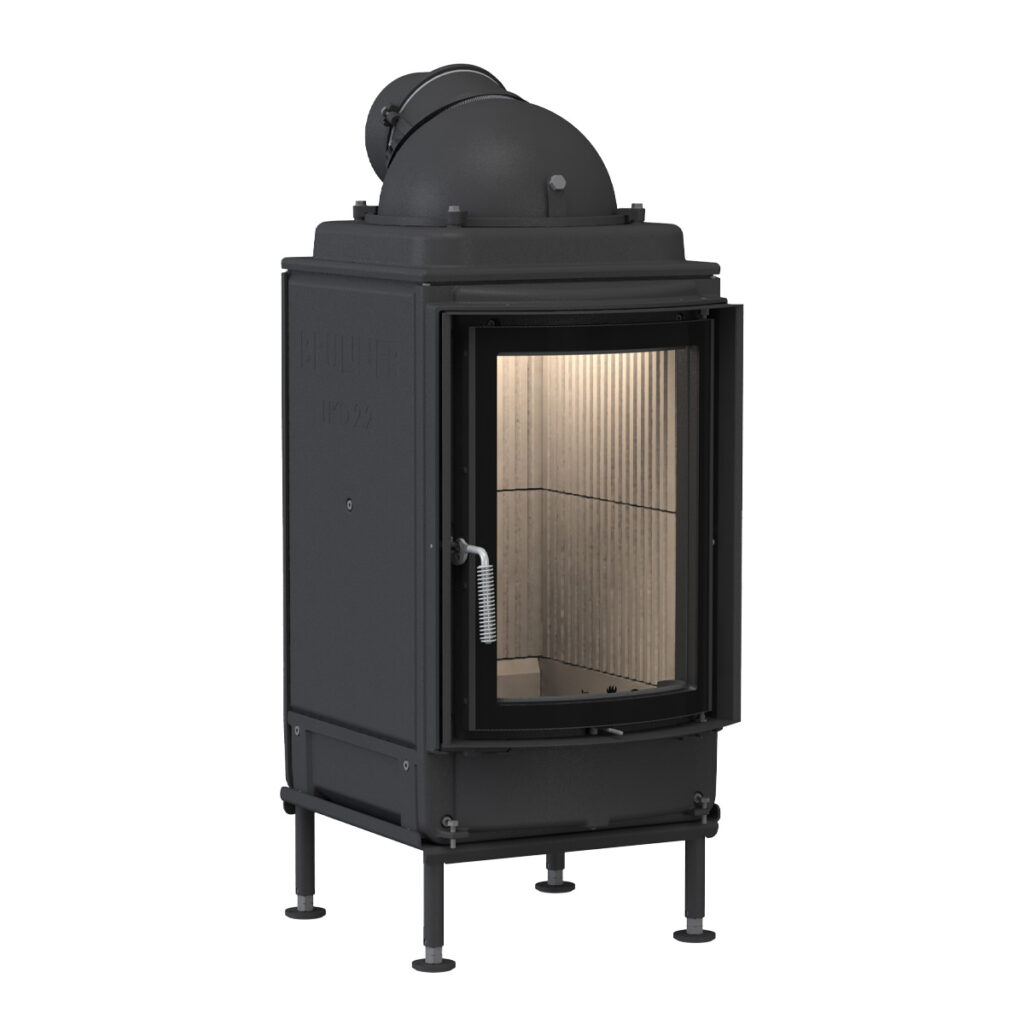
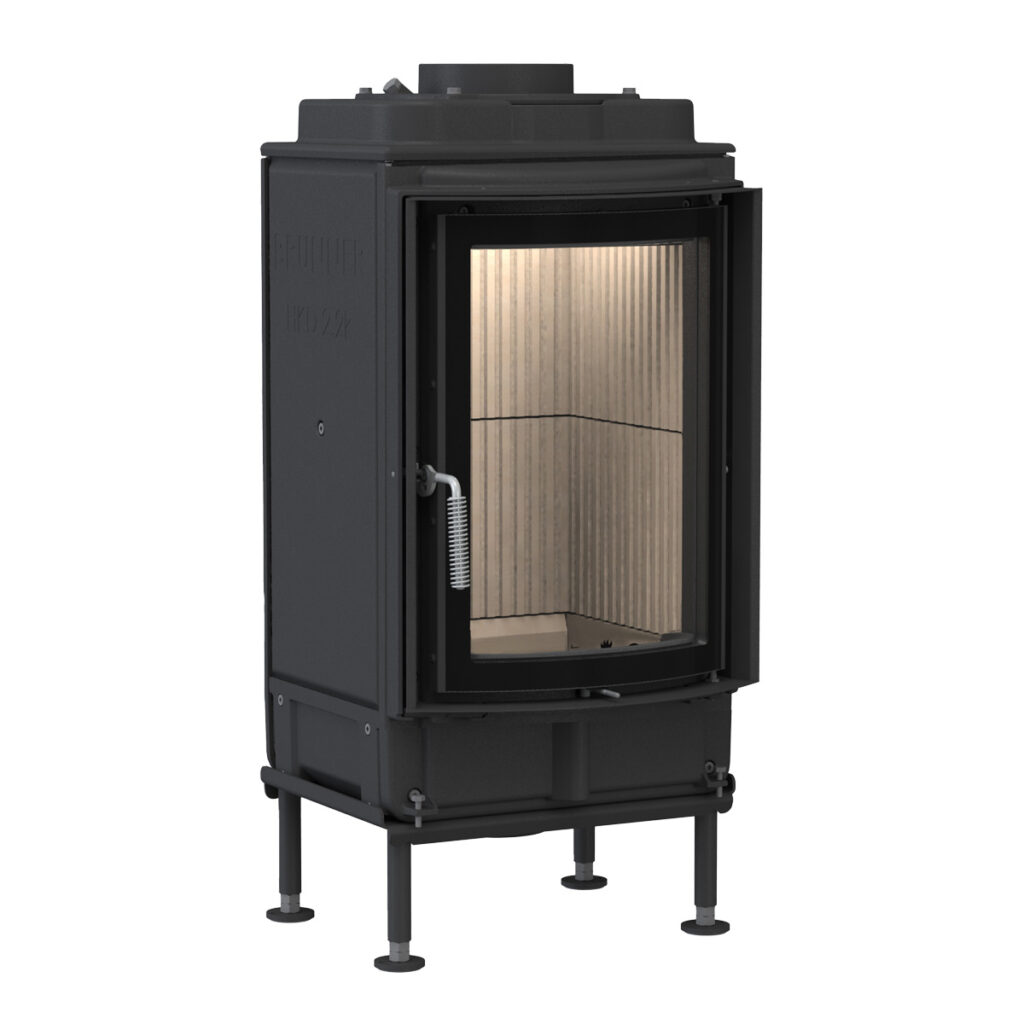
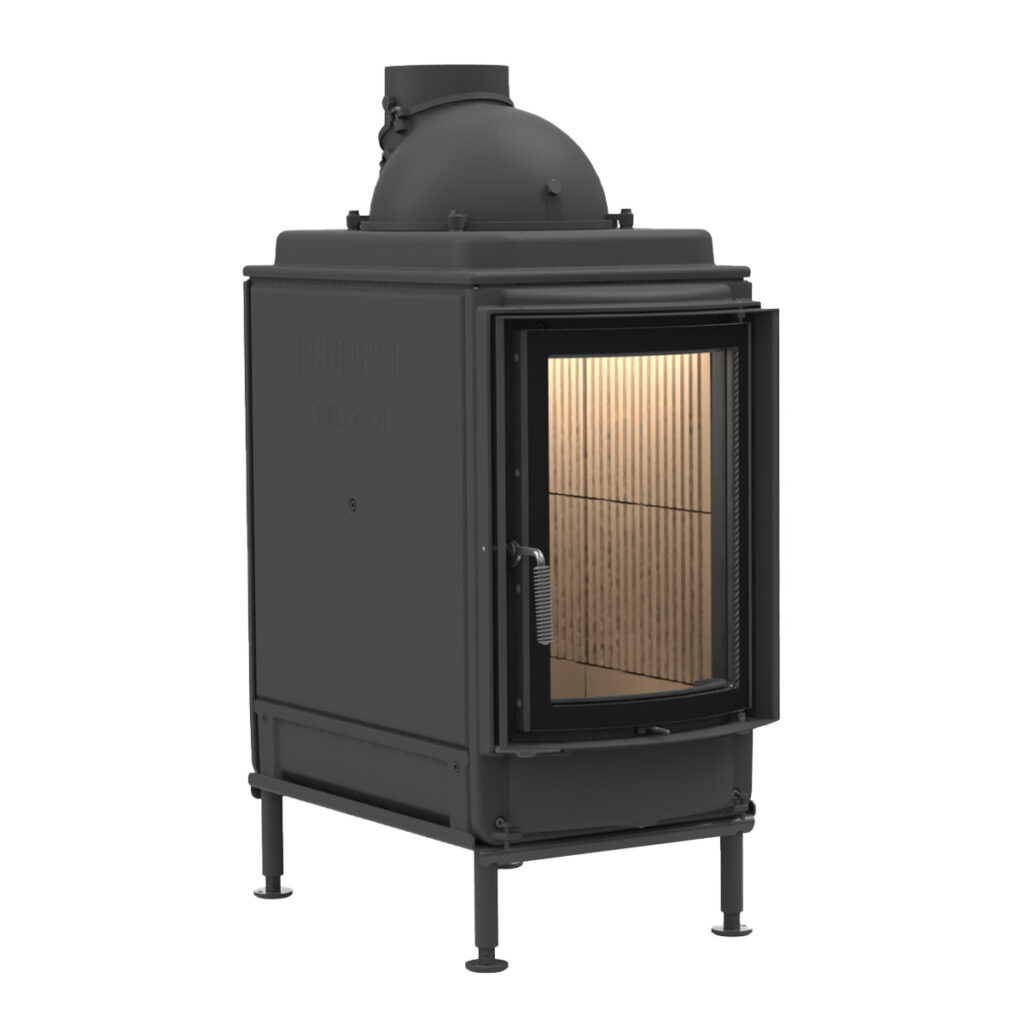
Tiled stoves with curved glass panes create a striking sense of depth in the play of flames. Whether the stove cladding is also designed with a rounded shape depends entirely on your own ideas. The design doesn’t necessarily have to follow the curve of the glass pane – there are virtually no limits to creativity and imagination here.
The tiled stove designed primarily for radiant heat
There are different types of heat produced by appliances such as stoves, fireplaces, and tiled stoves. In a storage stove, the heat generated is known as radiant heat. It is transferred through long-wave radiation to objects and surfaces in the room, which are then gently warmed. Radiant heat does not heat the air but solid materials instead. Its effect is similar to that of the sun, which is why people experience this kind of warmth as especially pleasant. It doesn’t affect the humidity in the room and doesn’t stir up dust, unlike convection heat.
With convection heat, warmth is distributed through the air. This happens quickly, which is an advantage over radiant heat, but it often creates an unpleasant feeling of draught. It also leads to uneven temperatures in the room – warm air rises to the ceiling while cooler air settles near the floor. And because of this air movement, dust circulates throughout the space, which can be especially uncomfortable for allergy sufferers.
How a tiled stove Works
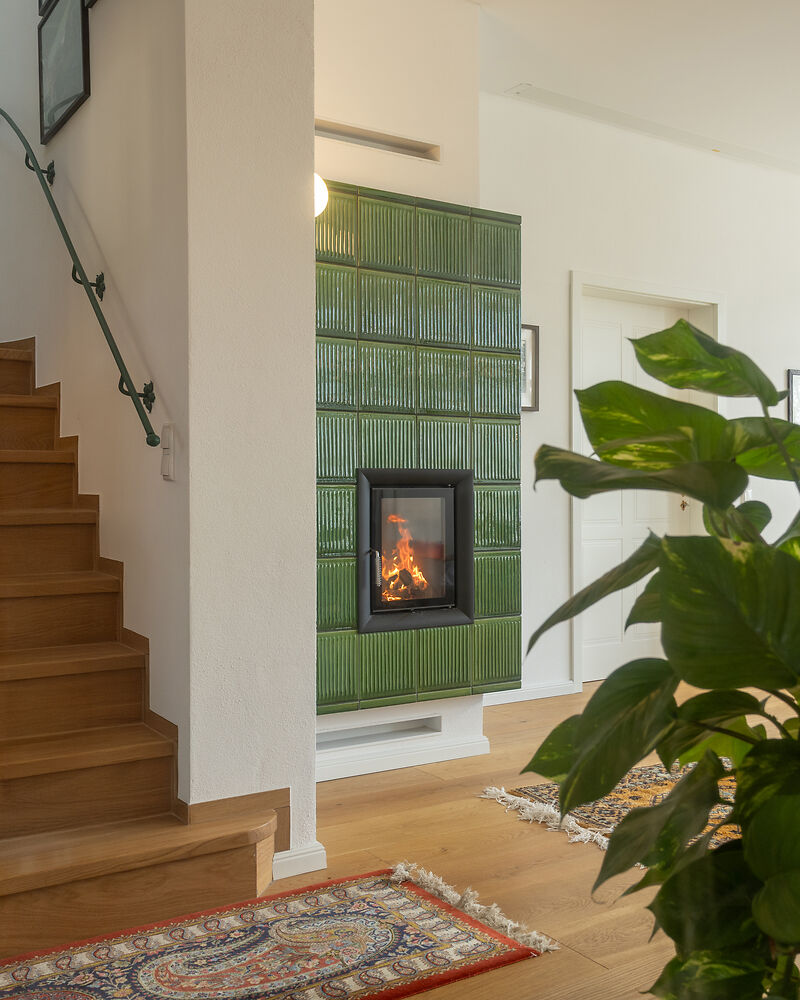
Tiled stove as a warm-air stove: the “fast-response stove”
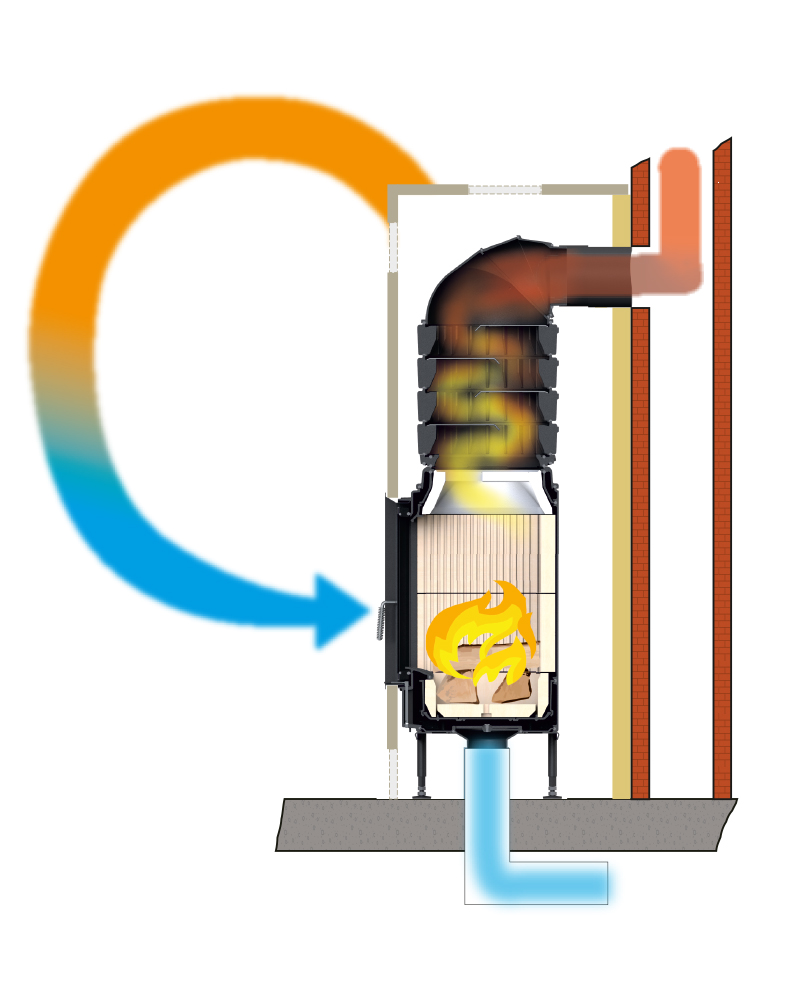
With warm air, a large amount of heat can be delivered to the room in a very short time. This concept is used when high heating output is required (over 4 kW), for example in older buildings or spacious rooms.
- Read more
In warm-air stoves, room air passes over the combustion insert and the metallic secondary heating unit, warming up rapidly before being distributed throughout the living space via warm-air grilles or ducts. This design delivers high peak outputs during combustion, as the stove’s storage mass is limited to its outer casing. Once the fire has burned down, heat output gradually decreases, and the stove cools. Warm-air stoves combine the combustion insert with an adjacent metallic secondary heating unit, or with cast iron rings mounted on top, ensuring efficient and immediate warmth for your home.
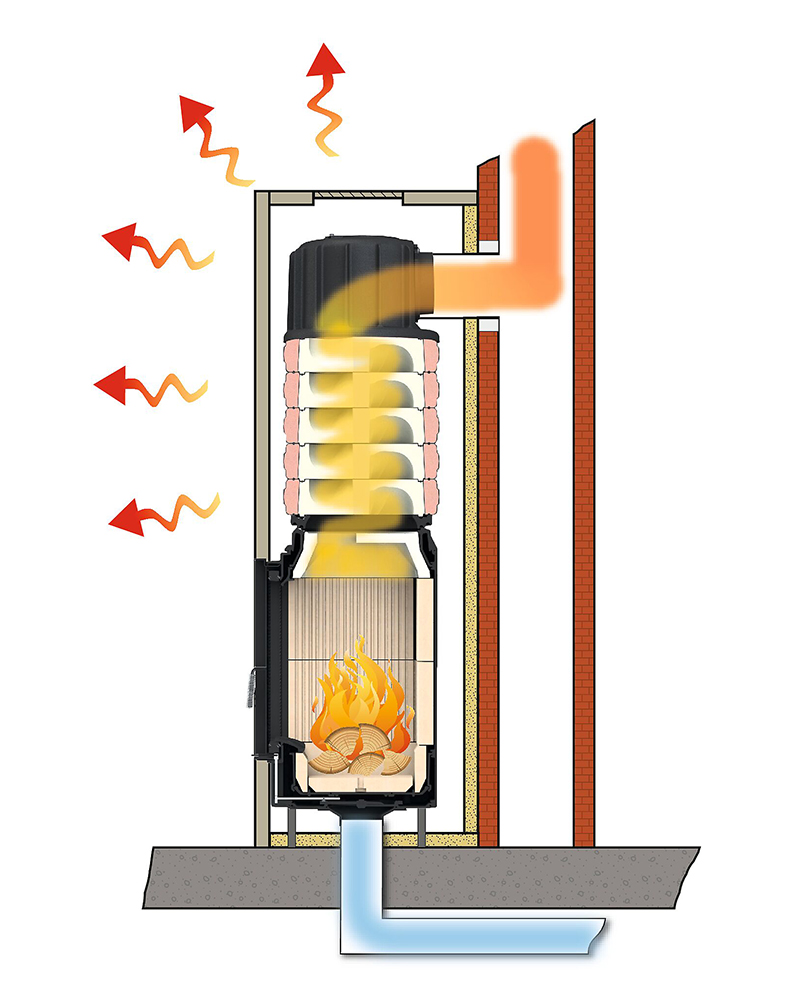

Tiled stove as a storage stove: the “slow-response stove”
The most comfortable form of heat distribution comes from the radiant warmth of a tiled stove. This concept of radiant heat is mainly used when low, consistent, and long-lasting heating output is desired.
- Read more
In a storage stove, the heat is stored in a 300–600 kg ceramic heat storage mass and released slowly through the stove’s surface.
This prevents performance peaks and large temperature fluctuations in the room. Depending on the amount of storage material used, the tiled stove takes longer to heat up. Once the fire has burned down, the hot storage mass continues to supply the room with warmth.
This design provides pleasant radiant heat and impresses with long heat retention times for lasting comfort.

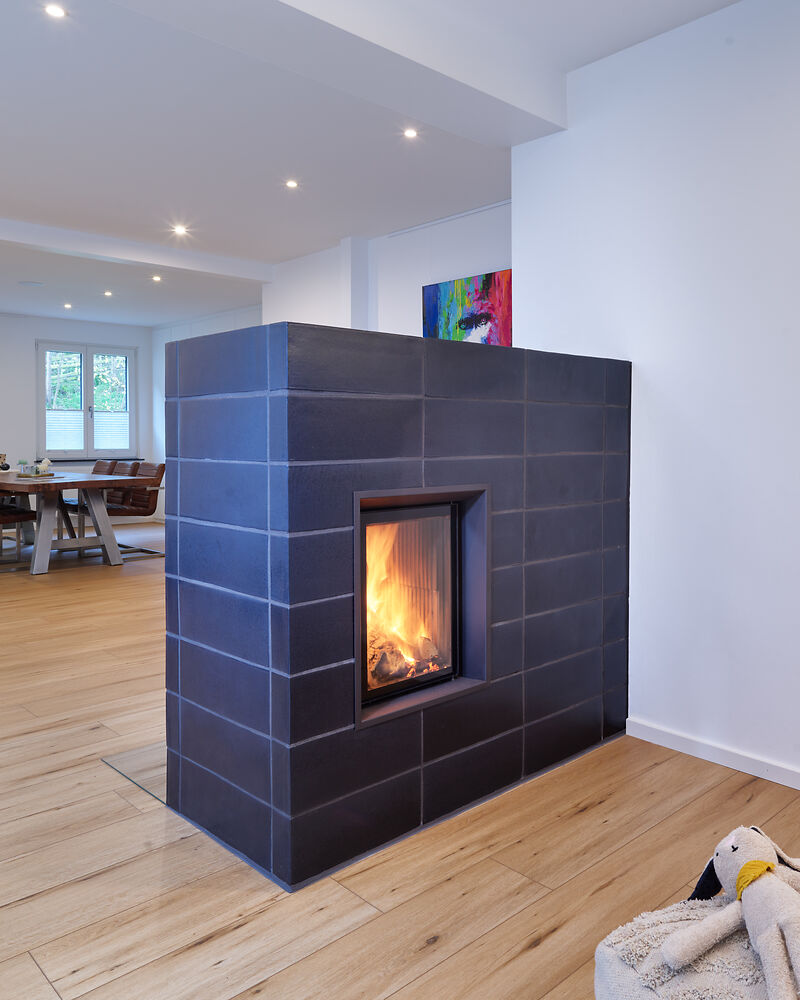
Handcrafted heat storage mass
The handcrafted storage mass represents the most traditional form of construction. Fireclay panels are cut and assembled into rectangular heating gas channels that form the ceramic flue system. As the hot flue gases pass through, their heat is absorbed, stored, and then slowly released through the surface of the tiled stove.
- Read more
This design provides pleasant radiant heat and stands out with long heat retention times for lasting comfort. BRUNNER also offers a solution with modular storage systems.
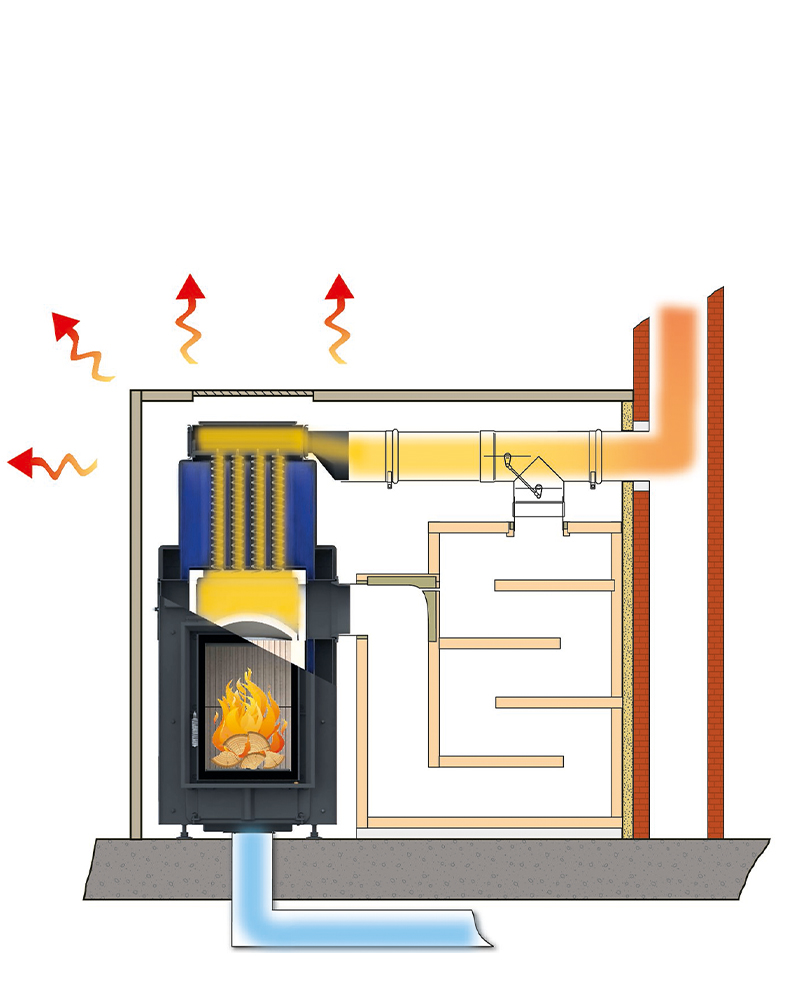
Tiled stove as a water-bearing stove
A completely different form of heat storage is achieved when the heating insert is combined with a boiler. This can be done with a mounted water heat exchanger, a boiler jacket, or both integrated into a single boiler body. In all water-bearing stoves, the primary heating effect is still directed into the room where the stove is installed through direct radiant heat.
- Read more
The excess heat generated during combustion is used to heat water, which is fed into a buffer tank and distributed as needed through the central heating system.
This solution produces heating water, supports the central heating, and provides long-lasting warmth throughout the entire home.
Glass pane format
Glass pane format
More filters
Fuel type
Log length
Replacement
Fuel type
Log length
Replacement
Selected filters:
Load more Products






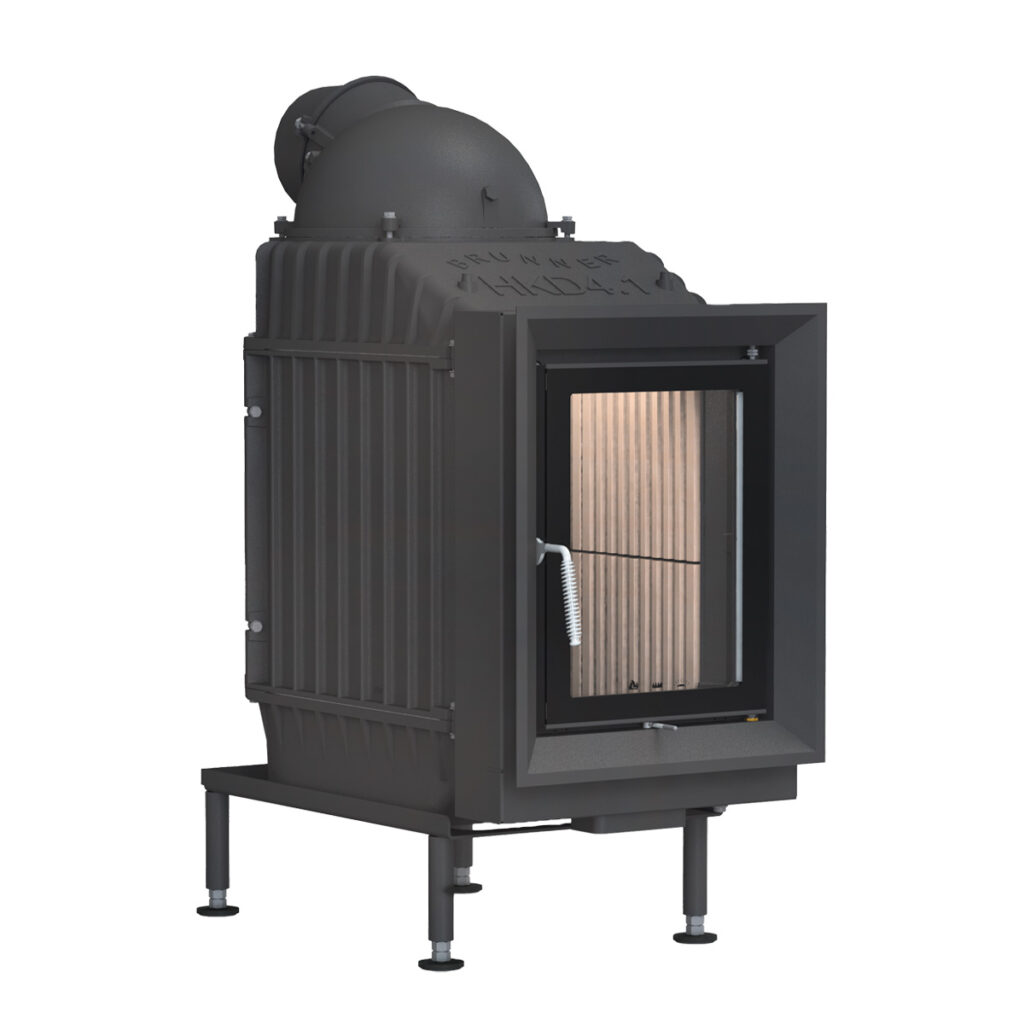
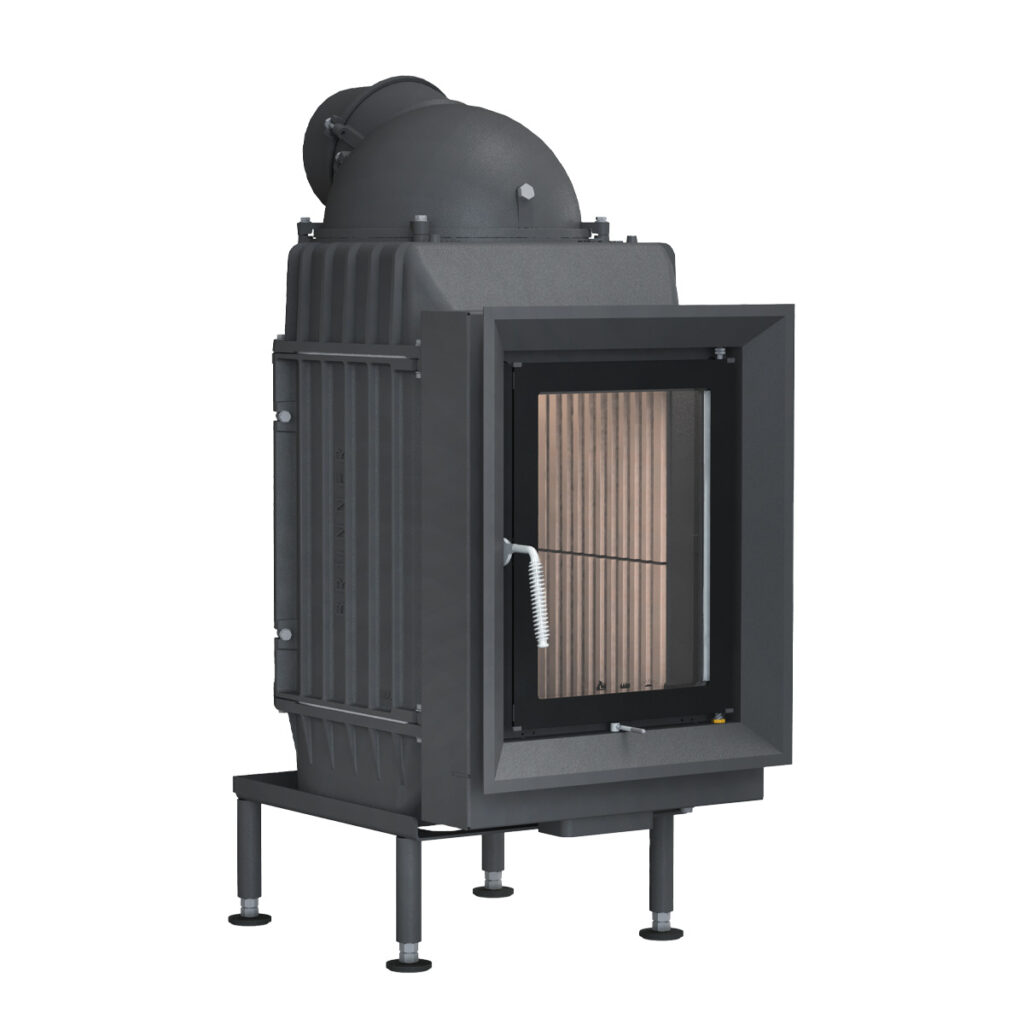
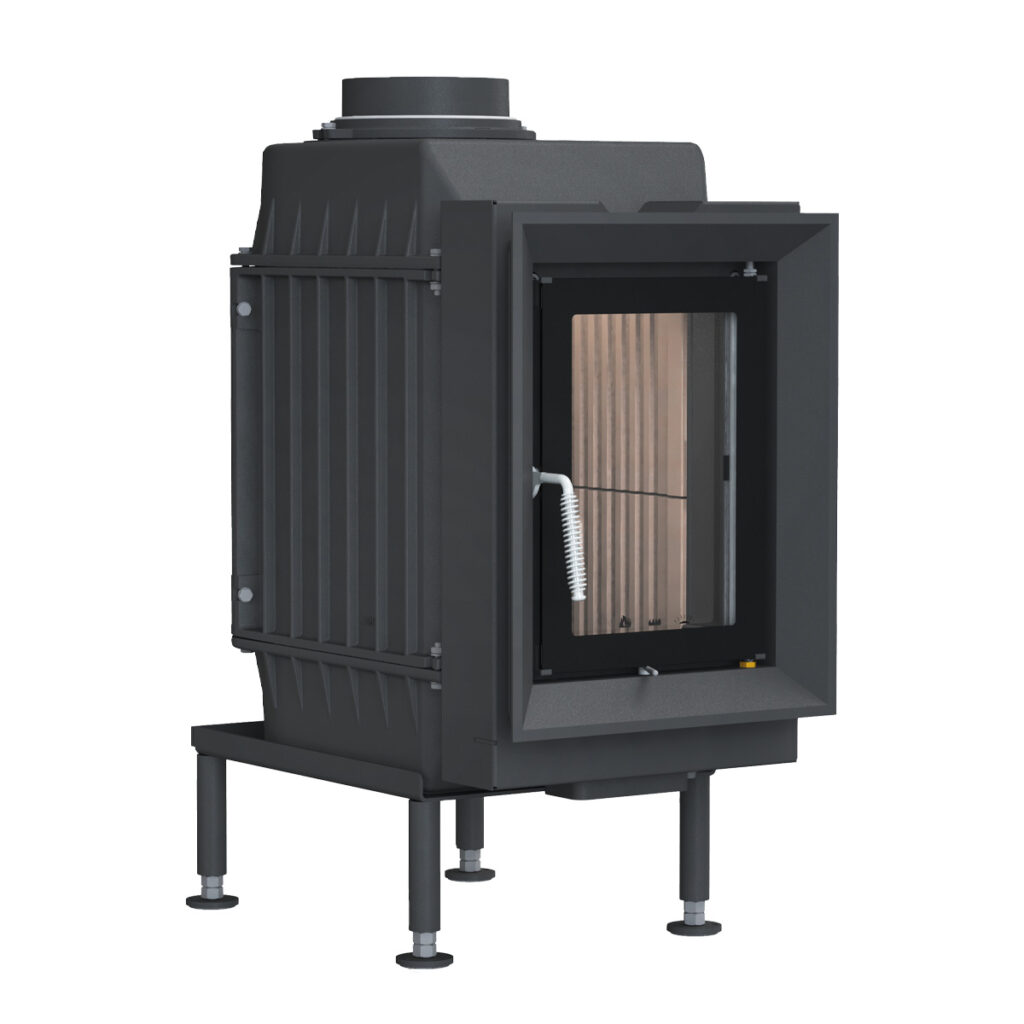


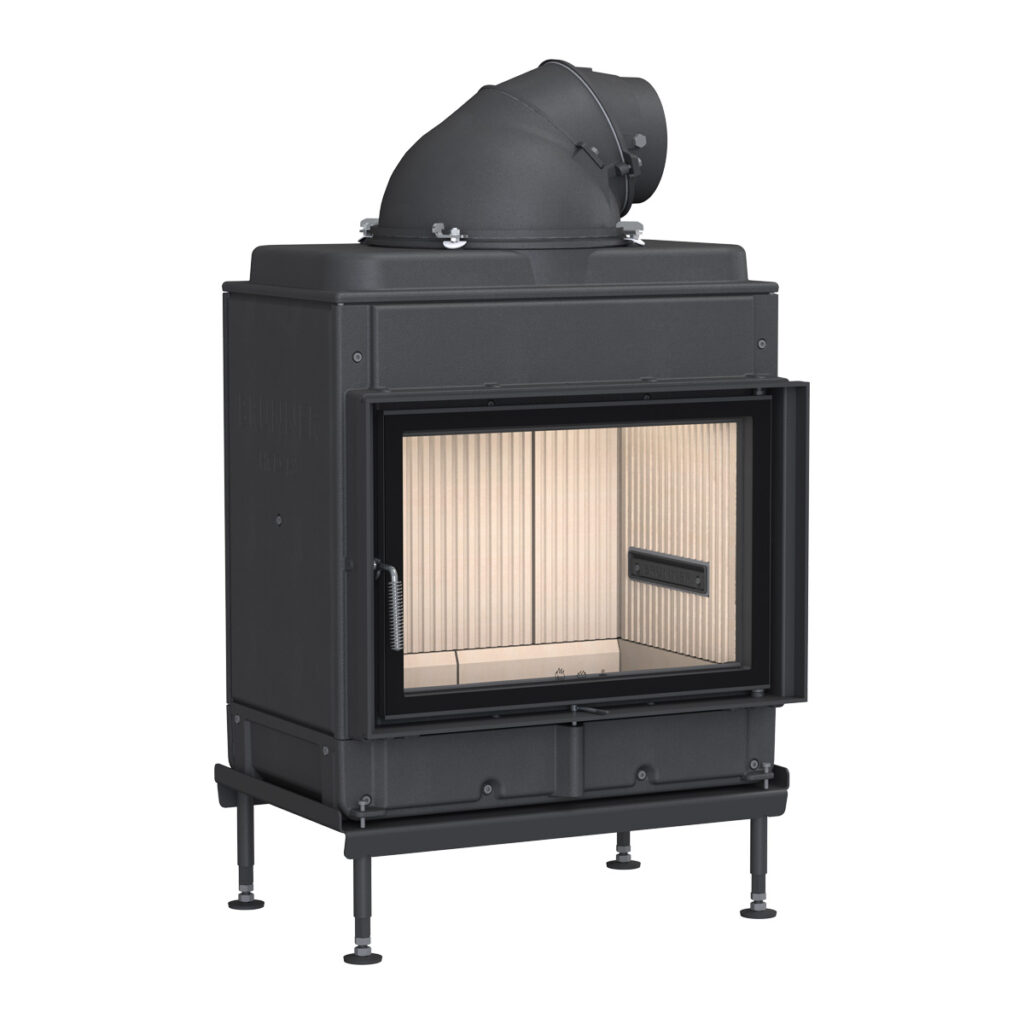

FAQ Tiled Stoves
- Tiled stove – when does it need to be replaced?
To prevent further increases in particulate matter and carbon monoxide, the German Federal Immission Control Ordinance (BImSchV) has set new limits. Fireplaces, heating fireplaces and tiled stoves must not exceed these values. Older appliances installed before 1985 had to be decommissioned already. Newer appliances installed between 1985 and 2010 must be retrofitted if they cannot meet the limits. Detailed information can be found in our magazine.
- How much does it cost to have a tiled stove cleaned?
By law, fireplaces must be regularly inspected, cleaned and serviced by the district chimney sweep. This usually takes place two to three times a year. During these visits, other components of the tiled stove can also be checked and, if necessary or requested, cleaned. A tiled stove cleaning takes about one hour, with average costs of around 100 euros.
- Who cleans the tiled stove?
Anyone who wants to enjoy their tiled stove for many years should have it professionally cleaned and serviced on a regular basis, ideally before the start of each heating season. Deposits form inside the stove as well as in the pipes and flue channels, and these must be removed. Soot deposits, for example, have an insulating effect that reduces heat output. They can also obstruct the flue gas path, which poses a safety risk.
Maintenance of a tiled stove also includes replacing wear parts such as seals. Cleaning and maintenance of tiled stoves are carried out by specialized stove builders. Cleaning and maintenance of the chimney itself is the responsibility of the chimney sweep.
- What must be considered when installing?
Before deciding to install a tiled stove, it is important to consider whether it fits your lifestyle. For people who are often away from home, a fireplace may be the better choice, as it produces heat quickly and releases it directly into the room. Anyone without sufficient space to store firewood should consider a gas fireplace instead. All these factors play a key role in satisfaction after purchasing a wood-burning insert. But no worries: our skilled trade partners across Germany and Europe provide comprehensive advice to help you find the right solution for your situation.
- What is the difference between a tiled stove and a fireplace?
While a fireplace is mainly about atmosphere and a great visual fire experience, a tiled stove is a true heating appliance. Its massive heat storage surfaces absorb warmth for hours and then release it slowly and comfortably over the same period. Of course, tiled stoves today also come with large glass fronts, both flat and corner formats. This makes them the perfect solution combining both worlds: atmosphere and long-lasting, healthy warmth.
- Painting a tiled stove – is that possible?
However, modern tiled stoves are now also built using other materials such as stone, plain plaster, metal or stainless steel. The important thing is that the materials meet the physical requirements of heat transfer. If you want to give your fireplace a new look, you can paint the tiled stove—but only with heat-resistant paint. Suitable options include radiator paints and any coatings that can withstand at least 120 degrees Celsius.
- Are there tiled stoves without tiles?
In the past, wood-burning stoves were almost always built with an outer shell made of tiles — which is why the name “tiled stove” is still used today. However, that’s no longer the rule.
Today, many different materials can be used to build a tiled stove, ranging from stainless steel to simple plaster. What matters most is that the materials meet the physical requirements for proper heat transfer.
Of course, a tiled stove can still be built with ceramic tiles, and there’s a wide variety to choose from — from traditional to modern, small to large, simple to elaborate.
- Tiled stove tiles – what are they made of?
Stove tiles are ceramic tiles made from fired clay, kaolin, fireclay, and water. They are heavy and have a high heat capacity, meaning they store heat energy long after the fire has gone out. The gentle, even radiant warmth they release allows you to keep the room temperature lower while still feeling comfortably warm — unlike warm-air stoves, which heat primarily through convection.
There are two types of stove tiles: simple tiles, also called vessel tiles, and composite tiles. Handcrafted ceramics are produced in several detailed steps, allowing for endless creative possibilities. A wide range of sizes, colors, designs, and surface textures can be tailored to suit any individual living style.
Ceramic surfaces are not only excellent heat retainers and visually appealing — they’re also especially easy to clean.
- What is the difference between radiant heat and convection heat?
Even though it may not seem like it, different wood-burning stoves produce different types of heat.
A storage stove generates radiant heat, which is transferred to the objects in the room through long-wave radiation. The surrounding air is not directly heated, so there is no air circulation — something generally considered healthier, especially for allergy sufferers.
Convection heat, on the other hand, relies on warming the air itself. Its advantage is that heat is released more quickly. In fireplaces or stoves with large glass fronts, for example, pleasant warmth is radiated directly into the living space even while the fire is burning.
- What is a tiled stove?
A tiled stove is a wood-burning unit that was originally designed to heat an entire house. Unlike a fireplace, a tiled stove is a storage stove. It stores the heat generated during wood combustion in its large, heavy structure and slowly releases it into the living space.
This happens through radiant heat, which warms physical objects — such as people — rather than the surrounding air. Although the name suggests that a tiled stove is covered with ceramic tiles, many modern tiled stoves are built using other materials such as plaster, stone, or metal.
BRUNNER craftsmen search
If you are interested in a BRUNNER stove or heating system, please contact one of our craftsmen.