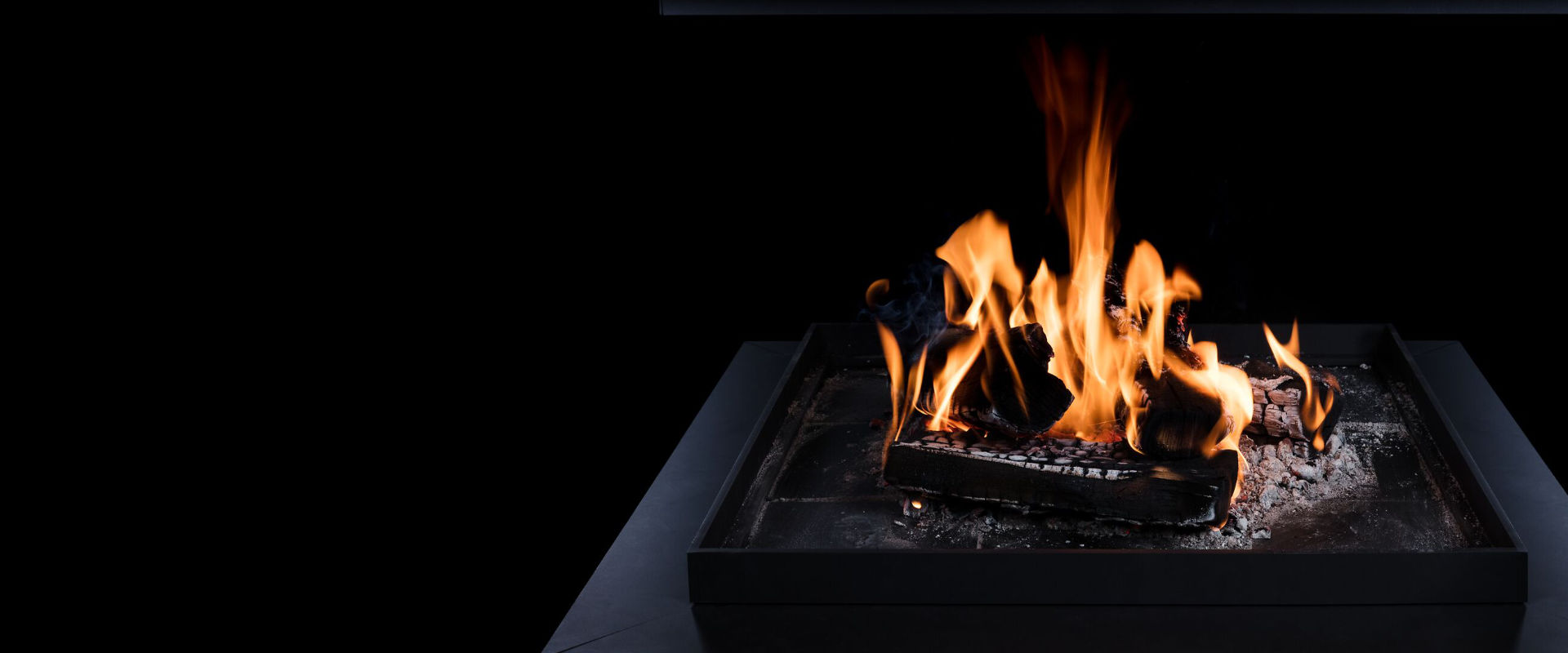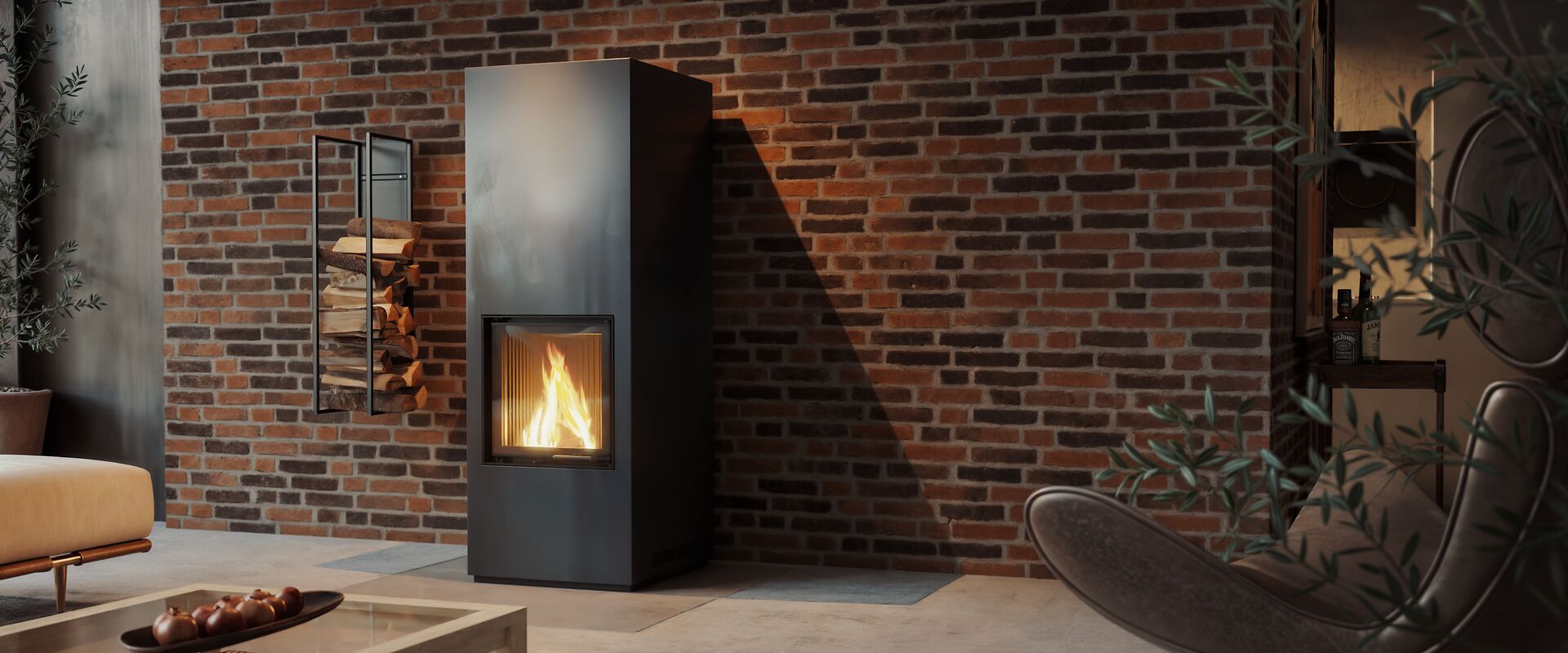
No matter how big your own four walls are, no one has to miss out on this experience. There is a suitable, space-saving fireplace or stove for every room, still elegant and refined in design. A small fireplace, by the way, is one that measures around 90 centimeters in height and about 40 centimeters in width and depth.
Such a stove requires very little floor space, which makes it ideal for smaller rooms. To avoid installation issues, it’s important to consider the required distance from the wall as well as the diameter and position of the flue connection. The internal dimensions also matter, since a small stove can only be used with short firewood.
Solutions for small spaces
There are many different versions of space-saving stoves that require little room for installation or integration. Corner fireplaces, for example, make good use of otherwise unused corners. A flat stove still offers the familiar view of the fire.
Wall-mounted fireplaces don’t take up any floor space. Tall, narrow models are also a good alternative. Tunnel fireplaces are practical because they can serve as a dividing wall and offer a view of the fire from both sides. Which model you choose depends on personal taste, but above all on the layout and structure of the room.

Smaller wood-burning stoves are in no way inferior to larger ones. The wood crackles pleasantly and creates a cozy warmth. One key factor to consider when purchasing a stove or fireplace is the nominal heat output. This value indicates the heating capacity that the stove or fireplace delivers continuously over a certain period of time, using a specific amount of firewood.

Small fireplaces also have a lower output – after all, they are designed for smaller rooms. Typically, a space-saving stove provides between four and five kilowatts of power. While it’s important to ensure high heating performance for large spaces, the nominal heat output should be lower in smaller rooms to prevent overheating.
How much space is needed for a stove?
Before purchasing a stove, there are three key questions to consider:
- How often will it be used?
- How well is the house insulated?
- How many square meters need to be heated?
As for the minimum size of the installation room, there are legal requirements to ensure safety.
A wood-burning stove draws air from the room during combustion, so it must be ensured that the room is large enough to provide sufficient oxygen and allow for proper air exchange. Otherwise, a lack of oxygen can cause headaches, nausea, and dizziness in people and animals.
A general rule of thumb is 0.1 kilowatts per square meter with a ceiling height of 2.5 meters. If the planned installation room is smaller, it is strongly recommended to consult a chimney sweep. An alternative would be a small stove that operates independently of room air and uses an external air supply for combustion.
In this case, the air is supplied to the appliance through an external air connection. A room-air-independent stove is usually installed in modern passive or low-energy houses, where the high level of insulation allows very little fresh air to flow into the interior.
There are also stove solutions with an external air supply through the chimney. In this setup, a so-called air-flue chimney carries away the warm exhaust gases while simultaneously supplying fresh combustion air.
BRUNNER compact storage stove
Maximum heat storage in a small space
The compact storage stove KSO is a solid-fuel stove designed for small spaces, offering the full enjoyment of a real fire on a minimal footprint. Precisely shaped components allow for quick and cost-effective assembly of the compact storage stove.
It releases pleasant radiant heat for hours. The slim, column-like design is available with either a round or square base, in a ceramic or concrete-look finish. It can also be built with a handcrafted outer shell featuring a plastered surface.

Conclusion
Tastes differ – and that also applies to the look of a fireplace. When it comes to the fireplace cladding, there is plenty of room for creativity, with a wide range of materials and design options to choose from. Those with the right skills can even take on some of the work themselves.