
Is there really one single “most modern” heating system?
The older a heating system gets, the more likely it is to waste energy. If your system is more than 20 years old, it’s time to start thinking about a new, modern heating solution. But that’s a big investment that needs careful consideration. So, what is the most modern heating system?
Our answer:
There isn’t just one. Every heating system has its pros and cons. You need to consider factors like purchase cost, operating cost, possible subsidies, available space, your living situation, ease of use, and whether it’s for a new build or an existing home.
The common idea of “bad” systems that use fossil fuels like oil or gas and “good” ones that rely on renewable energy like solar, wood or pellets is too simplistic. Gas can also be biogas, and the electricity used to power a heat pump might come from a coal plant.
The two main criteria for choosing a modern heating system are efficiency and low CO₂ emissions.
Modern heating for new builds
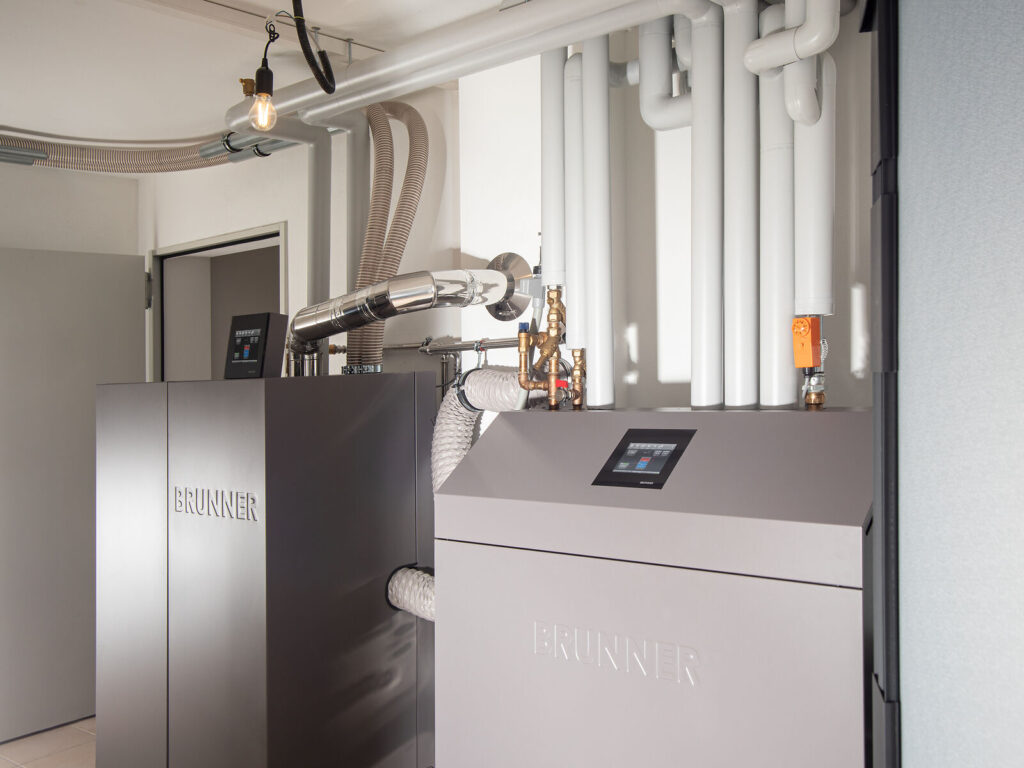
For new homes and single-family houses, a pellet heating system is a great alternative to the popular heat pump. BRUNNER pellet boilers stand out with high efficiency, quiet operation, minimal power consumption and very low standby losses.
Another modern heating option for both new and existing buildings is condensing technology. It’s highly efficient because it operates at low temperatures and even recovers heat from the exhaust gases – heat that would otherwise be lost through the chimney.
Conclusion
There’s no one-size-fits-all solution for heating system upgrades. Every system needs to be planned individually. A new build often requires a different setup than an existing home. It’s important to get proper advice in advance and work with your heating installer and chimney sweep to find the system that fits you best.