
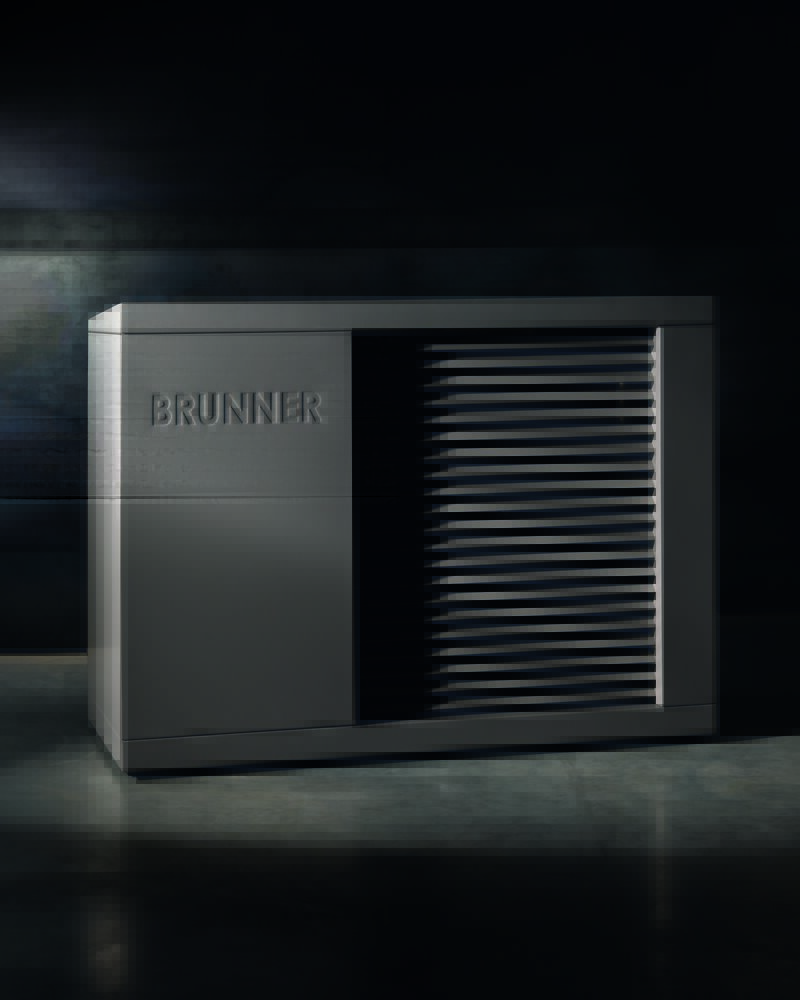
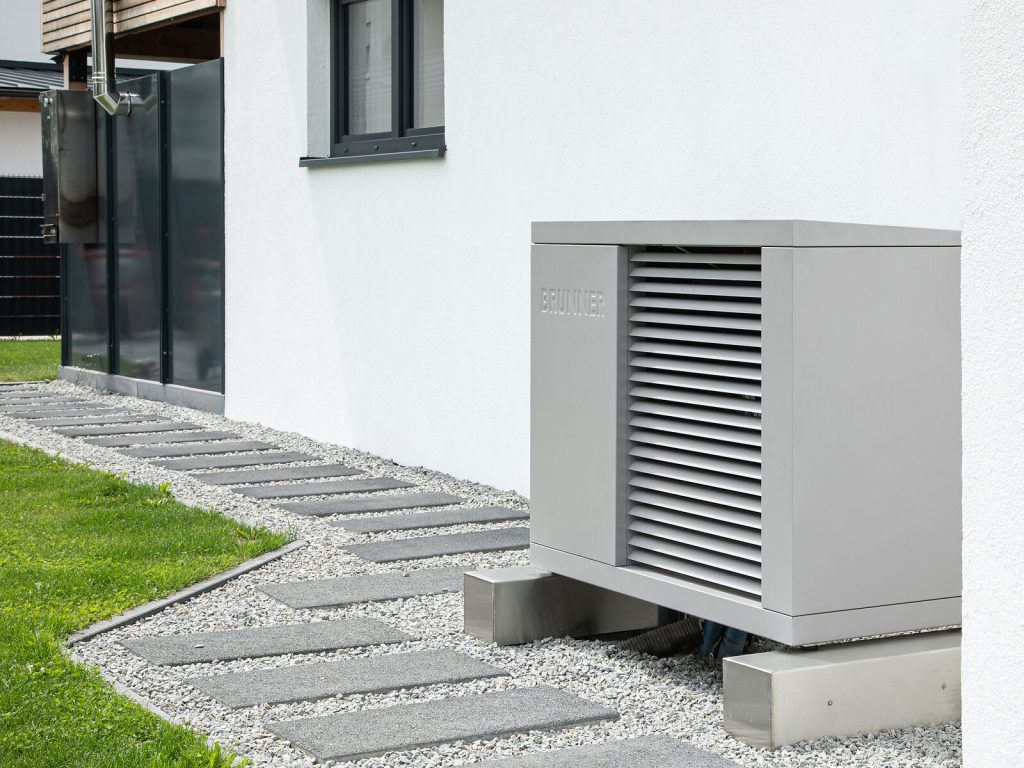
Heat pumps harness natural thermal energy from the environment – either from the air or the ground – to heat buildings and provide hot water. In new constructions, heat pumps like the BRUNNER “green” are already standard. This particularly eco-friendly model extracts energy from the air, just like any air-to-water heat pump, and transfers it to the building’s heating system. Air-to-water heat pumps are popular because they are relatively easy to install, require no groundworks, and take up little space. However, they are generally less efficient than geothermal heat pumps.
Even in existing older buildings, a heat pump can be a worthwhile alternative to conventional heating systems such as oil or gas boilers. A key factor in using a heat pump in an older building is the “flow temperature”. Many older homes are equipped with radiators that rely on higher flow temperatures. Heat pumps typically cannot achieve these temperatures efficiently. Therefore, it is advisable to replace old radiators with modern, larger-surface models or to combine the system with underfloor heating, which operates effectively at lower flow temperatures.
In older buildings, insulation plays a crucial role in reducing overall energy consumption. Proper insulation of walls, roofs, and windows is essential to minimize heat loss and improve the efficiency of a heat pump. If a renovation or heating system replacement is planned, measures to enhance insulation should always be considered.
Installing a heat pump in an existing building often requires structural adjustments as well. Sufficient space and suitable connections must be created for the heat pump system. In addition, electrical and water lines may need to be adapted. Professional installation is essential, as it ensures the heat pump operates efficiently and reliably.
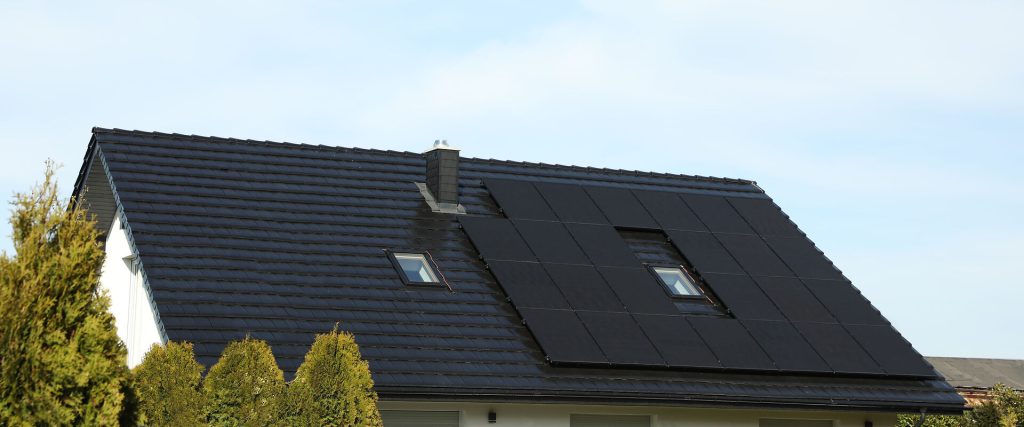
An important consideration when using a heat pump is “electricity consumption”- this applies to all homes, whether new or existing. Since heat pumps run on electricity, they increase a building’s overall power demand. It is therefore advisable to explore the use of “renewable energy sources”, such as photovoltaic systems, to supply the heat pump with self-generated electricity. This can help lower operating costs and further enhance the system’s sustainability.
Is a heat pump in an older building really worth it?
A heat pump can be a sensible choice for an existing building if certain conditions are met. Here are a few reasons why installing a heat pump in an older home can make sense:
- Energy efficiency: Heat pumps extract warmth from the air, the ground, or groundwater to generate usable heating energy. Compared to conventional heating systems such as oil or gas boilers, heat pumps can operate much more efficiently. They typically produce more heat energy than the amount of electricity they consume, leading to significant energy savings and reduced CO₂ emissions.
- Sustainability: Using a heat pump in an existing building helps lower CO₂ emissions and supports climate protection. Since heat pumps draw energy from renewable sources, they play an important role in the energy transition and help reduce dependence on fossil fuels.
- Government incentives: There are various government subsidy programs that financially support the installation of heat pumps in existing buildings. These incentives can cover a substantial portion of the investment costs and improve the overall economic viability of the project.
- Independence from fossil fuels: Installing a heat pump in an older building reduces dependence on fossil fuels such as oil or gas. Prices for these fuels are subject to market fluctuations and can vary significantly. A heat pump, on the other hand, uses freely available environmental heat, offering a greater level of independence from volatile energy markets.
Why might a heat pump not be suitable for an older building?
Despite all the advantages, there are also factors that may argue against installing a heat pump in an existing home. In addition to the previously mentioned aspects of insulation and flow temperature, “space requirements” can play a significant role. Depending on the type of heat pump, installation may require additional room for components and connections.
Moreover, the “initial investment costs” can be relatively high, particularly if extensive renovation work is necessary to adapt the building’s structure or heating system. In such cases, the overall cost and effort may outweigh the potential savings, making a heat pump less practical for some older buildings.
Can a heat pump also be used with radiators?
Yes, it is possible to operate a heat pump in combination with radiators, but it requires careful planning and system adjustments. One of the main challenges is the flow temperature. Radiators usually need higher flow temperatures than underfloor heating systems. Heat pumps, on the other hand, work most efficiently at lower flow temperatures. Therefore, it’s important to check whether the existing radiators in an older building are suitable for operation with a lower flow temperature.
In some cases, older radiators need to be replaced with modern, larger-surface models. When a heat pump is combined with radiators, hydraulic balancing of the heating system is especially important. This ensures that each radiator receives the right amount of heat, providing an even temperature distribution throughout the building and preventing some radiators from becoming unnecessarily hot. Proper hydraulic balancing improves the efficiency of the heat pump and reduces the system’s overall energy consumption.
It’s also advisable to use a suitable control system to manage the heat pump’s operation with radiators effectively. Modern heat pumps are usually equipped with intelligent controls that automatically adjust the flow temperature to match the system’s needs. This ensures a comfortable indoor climate and maximizes the efficiency of the heat pump.
When selecting and designing a heat pump system, it’s important to consider both the building’s heat demand and the requirements of the radiators. Professional consultation can be very helpful here.
How hot can a heat pump get?
The maximum flow temperature a heat pump can reach depends on several factors, including the type of heat source (air, ground, or groundwater), the construction of the heat pump, and the specific model configuration.
Air-to-water heat pumps generally achieve flow temperatures between 35 °C and 55 °C, which is ideal for modern underfloor heating systems and low-temperature radiators specifically designed for heat pumps.
Ground-source heat pumps, on the other hand, can reach higher flow temperatures—typically between 45 °C and 65 °C – because they draw energy from the ground, which maintains a relatively constant temperature. These higher temperatures make them suitable for operating traditional radiators.
However, lower flow temperatures are always more efficient, as the heat pump requires less energy to maintain a comfortable room temperature.
Are there subsidies in Germany for installing a heat pump in an older building?
Yes. Homeowners in Germany can access financial incentives and subsidies for installing heat pumps and carrying out energy-efficient renovations in existing buildings. The government and many energy providers offer programs to reduce investment costs and make heat pump systems more economically attractive. Funding is available at both the federal and state levels. Here are some key options:
BAFA funding:
The “Bundesamt für Wirtschaft und Ausfuhrkontrolle (BAFA)” offers subsidies for installing heat pumps under the “Marktanreizprogramm (MAP)”. This includes installations in both new and existing buildings. The funding is provided as grants, and the amount depends on several factors such as the heat pump type and the system’s installed capacity.
KfW funding:
The “Kreditanstalt für Wiederaufbau (KfW)” offers various programs for energy-efficient construction and renovation. Heat pump installations can be supported through these programs, either via low-interest loans or non-repayable grants. The exact amount depends on factors like the building’s efficiency rating and heating system type.
State-level subsidies:
In addition to federal programs, many German states offer their own regional funding schemes for heat pump installations. The conditions and grant amounts vary depending on the state, so it’s worth checking the local options.
The specific requirements and eligibility criteria differ by program. Typically, certain efficiency standards must be met, and installation must be carried out by qualified professionals. It is therefore advisable to research thoroughly before starting the project and consult the respective funding agencies for up-to-date conditions. An energy consultant or heating specialist can also assist with the application process and provide tailored advice on funding opportunities for heat pump installations in existing buildings.
Alternative: Hybrid heating system – gas and heat pump in existing buildings
A hybrid heating system that combines a gas boiler with a heat pump can be a sensible solution for older buildings. Here are some reasons why this approach makes sense:
Flexibility:
A hybrid system allows you to take advantage of two different heating technologies. The gas boiler can serve as the main heat source, while the heat pump supports heating during times of lower demand or when outdoor conditions are favorable. This ensures high overall efficiency and can help reduce operating costs. The heat pump can also be combined with a wood-burning appliance – ideally a water-bearing unit with a heat exchanger. BRUNNER offers well-designed system solutions for exactly this setup.
Lower investment costs:
Installing a standalone heat pump in an older building can be expensive, especially if extensive renovation work is required. A hybrid heating system offers a more cost-effective alternative, as the existing gas boiler can remain in operation and only the heat pump component needs to be added.
High heating output:
Gas boilers can deliver high flow temperatures, which is a major advantage in older buildings with traditional radiators. The heat pump can then operate efficiently during periods of lower outdoor temperatures or reduced heating demand, while the gas boiler provides the necessary flow temperatures when needed. This combination ensures maximum efficiency and consistent comfort.
Reduced CO2 emissions:
Using a heat pump as a supplement to a gas boiler reduces CO2 emissions compared to a gas-only heating system. The heat pump draws on renewable energy sources such as ambient air or geothermal energy and requires less primary energy. This helps lower environmental impact and supports the transition toward a more sustainable energy supply.

Conclusion
In summary, installing a heat pump in an existing building can be an attractive way to achieve an efficient and sustainable heating system. With proper system sizing, adjustment of the flow temperature, good insulation, and the use of renewable energy sources, a heat pump in an older building can reach its full potential and significantly reduce heating costs. However, professional consultation is essential during planning and installation to take the building’s individual requirements into account and ensure the best possible solution.