Stoves and fireplaces
Control system
Depression safety cut-off switch USA 4
Product benefits:
- Safe operation of fireplace and stove in combination with ventilation systems
- Automatic shutdown in case of critical negative pressure in the installation room
- Officially approved for all common wood-fired appliances

Technical data
& Downloads
BRUNNER Control systems
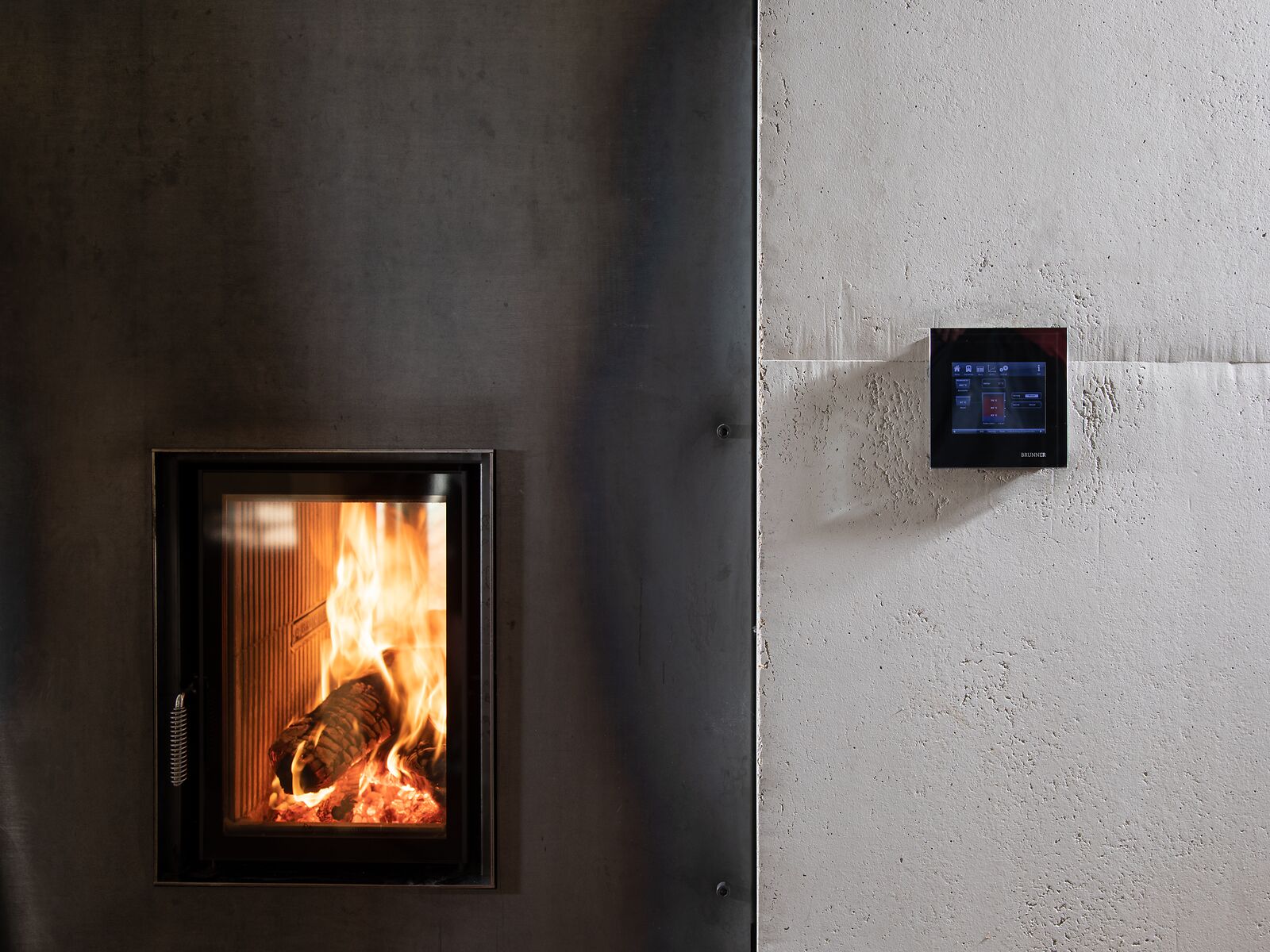
System safety, optimal emission values, and ease of use were the reasons why BRUNNER became the first company, back in 1990, to develop fireplace controls for wood-burning inserts. BRUNNER control systems take into account all characteristics and potential disturbances of the combustion process. Simply load the firewood, light it, and the heat release runs automatically – guaranteeing the desired long ember retention times. Combined with other system solutions from BRUNNER, the entire heat management of a building can be centrally controlled and clearly displayed on a touch screen.
FAQ Control systems
- What makes the negative pressure safety switch (NPS) so reliable?
- At BRUNNER, the NPS (negative pressure safety switch) is based on proven technology – the kind used in aircraft engineering. To measure the difference in pressure, a barometric capsule is used. Its expansion is detected and processed electronically. The precision mechanics are of high quality and long-lasting, ensuring exact and highly sensitive measurements for many years without the need for replacement or maintenance.
- As an alternative to the NPS 3, BRUNNER has now introduced the NPS 4. Instead of the barometric pressure capsule, the fourth generation uses a piezo-crystalline pressure sensor that no longer requires calibration.
- How does the NPS (negative pressure safety switch) work?
- The NPS is installed close to the fireplace. During operation, the control unit monitors the pressure difference between the stove and the room. Short pressure fluctuations caused by wind gusts at the chimney or by opening windows and doors are filtered out by the NPS.
- The sole purpose of the negative pressure sensor is safety. For this reason, there is no display. The NPS is easy to use and approved by the DIBt. A red and a green LED are all that’s needed to show the operating status. If the red LED lights up, it indicates a clear safety risk.
- What is the NPS (negative pressure safety switch) needed for?
Since 2006, the law has required a monitoring device for manually built fireplaces in airtight buildings with ventilation systems or extractor hoods. That’s why BRUNNER developed the negative pressure safety switch (NPS). It ensures that, in case of a malfunction in the ventilation system or when the kitchen fan is running at the same time, flue gases do not enter the living space.
Air-extracting systems – including tumble dryers – can create such a strong negative pressure that toxic gases like carbon monoxide no longer escape through the chimney but are instead drawn back into the room. A kitchen hood can create a dangerous negative pressure in as little as five to ten seconds. These gases are invisible and usually odorless.
If a critical negative pressure is detected near the fireplace, the NPS immediately shuts down the air-extracting systems. Once the required pressure level is restored, the safety switch reactivates them.
- How safe is the EOS?
- Unique when it comes to safety: all components are constantly monitored for proper function. For this purpose, dual door contact switches are built in.
- In case of a component failure or power outage, a 9-volt battery ensures the system automatically moves into its safety position. In such a situation, the fireplace can also be operated manually.
- How does the EOS control work?
- The control panel, protected by a durable glass front, provides information about the combustion process, current burn temperatures and much more. Burning wood couldn’t be easier or more efficient.
- The graphic interface of the touch display has been continuously refined over the years into a clear, intuitive information and control unit. By simply touching the text or graphic icons, you can access all displayed functions and information.
- BRUNNER system controls can be updated via the USB port on the touch display, ensuring your EOS always stays up to date with the latest technology.
- What is the EOS control system used for?
With well over 100,000 units installed, the EOS has been one of the best-selling control systems in stove and fireplace construction since its introduction in 1991. All BRUNNER heating and fireplace inserts are designed so they can be equipped or retrofitted with this control system at any time.
The EOS is typically used in water-bearing stove and fireplace systems, but it’s also applied wherever motorized control functions or additional sensors are needed.
Except for placing and lighting the logs, every operating step is fully automated. The control unit regulates the air flap motor, which controls the exact amount of combustion air through a tightly sealed flap. Door contact switches on the stove door detect when the burn starts, and the system then optimally manages the process using a combustion chamber sensor.
- How safe is the EAS?
- All components are constantly monitored by the control system. This monitoring function is managed through the internal data bus system.
- Safety-relevant parts, such as the door contact switch, are installed twice or equipped with additional sensors. Only when both signals match does the component operate correctly.
- The same applies to the actuator of the combustion air flap. The BRUNNER safety concept requires feedback to confirm that the flap is in the correct position.
- “Emergency mode” in case of power failure: a built-in battery provides the necessary power to move the combustion air flap fully into its safety position. This ensures that flue gases can always escape safely through the chimney, no matter what operating state the stove is in.
- How does the EAS control work?
- User-friendly and easy-to-understand control interface with clear graphics and symbols.
- Combined with other BRUNNER system solutions, it allows the entire heating management of a building to be centrally controlled and clearly displayed on the touch screen.
- What is the EAS used for?
- The EAS is an affordable combustion air control system for fireplaces and storage stoves.
- It helps you burn wood the right way. During combustion, besides using wood that’s not too damp or too coarse, the correct air supply is essential.
- If the combustion air — normally adjusted by hand — isn’t properly regulated, unwanted effects of incomplete combustion can occur: a heavily sooted glass window, unburned wood pieces, short ember retention, and unpleasant odors outdoors.
- The electronic combustion control from BRUNNER largely prevents these issues. Simply load the wood, light it, and the entire burn process up to the ember phase runs automatically. You don’t need to be present while the fire is burning.
- What to do in case of a power failure or a component malfunction?
We’ve thought of that, too. At no point should there be a safety risk – no matter what the operating state is. This level of safety is unique to BRUNNER. All components are monitored by the control system. Safety-relevant parts, such as the door contact switch, are installed twice or equipped with additional sensors. The same applies to the actuator of the combustion air flap. The BRUNNER safety concept requires feedback to confirm that the flap is in the correct position.
This monitoring function is handled by the internal data bus system. Experience and expertise are essential to ensure our control systems run smoothly and reliably.
In case of a power failure, an “emergency program” is automatically activated. A built-in battery provides the necessary power to fully open the combustion air flap – moving it into its safety position. No matter what operating state the stove is in, the flue gases can always escape safely through the chimney, preventing any damage or danger.
Brunner Craftsmen search
Are you interested in a stove or heating system from BRUNNER? Please contact one of our craftsmen partners.