Heating with wood: Is it climate-neutral?
Plants and trees constantly carry out photosynthesis – they convert the energy of sunlight into biomass. To do this, they absorb CO2 from the atmosphere, using the carbon for growth and releasing oxygen back into the air. Wood is therefore stored solar energy.
When firewood is burned, it releases only as much CO2 as the tree absorbed during its growth. This is a major advantage of wood compared to fossil fuels such as oil or gas – it is climate-neutral.

When wood burns, the amount of CO2 released is the same as what would be emitted naturally through the decomposition of wood in the forest. In sustainable forestry, wood harvesting and regrowth remain in balance, which means the total amount of carbon stored in the forest stays largely constant. The CO2 released from burning wood is therefore offset within a short time. In fact, according to the German Forest Owners Association, forest growth in Germany currently exceeds the amount of wood harvested. Sustainable forest management thus plays a crucial role – while it cannot provide unlimited amounts of wood, it can supply it indefinitely when managed responsibly.
Is heating with wood going to be banned?
Despite its CO2 neutrality, Germany’s Federal Environment Agency (*Umweltbundesamt*) views wood as a critical fuel source because wood combustion releases fine particulate matter into the air.
However, this does not mean that wood heating is about to be banned. The Federal Immission Control Ordinance (BImSchV) sets emission limits for heating appliances, including fireplaces, heating stoves, and tiled stoves. By the end of 2020, all stoves approved before January 1, 1995 had to be shut down, retrofitted, or replaced. Starting at the end of 2024, this requirement will also apply to all systems installed before March 21, 2010.
Exempt from these regulations are:
- open fireplaces
- masonry stoves (Grundöfen)
- non-commercial cooking and baking stoves
- single-room fireplaces used as the sole heating source in a dwelling
- and stoves built or manufactured before 1950.
So, heating with wood will remain permitted – but only with modern, low-emission appliances that meet today’s environmental standards.

When installing new wood-burning stoves, the unit must have a nominal heat output of at least 5 kilowatts, and the seasonal space heating efficiency of the wood heating system must be at least 78 percent. With a new BRUNNER wood-burning insert, the current, highly demanding emission limits are not only met but even undercut. This reduces wood consumption and heating costs.
Heating with wood – but the right way
Those who heat with wood and enjoy the cozy warmth of a fireplace can contribute to climate protection – but only if it’s done correctly. Alongside using a modern appliance, the user’s behavior plays a key role. How you operate your stove determines whether the combustion process runs efficiently and cleanly, releasing minimal pollutants and fine dust into the air.
Even when buying firewood, there are important points to consider – most importantly, that the wood has been properly seasoned and dried. The residual moisture content should be below 20 percent, ideally around 15 percent, to ensure clean and efficient combustion.
The moisture content can easily be checked with a wood moisture meter from a hardware store. Moisture in the wood has a decisive impact on clean combustion, because the rule is simple: the drier the wood, the hotter the combustion and the fewer pollutants are released.
For pellet heating systems, only certified pellets should be used. Manually adjustable air supply controls on the appliance also help ensure optimal, high-temperature combustion, as they allow you to regulate the airflow for each phase of the burning process.
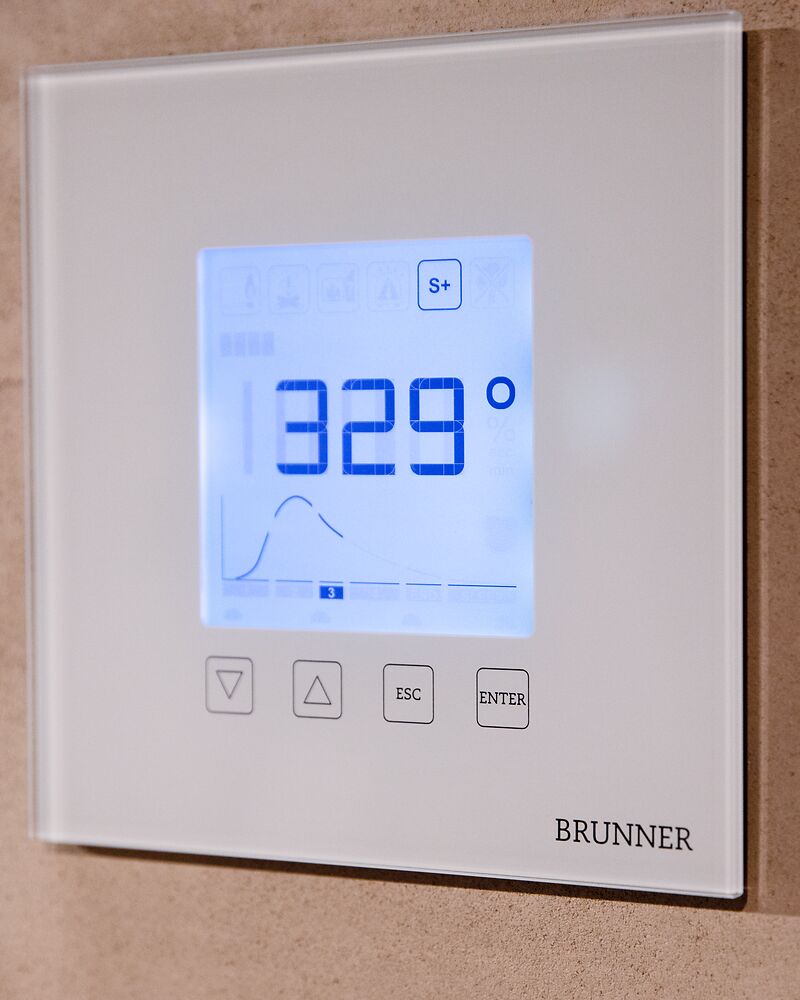
For those who want maximum comfort and security, an automatic control system such as the BRUNNER Electronic Combustion Control (EAS) is the ideal solution. It helps prevent combustion errors, ensures fully automatic and optimal heat release, and always achieves perfect efficiency. The BRUNNER EAS also detects incorrect operation and provides user feedback if the fuel is insufficient, too moist, or unsuitable.
Is heating with wood cheaper?
Wood and pellet heating systems are becoming increasingly popular, and demand continues to rise. Even though the prices for firewood and pellets have gone up, they are still generally cheaper than oil or gas. According to the Federal Statistical Office of Germany, in August 2022 – the time when most wood stove owners stocked up for winter – the price of firewood and wood pellets was about 85.7 percent higher than in the same month the previous year.
However, determining whether heating with wood, gas, or oil is currently cheaper isn’t so simple, as prices can vary significantly by region. If you look only at operating costs and leave out factors such as purchase and maintenance costs, wood and wood chips remain the most economical options. Firewood for stoves and fireplaces is especially affordable when it’s self-harvested. Local forestry offices can provide information and designate specific areas where an agreed amount of wood may be collected. To fell trees yourself, you’ll need a so-called “firewood license” (Brennholzführerschein).
Does heating with wood have a future?
Yes – because modern heating appliances are becoming increasingly efficient and cleaner in terms of emissions. Regularly updated legal requirements and emission limits set by the Federal Environment Agency ensure that wood heating continues to have a place in the future. Since the introduction of the Federal Immission Control Ordinance, particulate emissions from all wood stoves have decreased by about one-third. Modern wood stoves emit roughly ten times fewer pollutants than older models from the 1980s and 1990s. With wood heating accounting for only about 8 percent of total particulate emissions, even a potential ban on wood-fired heating in urban areas would have little practical impact.
Information brochure: Heating with wood for the energy transition
The “HKI Industrial Association for House, Heating, and Kitchen Technology e.V.” has published a brochure titled “Mit dem erneuerbaren Energieträger Holz zur Klimawende” (“Achieving the Energy Transition with Renewable Wood Fuel”). The publication presents facts about the use of wood in single-room heating appliances such as stoves, tiled stoves, and wood boilers. It provides an overview of the technological possibilities of modern wood combustion, delivers key data for climate policy discussions, and advocates an open approach to technology on the path toward a climate-neutral future.
Conclusion
If a few key points are observed, heating with wood remains a sustainable and natural way to heat your home. What matters most is using a modern wood-burning insert that meets fine dust emission limits and practicing proper heating habits. This way, the natural and renewable resource wood can continue to be used as a responsible and reliable source of heat.