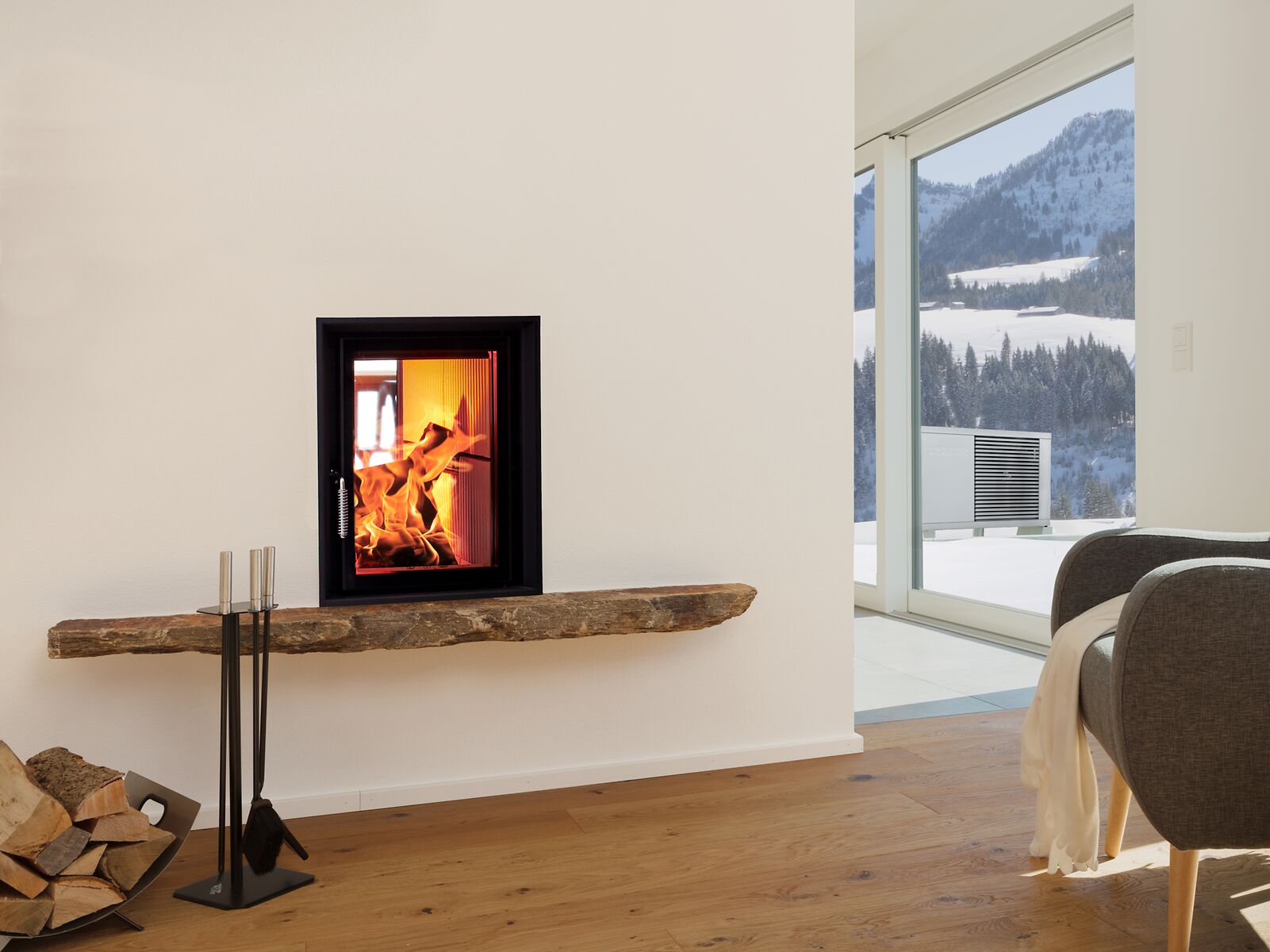
In 2016 alone, around 32% of all newly completed residential buildings were equipped with a heat pump – a figure that remained nearly unchanged compared to 2015, according to the latest data from the Federal Statistical Office.
Heat pumps were particularly popular in single- and two-family homes, accounting for 34% of all new installations, says BWP Managing Director Dr. Martin Sabel. In total, around 36,500 new buildings were fitted with heat pumps – 2,000 more than the previous year. This proves that climate-friendly construction is both possible and affordable, Sabel adds.
In Baden-Württemberg alone, 47.9% of all new homeowners chose a heat pump – the highest share ever recorded in any German state.
Most of the market share goes to systems using ambient energy, such as air-source and groundwater heat pumps. At the same time, innovative new systems are steadily gaining ground on the German market.
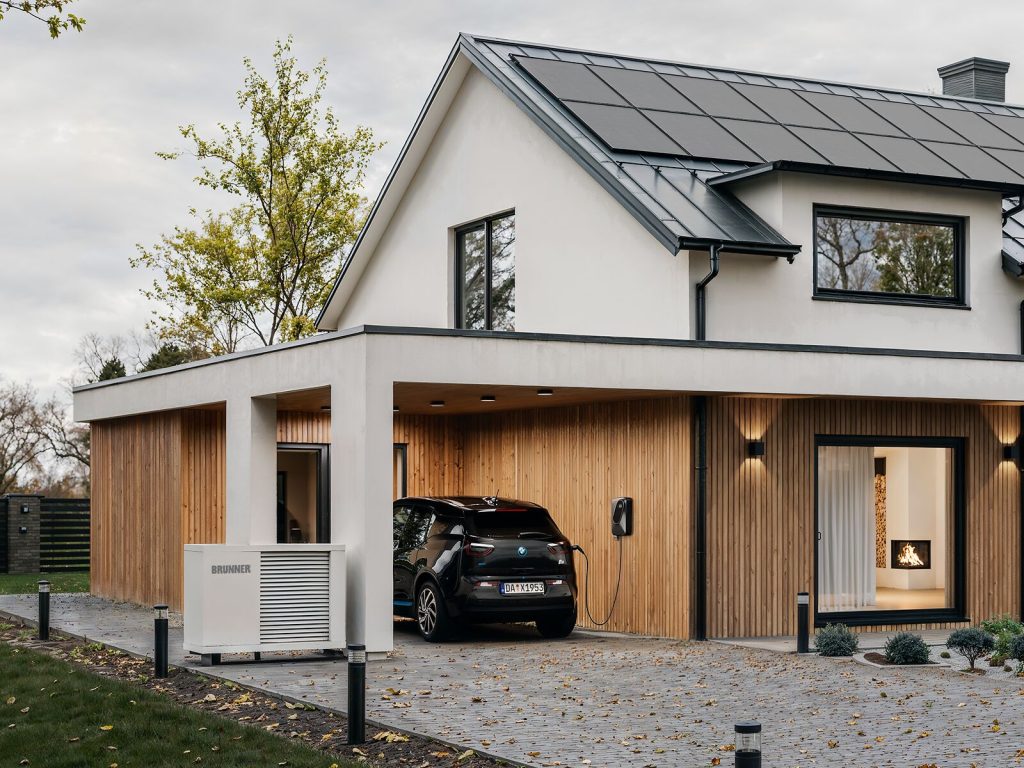
A modern technology enabling higher performance
The air-to-water heat pump has become the leading system. It extracts heat from the outside air and transfers it as heating energy into the home. With an operating power of just one kilowatt, it can achieve up to five times as much heating output.
The BRUNNER heat pump provides the necessary energy for heating and hot water. The hydraulic tower is installed inside the building – space-saving and neatly integrated together with all required components. With a capacity of 200 liters, it ensures a reliable hot water supply at all times. The connection to the heating system is made via the buffer tank.
At outdoor temperatures of around -2 °C, the air-to-water heat pump reaches its peak efficiency. When temperatures drop lower, the system requires more power, efficiency decreases, and output performance declines.
This is where the principle of the combined heat pump stove heating system comes in: the heat pump, hydraulics, water-bearing wood-burning insert, and control unit are all connected into one integrated system solution.
When the outside temperature falls, the heat pump sends an SOS to the wood-burning stove. The control system notifies the homeowner to fire up the stove and maintain a constant, efficient level of warmth throughout the home. The heat generated by the wood fire is stored in the buffer tank, transferred into the house’s heating circuit, and distributed evenly to all rooms.
The advantages of such a system are clear:
- Firelight atmosphere and heating performance in one system
- Basic need for warmth covered by the stove
- Cost-efficient
- Longer heat pump lifespan of eight to ten years
- Consistent heat level even on freezing days
- Eligible for state subsidies
New builds heated by a heat pump system can receive financial support from KfW and BAFA. In addition to the wood-burning stove and heat pump, further heat generators can be integrated into the overall heating concept.
Subsidies are granted for efficient heat pumps
- with a nominal heat output of up to 100 kilowatts for process heat supply
- for combined domestic hot water and space heating in buildings
- for space heating in residential and non-residential buildings
- when domestic hot water is primarily produced using renewable energy
- for providing heat to district heating networks
Environmentally friendly & efficient
The heat pump stove heating system is currently one of the most environmentally friendly and efficient heat pump solutions available for single-family homes. The trend toward sustainable and cost-effective heating will continue. At BRUNNER, we design our heating and stove systems to combine efficiency, environmental protection, and economic value – fulfilling customer needs while contributing to a healthy environment.
Expert advice
Unbedingt mit einem Fachmann und auch von Beginn an mit dem Schornsteinfeger zusammenzuarbeiten empfiehlt sich. Nur so lässt sich das perfekte System für den individuellen Bedarf finden und auch die Fördermöglichkeiten kann man so am besten nutzen.