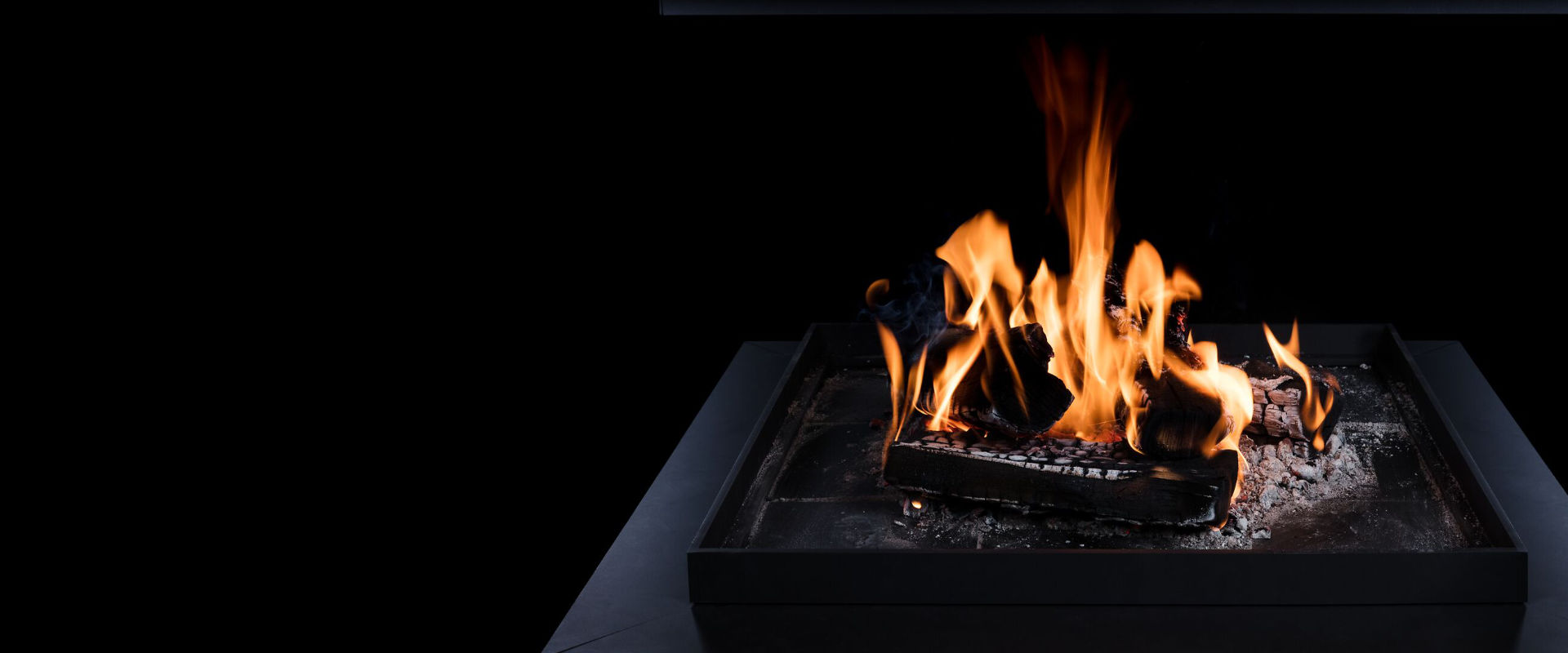
Tiled stoves
The tiled stove has been a popular source of heat for centuries. In the past, tiled stoves were mainly built with tiles, as these are very easy to maintain and were once an expression of taste, fashion and even a status symbol.
Today, in addition to tiles, other materials such as metal, stone or plaster have proven themselves for designing the outer casing. The different materials offer a wide range of design options, making individual planning necessary for every tiled stove – turning each one into a unique piece.
Tiled stoves are also known as masonry heaters, radiant stoves or storage stoves. Although their heating systems may differ slightly, they all share one main purpose: the desire for warmth – and the underlying principle is always the same:
As the term masonry heater suggests, the fire is not lit on a grate but directly on the base of the stove. The combustion gases generated by the burning wood flow through the storage mass built into the interior.
This storage mass absorbs the heat energy contained in the gases and releases it gradually into the living space over several hours. This principle results in high efficiency with maximum energy utilisation and low emissions.
Further tiled stove variants based on this principle include:
- the warm-air tiled stove / warm-air stove
Warm-air stoves not only provide radiant heat but also distribute warm air into the room: cool room air enters the stove through base openings, is heated along the outer walls of the combustion chamber insert, and rises inside the stove.

- The combination tiled stove
This type of stove also emits both warm air and radiant heat. However, the difference compared to the warm-air stove lies in the reaction time: the heat energy from the combustion chamber flows through the internal storage mass, which means it takes considerably longer to release radiant heat into the room.
- The hypocaust stove
The hypocaust stove features an additional closed air circuit that circulates only within the stove itself, heating both the thermal storage and the tiles. The outer shell releases heat across large surfaces, often over two storeys. However, this type of system is rarely installed today.
Open and closed fireplaces / Urfeuer
Fireplaces are primarily about creating atmosphere through the visible flame.
Basically, there are two types of construction: open and closed fireplaces.
An open fireplace creates a romantic atmosphere and an authentic “campfire look” in the living space. However, it is important to know that this type of fireplace allows a large amount of air to flow up the chimney due to the open cross-section of the fireplace opening. As a result, when burning, the open fireplace essentially acts as a “room ventilation system” and is therefore less suitable for heating.
In older houses, this is not an issue, as sufficient replacement air can reach the fireplace through gaps or other leaks. In today’s more airtight building designs, however, this natural air supply is missing, meaning an artificial air inlet channel must be installed for the fireplace.
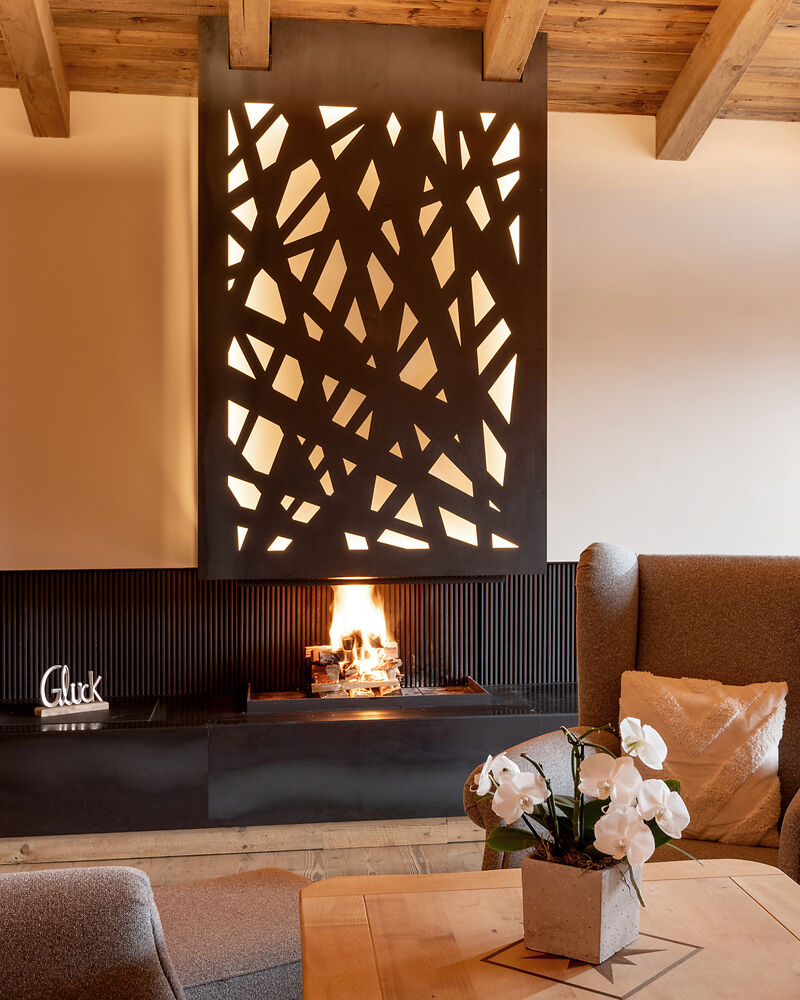
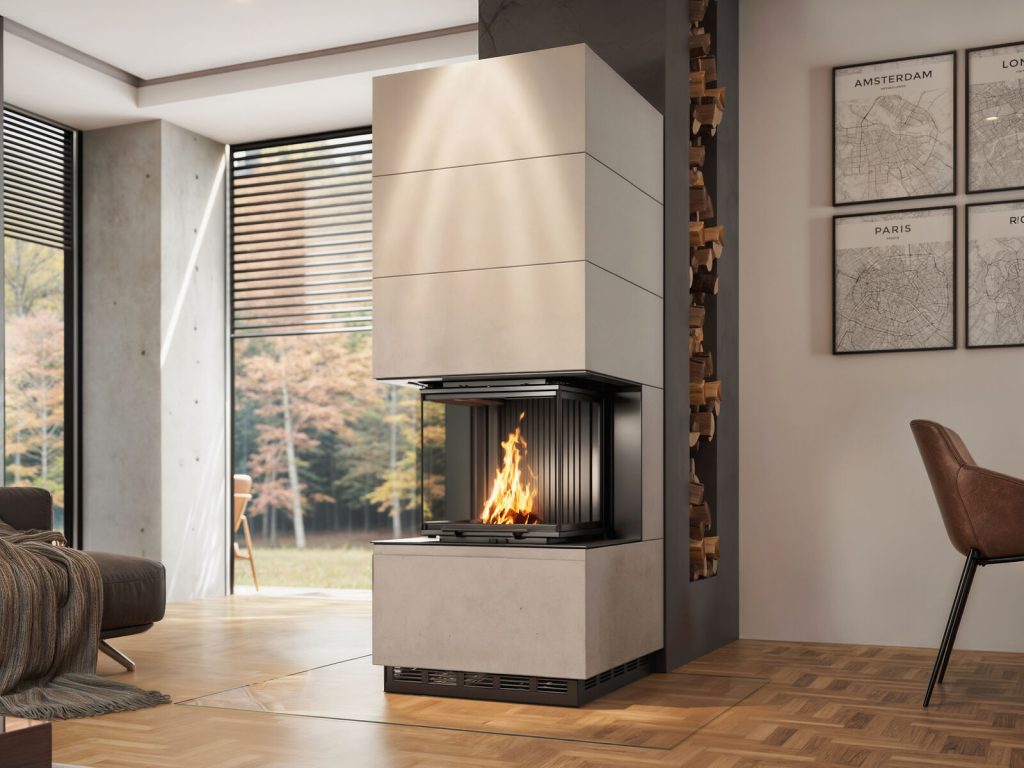
Ultimately, the closed fireplace is characterised above all by the fact that it only draws in the amount of air required for combustion. These fireplaces are primarily designed to provide fire ambience combined with heating performance and quick heat release. In terms of appearance, a wide range of designs is possible — from various shapes to one-, two- or three-sided glass doors.

Gas fireplaces
A gas fireplace is the ideal solution for anyone who wants (or needs) to do without heating with wood and everything that comes with it. In some living situations, for example, heating with wood is hardly practical — a Berliner living in a small fifth-floor apartment is unlikely to enjoy storing and carrying firewood upstairs.
Using natural gas or liquefied gas as fuels allows you to enjoy a very clean form of fireplace fire. Visually, a gas fireplace is now almost indistinguishable from a real wood fire, thanks to deceptively realistic ceramic log imitations. Press a button, the fire ignites, adjust the flame height — and enjoy. It doesn’t get more comfortable than that.

Water-bearing fireplaces and stoves
Fireplaces and stoves can not only provide the pleasure of a fire’s atmosphere and heat living spaces, but also be used for domestic hot water generation. For this purpose, the combustion gases flowing out of the firebox are directed through a water-bearing heat exchange surface. The gases transfer their heat to the water before entering the chimney at a reduced temperature.
The heated water is then collected in a buffer storage tank. Generally, more than 50% of the heat output should be converted into water-based heat. Only then does it make sense to invest in the additional cost of such a system. This setup is particularly interesting for low-energy houses.
Water-bearing heat exchanger surfaces are available for almost all types of stoves and fireplaces.

System stoves
A system stove can be compared to the principle of a prefabricated house: pre-manufactured components only need to be assembled by a professional on-site in the customer’s living space. This offers the same advantages as compact storage stoves. Within a very short time, an affordable stove can be installed and put into operation. System stoves are also available in a water-bearing version.
A compact storage stove is a type of masonry heater but, thanks to its compact column shape, provides hours of warmth even on a small footprint. With this variant, there are virtually no limits — from round or square clay cladding to a custom, handcrafted outer shell. The main difference compared to system stoves is that compact storage stoves can store more heat due to their flue gas–heated storage mass.
System fireplaces
System fireplaces are particularly suitable for those who want to save time and money while meeting their heating needs. The viewing window allows pleasant radiant heat from the combustion chamber, quickly creating warmth and comfort in the living space. Cooling after the end of combustion occurs rapidly. Limited space is no obstacle for this type of fireplace.

Wood-burning stoves
Wood-burning stoves, also known as Swedish stoves or room stoves, are delivered fully assembled and only need to be connected to the chimney for commissioning. A wood-burning stove can be made from various materials — steel, cast iron, ceramic or stone cladding are typically used.
Another advantage of the space-saving wood-burning stove is the rapid distribution of heat throughout the living area. For this reason, this type is often used as a “transitional heating system” in autumn or spring, or as a “backup system” in case of heating failures. However, the risk of rooms overheating quickly should not be underestimated.
Wood-burning stoves can often be found not only in specialist stores but also in DIY markets, available in various price and quality ranges. However, if long-lasting, high-quality fire enjoyment is desired, choosing the cheapest option should not be the priority. Good quality means expert craftsmanship from the manufacturer, premium materials and excellent workmanship — and these qualities come at a price.

Conclusion
After all these different fireplace and stove options, it becomes clear that there are more or less individual solutions, and that the construction method of the fireplace determines its heating characteristics. If you already have concrete ideas, you should discuss them with your stove builder. Suitable craftsmen in your region can be found here.