The most common heating mistakes
Lighting without using small pieces of wood: Depending on the appliance, ignition from the top or bottom is possible, but in both cases small pieces of wood should be used instead of newspaper. Alternatively, the BRUNNER Fidibus can be used – a 25-centimeter softwood stick soaked in wax, a pure natural product.
- Incorrect air flap setting: When lighting the fire for the first time, all air inlets of the wood-burning appliance should be open. As the main combustion phase comes to an end (after about 30 to 40 minutes), the air supply should be reduced and completely closed during the ember phase.
- Adding wood too late: Adding logs when only a small amount of embers remain risks causing smoldering combustion that can last for several minutes.
- Unsuitable fuel: The wood should not be too large or too moist – the residual moisture should be below 20 percent, ideally around 15 percent. This value can be easily checked with a wood moisture meter from a hardware store. Moist wood extracts valuable heat from the combustion process.
- Overloading the combustion chamber: Too much wood is placed in the chamber so that the fire keeps burning during absence and the embers last as long as possible.
Incorrect heating behavior and its consequences
Heating mistakes can increase emissions many times over while reducing efficiency. If combustion is incomplete due to incorrect air supply, the glass becomes sooty, wood residues remain, the embers last only briefly, and unpleasant odors can occur outside.
Ease of use and safety: the electronic combustion control
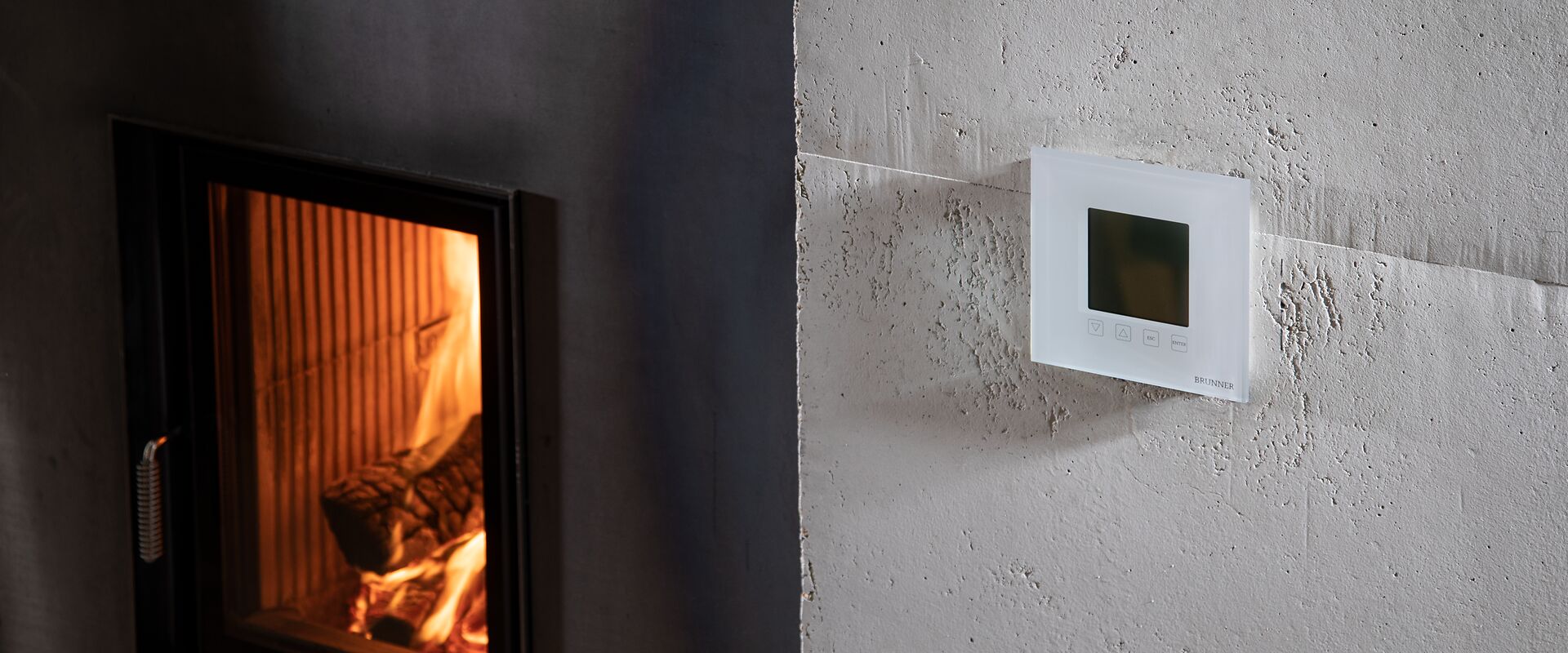
With an air control system such as the BRUNNER electronic combustion control (EAS), these mistakes can largely be avoided. Simply load the wood and light it – the system takes care of everything else. The heat release process runs completely automatically.
Because the EAS actuator never forgets to readjust or close the air supply after a combustion cycle, the stove achieves perfect efficiency. In addition, there is no need to stay nearby after lighting the fire, since no manual adjustment is required.
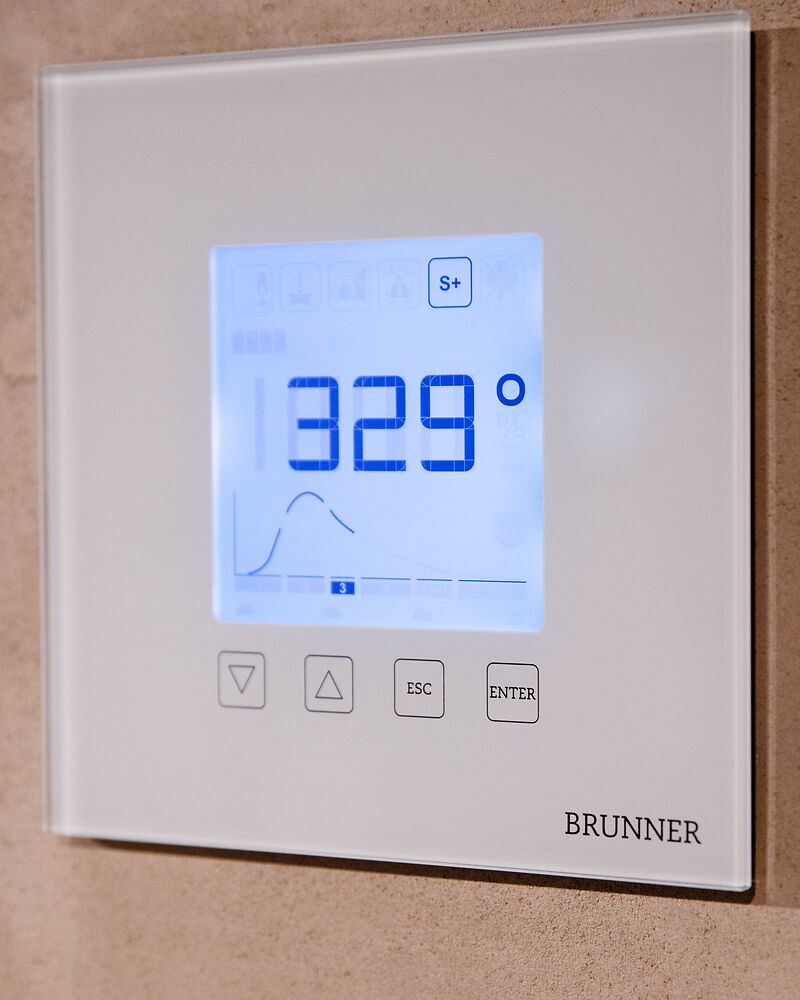
BRUNNER control systems not only regulate the air supply but also detect operating errors. If there is too little, too moist, or unsuitable fuel, the system provides user guidance. A display shows the combustion progress, the temperatures inside the firebox, and the optimal time to add more wood.
Conclusion
An electronic combustion control ensures that the combustion process in a fireplace or tiled stove runs automatically, without the need to adjust the air supply manually. This is not only highly convenient but also guarantees environmentally friendly combustion, higher efficiency, and reduced fuel consumption.
Expert advice
An electronic stove control helps you operate your stove correctly. This ensures maximum efficiency and prevents operating errors.