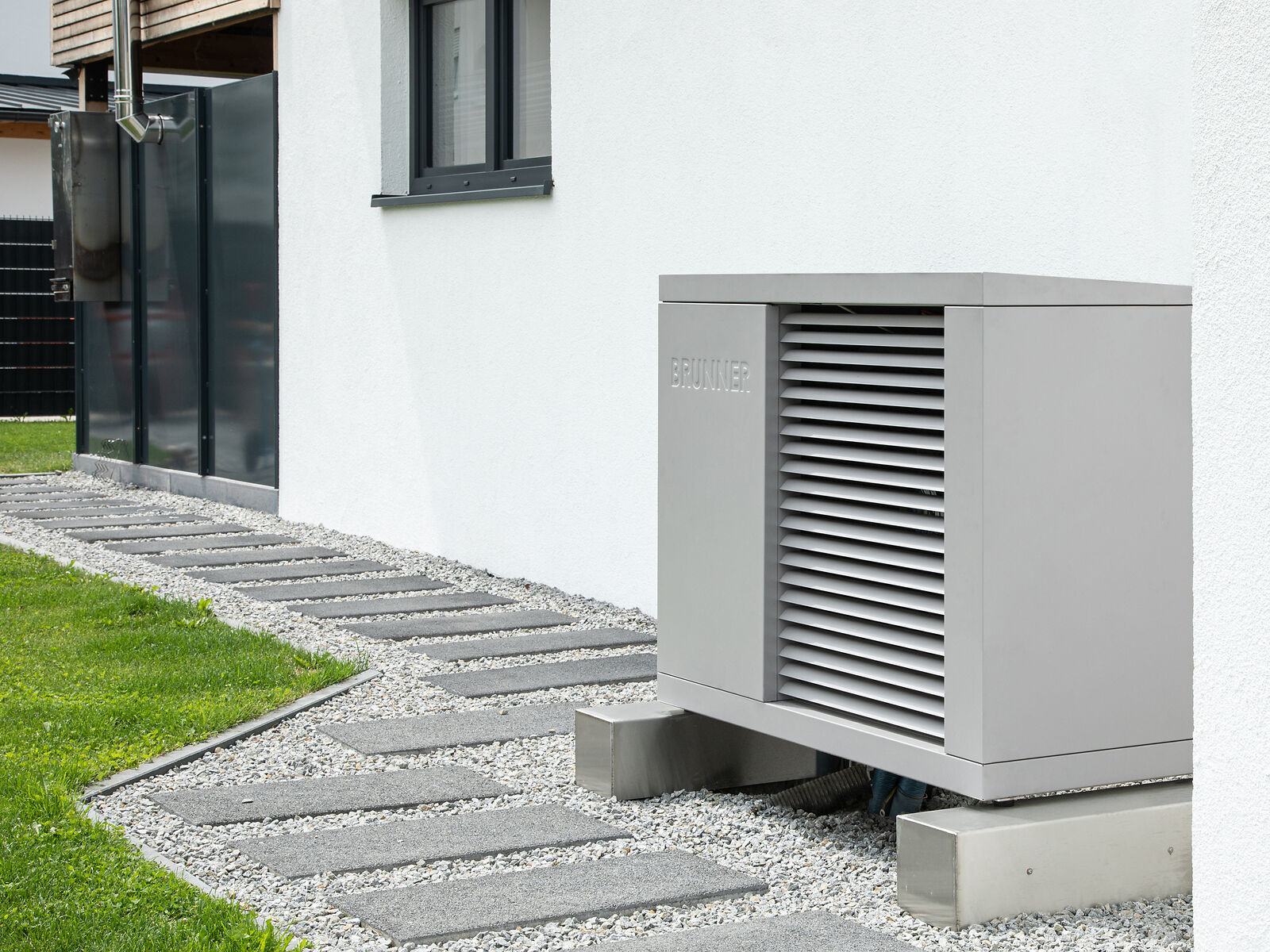
In new buildings, heat pumps are being installed more and more frequently – in Germany, in fact, in every third residential building. They are especially popular in single-family and two-family homes. The main reason is their high efficiency: on average, one kilowatt of electricity is enough to generate about three to five times as much thermal energy. In addition, heat pumps meet the requirements of the Energy Saving Ordinance and are easy to install. They are climate-friendly because they use renewable energy, produce no CO2, and make homeowners independent of fossil fuel imports such as heating oil or natural gas.
Not ideal for frosty days
How does an air-source heat pump work? It extracts thermal energy from the air and converts it into heating energy. Heat pumps operate most efficiently at outdoor temperatures between 2 and 15 degrees Celsius. When it gets colder, they quickly reach their limits and their efficiency decreases. Yet it is precisely in winter that we want a warm home. To prevent the building from cooling down too quickly, an electric heating element switches on to provide the additional heat energy for water and heating. The downside: it consumes a lot of electricity, and electricity is expensive.
Perfect duo reduces electricity costs
To prevent a heat pump from becoming a power guzzler at low outdoor temperatures, it makes sense to combine it with a wood-burning appliance – such as a tiled stove, a heating fireplace, or a pellet stove. The ideal solution is a water-bearing unit with a heat exchanger. Why?
Because it not only heats the room where it is installed, but also transfers the remaining energy to the heating system. There, it can be used either for space heating or for domestic hot water. By combining a heat pump with a wood-burning appliance, a building can be heated all year round using renewable energy.
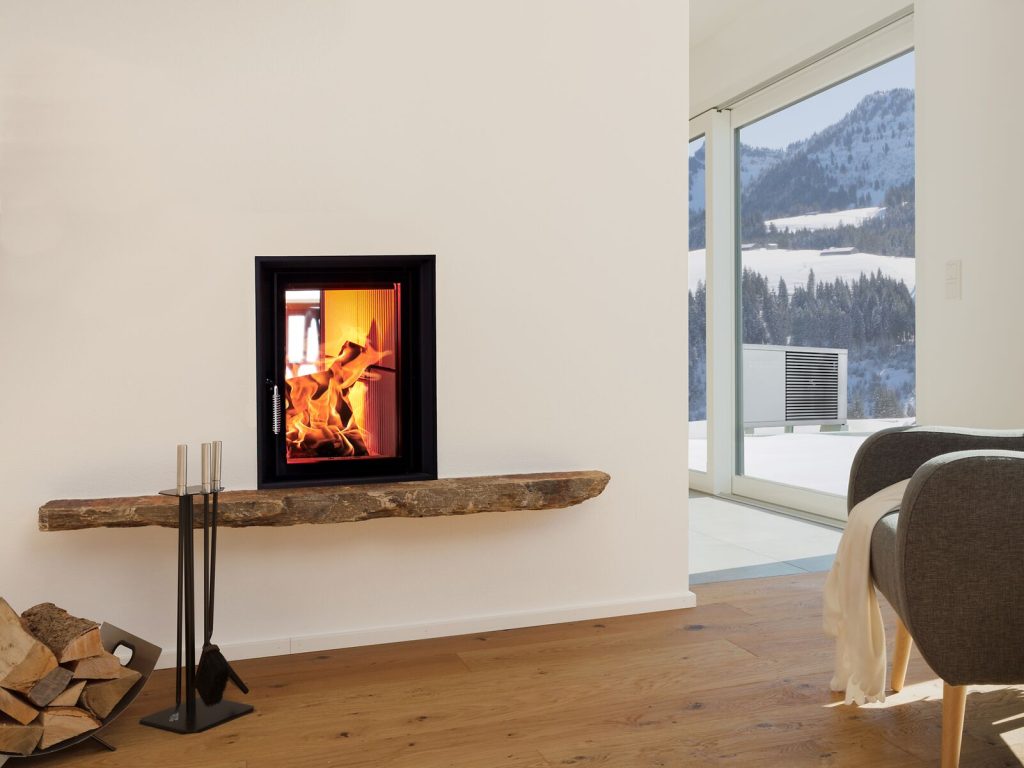
In addition, a wood fire creates a very special atmosphere in any home. It appeals to all the senses – its warmth, the crackling sound, the scent of the logs, and the pleasant light.
Conclusion
Even in Central Europe, it is possible to heat with renewable energy all year round without electricity consumption rising sharply – with a heat pump stove heating system. During summer and the transitional seasons, the heat pump provides the heat supply; when it gets colder, the fireplace takes over support. This combination significantly reduces strain on both the heating system and the household budget.
Expert advice
A heat pump is generally a good idea. However, during cold winters, it should be supported by a tiled stove. This combination is unbeatable!