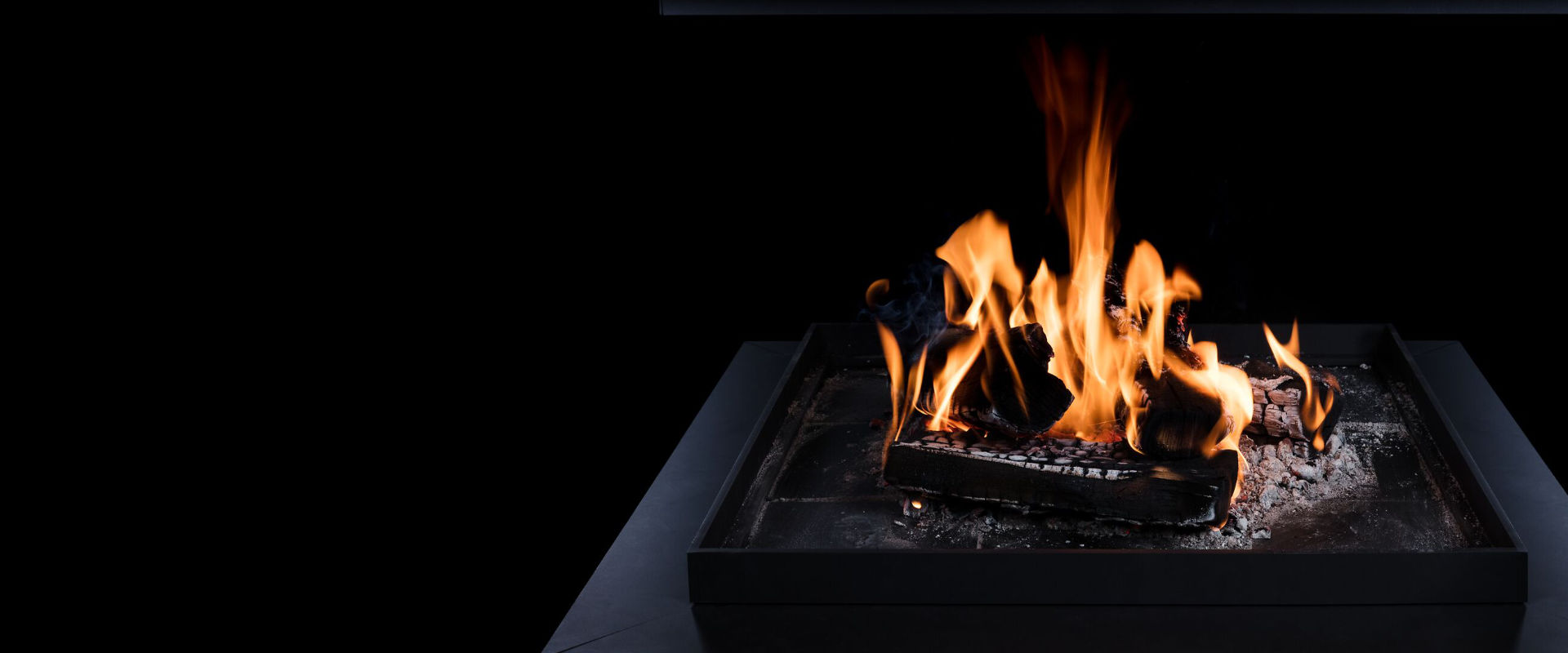
Visually, a water-bearing wood stove looks almost the same as a standard one, since the main technology is hidden behind the cladding. As with any stove, wood is burned and the heat produced warms the room – but not all of it.
Part of the heat is transferred to a buffer tank and fed into the central heating system. Depending on the setup, this can supply heat to radiators, underfloor or wall heating. A fireplace stove with a water jacket makes it possible to use the heat generated in the stove throughout the house.
It’s the perfect support for your heating system – especially during the transitional seasons, when just one or two burns a day can help heat the system without starting the oil or gas boiler.
In emergencies, a water-bearing fireplace or tiled stove could even cover the entire heating demand.


How does a water-bearing wood stove work?
The combustion chamber of a water-bearing wood stove has a double-wall design. Between the walls is a heat exchanger in the form of a water jacket. The heating water flows through this space. To warm the water inside the jacket, the stove uses the excess heat from the flue gases that would otherwise escape unused through the chimney. The heated water then flows through a buffer tank into the central heating system, reducing the load on the entire setup.
The heated water in the water jacket flows through a buffer tank into the central heating system, relieving the overall setup. If you want to heat not only the heating water but also the domestic hot water in your home, a hygiene storage tank with an integrated heat exchanger is used instead of a standard buffer tank.
Two types of output
A water-bearing fireplace stove has two types of output: the heating-side (also called water-side) output and the room-side (also called air-side) output. The heating-side output supports the central heating system, while the room-side output heats the living space. Both values depend on how the stove is built and designed, and they are listed in the manufacturer’s documentation. These two outputs must be in the right balance for the system to work efficiently.
Whether a fireplace or tiled stove should be water-bearing depends on personal preference. In general, a water-bearing fireplace is ideal if you want large glass panels and a strong view of the fire. If you prefer the pleasant radiant heat typical of a tiled stove, a water-bearing tiled stove is the better choice.
Once you’ve decided between fireplace and tiled stove, the next step is to select the right heating insert. The key factors are the building’s heat demand and the size of the room. BRUNNER offers a wide range of water-bearing heating inserts, especially from the HKD series.
Is a water-bearing wood stove eligible for funding?
That’s an important question when it comes to government subsidies. Water-bearing stoves that burn firewood are not eligible for funding, but water-bearing pellet stoves are. The German Federal Office for Economic Affairs and Export Control (BAFA) and the KfW offer grants for pellet stoves with a water jacket starting from a nominal heat output of five kilowatts (for thermal use).
Eligible for funding are both the water-bearing pellet stoves themselves and the related installation and conversion costs.

Water-bearing wood stove: how to connect it
If you want to connect a water-bearing wood stove to your heating system, you should always hire a professional. The process is complex – even adding a buffer tank and adjusting the heating controls should only be done by experts. It’s also highly recommended to involve a chimney sweep from the very beginning when planning any fireplace, including a water-bearing stove.
Since the chimney sweep will need to inspect and approve the system anyway, they can point out possible solutions, requirements and legal regulations in advance. If a water-bearing stove is not only used for domestic hot water but also as part of the central heating system, the emission regulations under the Federal Immission Control Act are much stricter. This includes precise limits for exhaust values and an exact match between stove output and installation site.
The location also needs to be carefully checked, as water-bearing stoves are significantly heavier than conventional ones.
Expert advice
It’s highly recommended to work with a professional and involve the chimney sweep from the very beginning. This is the best way to find the perfect system for your individual needs and make full use of any available funding options.

Heat pump and stove heating
For homes with a heat pump, combining it with a water-bearing wood stove system is the perfect support. When temperatures drop, the heat pump needs more electricity and becomes less efficient. That’s when a water-bearing wood stove can take over.
The interaction between the different heat sources is managed by a heating controller. There are also water-bearing heating units that can run not only on firewood but as pellet stoves as well.
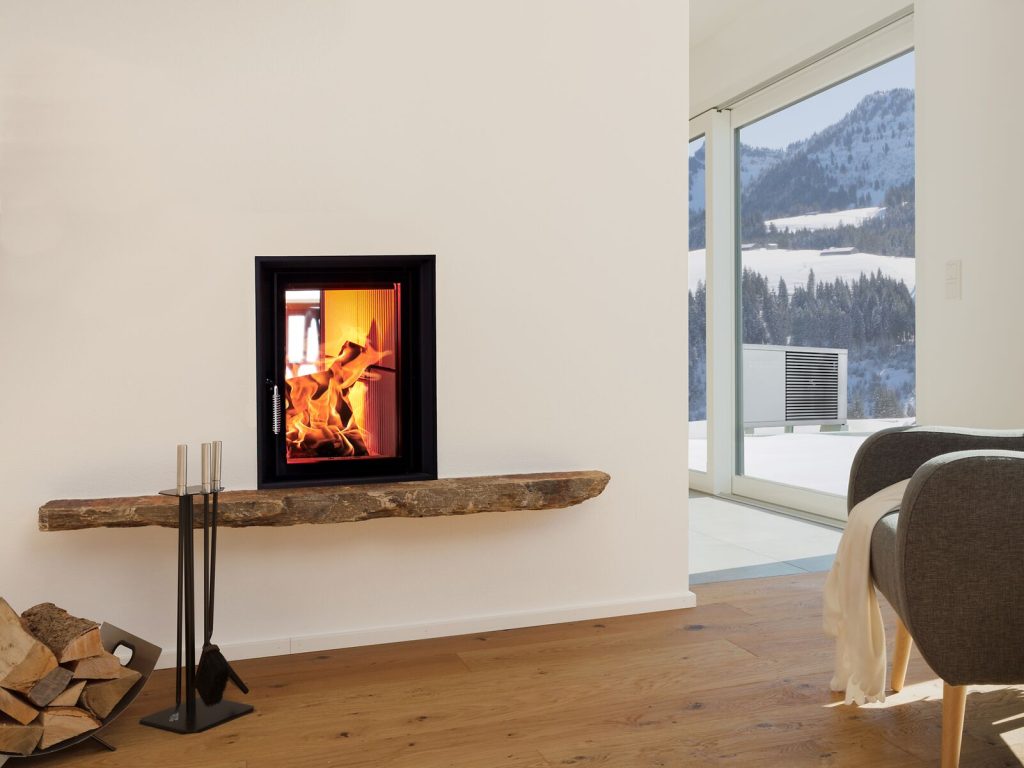
System solution
With its heating center (BHZ), BRUNNER offers a dedicated system solution for hybrid heating setups. Intelligent heat management ensures perfect coordination between heat sources and heat consumers while providing convenient operation. In case of a power outage, an emergency power supply keeps all essential heating pumps and the control unit running.
Can a water-bearing stove be operated without water?
The answer is short and simple: no.
Conclusion
Even though a water-bearing tiled stove looks almost the same as a standard one, it offers great relief for the central heating system. The heat is not only released into the room but also fed into the heating circuit. The ideal combination with a heat pump makes you independent from oil and gas.