According to regulations, only wood with a moisture content below 25 percent (based on the dry weight of the fuel) may be burned in heating systems. Wood with a moisture level just under 20 percent is considered dry and may be officially labeled as such. Even better is a residual moisture between 15 and 18 percent – that’s when firewood is truly dry. Why does this matter?
Burning wood that’s too moist leads to multiple heating issues and significantly increases emissions. At the same time, efficiency drops. Combustion remains incomplete, glass panes get sooty, and unburned wood residues remain. The embers fade quickly, and the smoke can cause unpleasant odors outdoors.
During combustion, the water in the wood must first be heated and evaporated. The energy required for that is taken from the combustion heat itself, which lowers flame temperatures and produces smoldering gases.
How can I measure wood moisture?
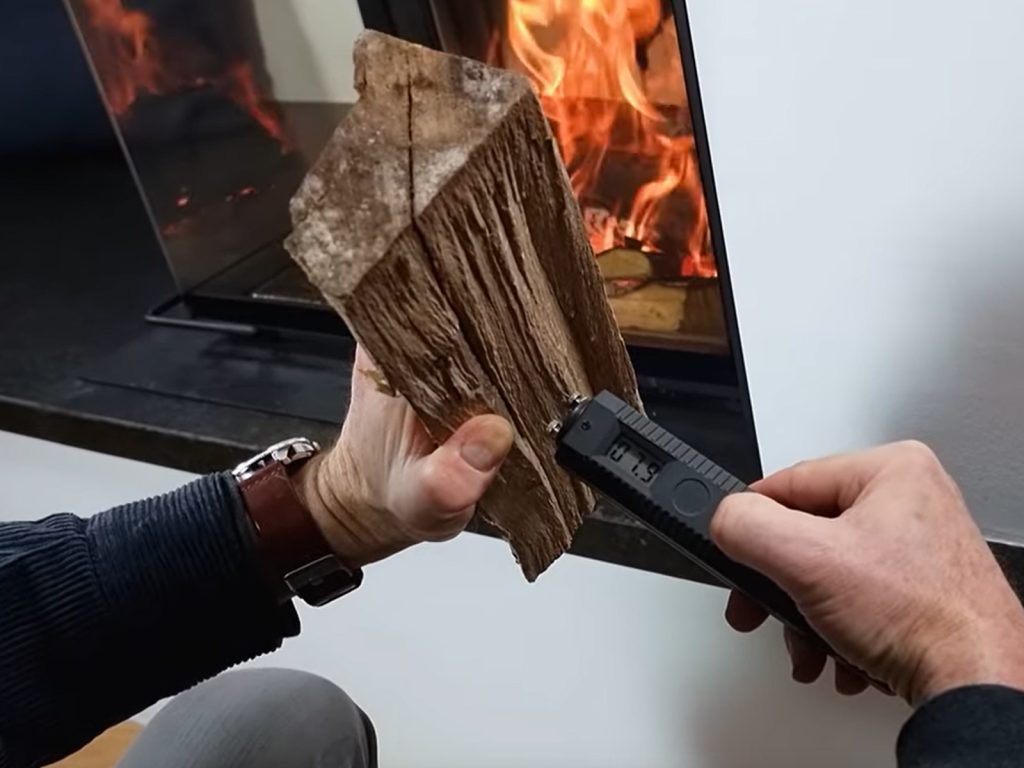
If you’re unsure whether your delivered or self-prepared firewood is dry enough, you can check it with a wood moisture meter. It’s available at any hardware store and allows you to easily and accurately determine the moisture content of your firewood.
Take several logs from the stack – one alone isn’t enough, since moisture levels can vary within the pile – and split them in half. Place the moisture meter across the wood grain and measure the moisture in the core at two points.
There are two types of wood moisture meters: ones with probe pins and others with electrodes at the tip. Both are placed directly on or into the wood surface to get a reading.
Methods for measuring wood moisture
Different types of wood vary in how much moisture they contain, how fast they dry and how dense they are. That’s important to know when choosing a measuring device. Most commercial wood moisture meters are preset for specific wood types. But which method should you use – the one with probe pins or with electrodes?
- Meters with probe pins have one clear advantage: they can be upgraded with longer probes for deeper measurements. They work by measuring the electrical resistance between the two contact pins. The small holes left in the wood don’t matter when testing firewood.
- Meters with electrodes use the high frequency method. This allows measuring moisture both on the surface and several centimeters deep. However, the surrounding air humidity can affect the reading and distort the result.
Measuring wood moisture without a device
If you don’t have a moisture meter at hand, there are simple ways to test how dry the wood really is – for example the “soap test.”
- Take a log and rub a bit of dish soap on one end. Then blow into the other end of the log.
- If the wood is dry, white soap bubbles will appear right away on the soapy side. That’s because there’s no moisture left in the wood fibers – everything has evaporated or dried out – and you can easily blow air through it.
How do you dry wet wood?
Freshly cut wood has a moisture level of about 40 to 60 percent – far too wet for heating. How long does wet wood take to dry? Under less than ideal conditions, it can take one to three years. If the logs are stored properly and get plenty of sun and air, a few months may be enough.
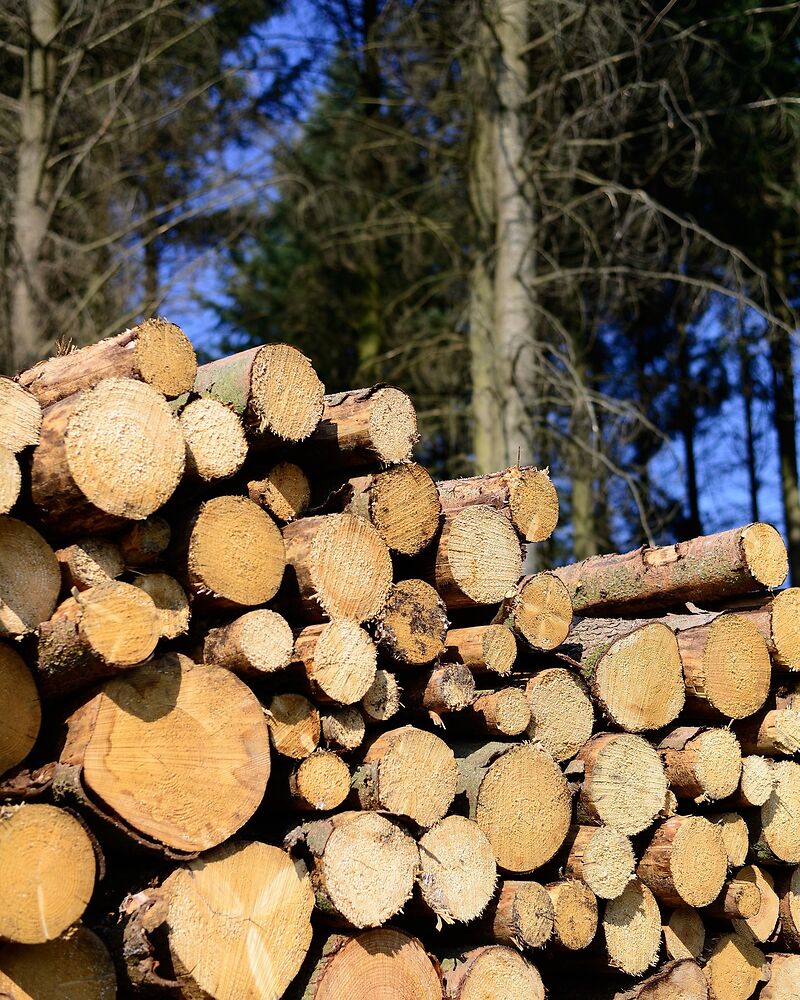
Fresh logs should be stacked for drying. The height and size of the stack depend on the available space. The ideal storage spot is dry, covered and well ventilated – for example, along a protected wall.
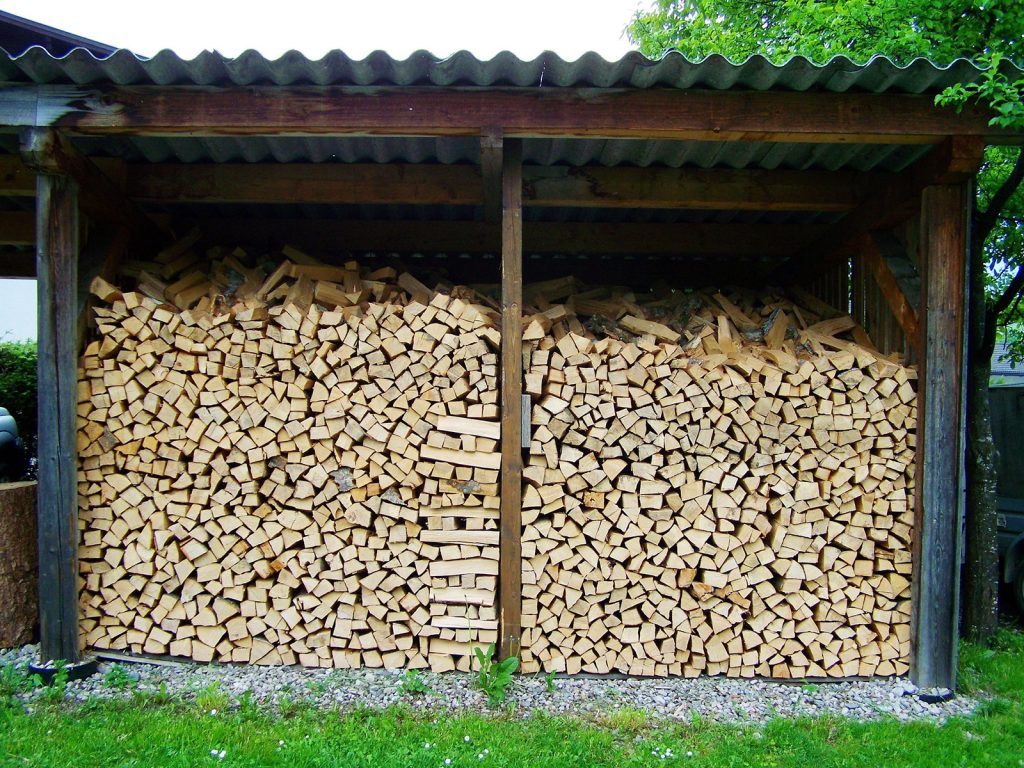
Make sure that no moisture can rise from the ground. A distance of about ten centimeters from the wall allows air to circulate freely, which speeds up the drying process. Inside the stack, the logs should be arranged so that air can flow through as well.
Thin trunks or beams form the base of the stack. They are laid crosswise to the storage direction of the firewood to keep enough space between the logs and the ground.
By the way, beech wood has the highest heating value, followed by maple, cherry and ash.
Conclusion
The right wood moisture is key for efficient heating. Wood that’s too wet won’t deliver optimal heat, increases emissions and causes excessive soot on the glass. Always make sure to burn dry, well-stored wood. It’s better for the environment – and for your wallet.